San Antonio Missions: The Churches That Built Texas
The Alamo is the famous one, but it's also the least intact. The original mission was secularized, fortified, fought over, and partially demolished; what survives is shrine more than church. The four other San Antonio missions tell a fuller story of Spanish Texas: Mission San José, the 'Queen of the Missions,' with its ornate rose window; Mission Concepción, the most complete colonial church in North America; Mission San Juan and Mission Espada, smaller but still active parishes. Together they form a UNESCO World Heritage Site, the only one in Texas, preserving 300 years of colonial architecture, Indigenous displacement, and Catholic faith along the San Antonio River.
The System
Spanish missions combined religious conversion with colonial economics. Franciscan friars established churches; Indigenous peoples were gathered into communities around them. The converts provided labor for farms, ranches, and construction; the friars provided religious instruction and, theoretically, protection from raids. The system was coercive - departure was not permitted - but offered survival as Apache and Comanche raids intensified. The San Antonio missions operated from roughly 1718 to 1824, when Mexican independence ended the colonial mission system. The physical structures remained; the system that created them dissolved into the new nation.
The Architecture
The missions are fortress and church combined. Thick stone walls enclosed living quarters, workshops, and granaries around central plazas. The churches themselves display Colonial Spanish Baroque architecture: carved stone facades, bell towers, interior frescoes. San José's rose window, carved by an unknown artisan around 1775, is considered the finest piece of colonial sculpture in North America. The churches were built to impress as well as defend; they made Spanish power and Catholic grandeur visible on the frontier. What survives is remarkable - intact churches older than American independence, still conducting services in spaces designed for conversion.
The Alamo
Mission San Antonio de Valero, founded 1718, became the Alamo through military occupation. Spanish soldiers stationed there named it for their hometown, Alamo de Parras. By 1836, the mission was fortified ruin when roughly 200 Texan defenders faced Santa Anna's Mexican army. The battle lasted thirteen days; the outcome was massacre. The Alamo became sacred to Texas independence, its defenders martyrs, the defeat transformed into rallying cry. The current chapel is what remains of the mission church; the iconic facade was added by the U.S. Army in the 1850s. The Alamo is more monument than mission now.
The Living
Unlike the Alamo, the four southern missions remain active Catholic parishes. Mass is celebrated regularly at Mission Concepción, San José, San Juan, and Espada. Parishioners worship in churches where converts worshipped 300 years ago, the same spaces, the same liturgy (though no longer in Latin). The missions' continued religious function shaped their preservation - congregations maintained what museums might have let decay. The living tradition complicates interpretation: these aren't just historic sites but active churches serving contemporary communities. Visitors must balance tourism with respect for worship.
Visiting San Antonio Missions
San Antonio Missions National Historical Park includes four missions south of downtown; the Alamo is separately administered in the city center. The Mission Trail connects all five sites, accessible by car, bike, or the river's hike/bike path. Park visitor center at Mission San José provides orientation. Each mission offers self-guided exploration; ranger programs are available. Admission is free except for special Alamo exhibits. The missions spread over several miles; allow a full day to visit all five. The Alamo is most crowded; the southern missions offer more contemplative experiences. Sunday Mass at the missions provides context unavailable to weekday visitors. The combination of architecture, history, and living faith is unique.
From the Air
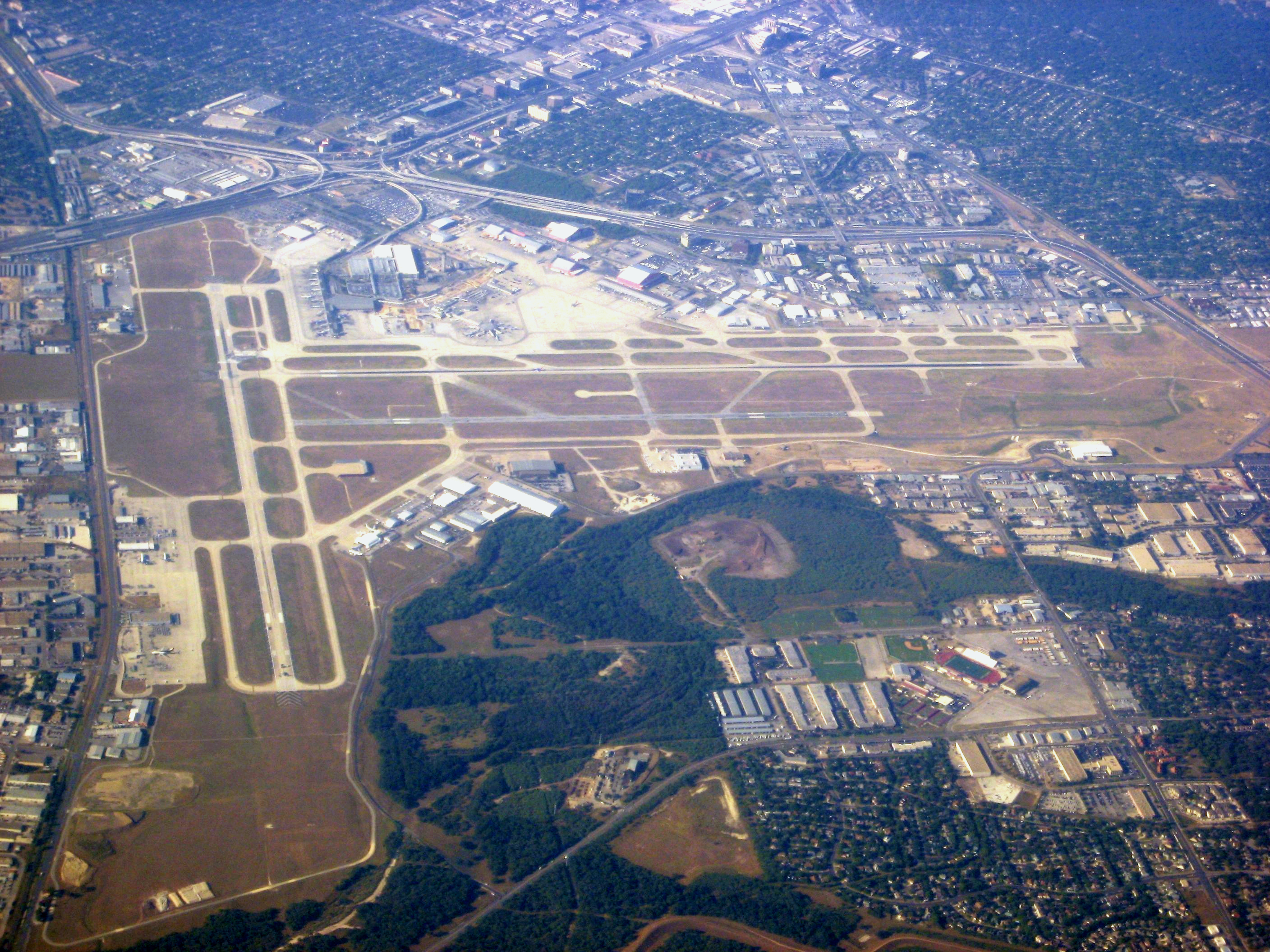
Located at 29.43°N, 98.49°W along the San Antonio River in south-central Texas. From altitude, the missions appear as historic structures along the river's course south of downtown San Antonio. The Alamo is in the city center, surrounded by modern development. The four southern missions are visible as walled compounds with churches at intervals along the river. San José, the largest, is most prominent from altitude. The San Antonio River's path, now channelized, links all five sites. The urban spread of San Antonio fills the visible landscape. What appears from altitude as scattered historic buildings represents a colonial system designed to transform both landscape and people - European architecture imposed on Spanish frontier, Indigenous converts building their own conversion.