San Antonio River Walk: The Drainage Ditch That Became Texas's Soul
They almost filled it in. After a devastating 1921 flood killed 51 people, city engineers proposed paving over the San Antonio River downtown and converting it to a sewer. Civic groups fought back, and in 1929, architect Robert Hugman proposed an alternative: turn the river into an attraction, a 'Venice of America' with shops and restaurants lining cobblestone paths below street level. The project languished through the Depression until the WPA provided labor; the River Walk opened in 1941 to little fanfare. For decades it remained a quiet backwater. Then HemisFair '68 focused attention, hotels rose along the banks, and the River Walk became what it is today: a parallel universe below street level, where tourists outnumber locals, where margaritas flow constantly, and where what could have been pavement became Texas's most beloved public space.
The Flood
The San Antonio River had flooded before, but September 1921 was catastrophic. Nine inches of rain fell in hours; the river rose thirty feet in places; the downtown business district flooded to the second floor. Fifty-one people drowned; damage estimates reached millions. The city's response was sensible by the standards of the day: dam the flood-prone section, channel it underground, turn the downtown riverbed into streets and parking. The proposal had powerful backers. But the San Antonio Conservation Society, founded just three years earlier, organized opposition. The river wasn't just infrastructure - it was identity, the reason the city existed where it did. The battle lasted years before preservation won.
The Vision
Robert Hugman was a young architect with romantic ideas. He envisioned the river as a Spanish fantasy - ironwork balconies, arched bridges, lush vegetation overhanging stone paths. His 1929 proposal included shops, cafes, and boat tours through what he called 'the most beautiful park in the world.' The Chamber of Commerce was skeptical; businesses saw liability, not opportunity. The plan was approved but unfunded until the WPA arrived with Depression-era labor. Workers built the walkways, the stairs, the stone walls. They planted the bald cypress trees that now tower over the channel. Hugman's vision was realized on government payroll, though he was eventually fired in a political dispute and watched others take credit.
The Transformation
For twenty years after opening, the River Walk was a pleasant backwater - quiet paths, occasional tourists, a few restaurants. The 1968 World's Fair changed everything. HemisFair brought millions to San Antonio; the convention center extended to the river. Hotels discovered that river frontage sold; the Hilton, Marriott, and Hyatt rose along the banks. The River Walk became an attraction, then the attraction, then an entertainment district. The expansion continued: new segments upstream and downstream, the Pearl Brewery district, the Museum Reach extending to the San Antonio Museum of Art. What was barely a mile in 1968 now stretches fifteen miles.
The Experience
The River Walk creates its own microclimate - cooler in summer, insulated from street noise, removed from automobile chaos. You descend from street level via stairs and suddenly you're elsewhere: riverboat barges gliding past, mariachi bands competing, waiters carrying trays of Tex-Mex above the crowds. The experience is commercial, sometimes crass, often crowded. But the bones are beautiful - the cypress trees, the limestone walls, the reflection of lights on water at night. The parallel universe quality persists: you're still in downtown San Antonio, but you've stepped into something that feels like it shouldn't exist. The drainage ditch that became paradise.
Visiting San Antonio River Walk
San Antonio is located in south-central Texas, accessible via San Antonio International Airport. The River Walk is accessed via stairs from street level at numerous points; the main tourist section runs from the Tobin Center for the Performing Arts to the Convention Center, about 2.5 miles. River barges offer narrated cruises. Restaurants and bars line both banks; Mexican food dominates but options vary. The Alamo is one block from the river at street level; the Pearl District upstream offers more upscale dining and shopping. Summer is hot; spring brings festivals. Early morning offers quieter paths before crowds arrive. The experience is best at night when lighting transforms the water and crowds reach festive density.
From the Air
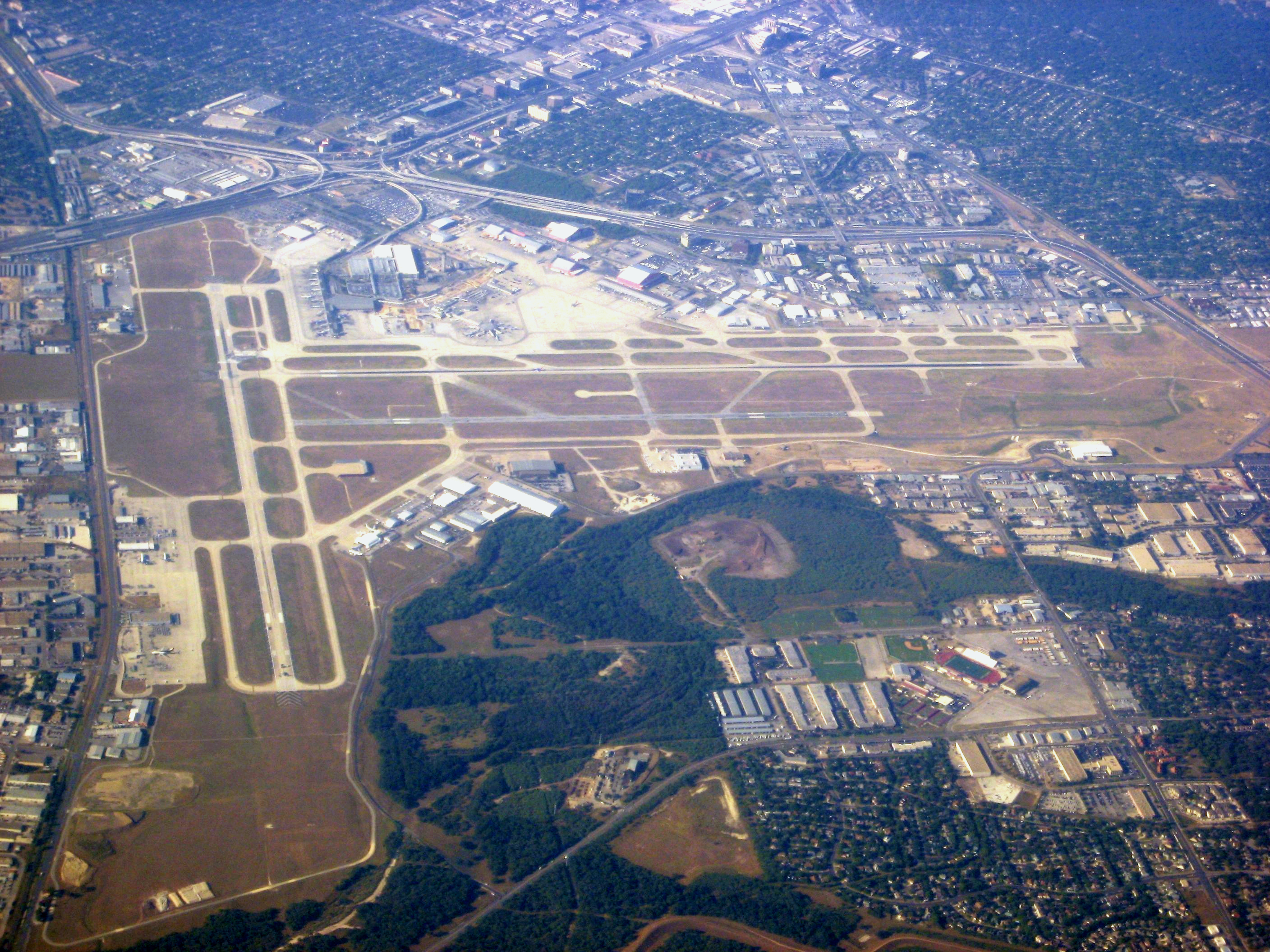
Located at 29.42°N, 98.49°W in south-central Texas. From altitude, the San Antonio River traces a horseshoe curve through downtown, though the River Walk itself is largely hidden below street level, visible only as a green ribbon amid urban development. The Tower of the Americas, legacy of HemisFair '68, rises 750 feet near the Convention Center. The Alamo sits north of the river bend, its small compound dwarfed by surrounding development. The Pearl Brewery complex is visible upstream. The city spreads in all directions across flat terrain. What appears from altitude as an ordinary Texas city contains, below street level, a parallel world - Robert Hugman's dream realized in stone and water and cypress, the drainage ditch that became the heart of Texas tourism.