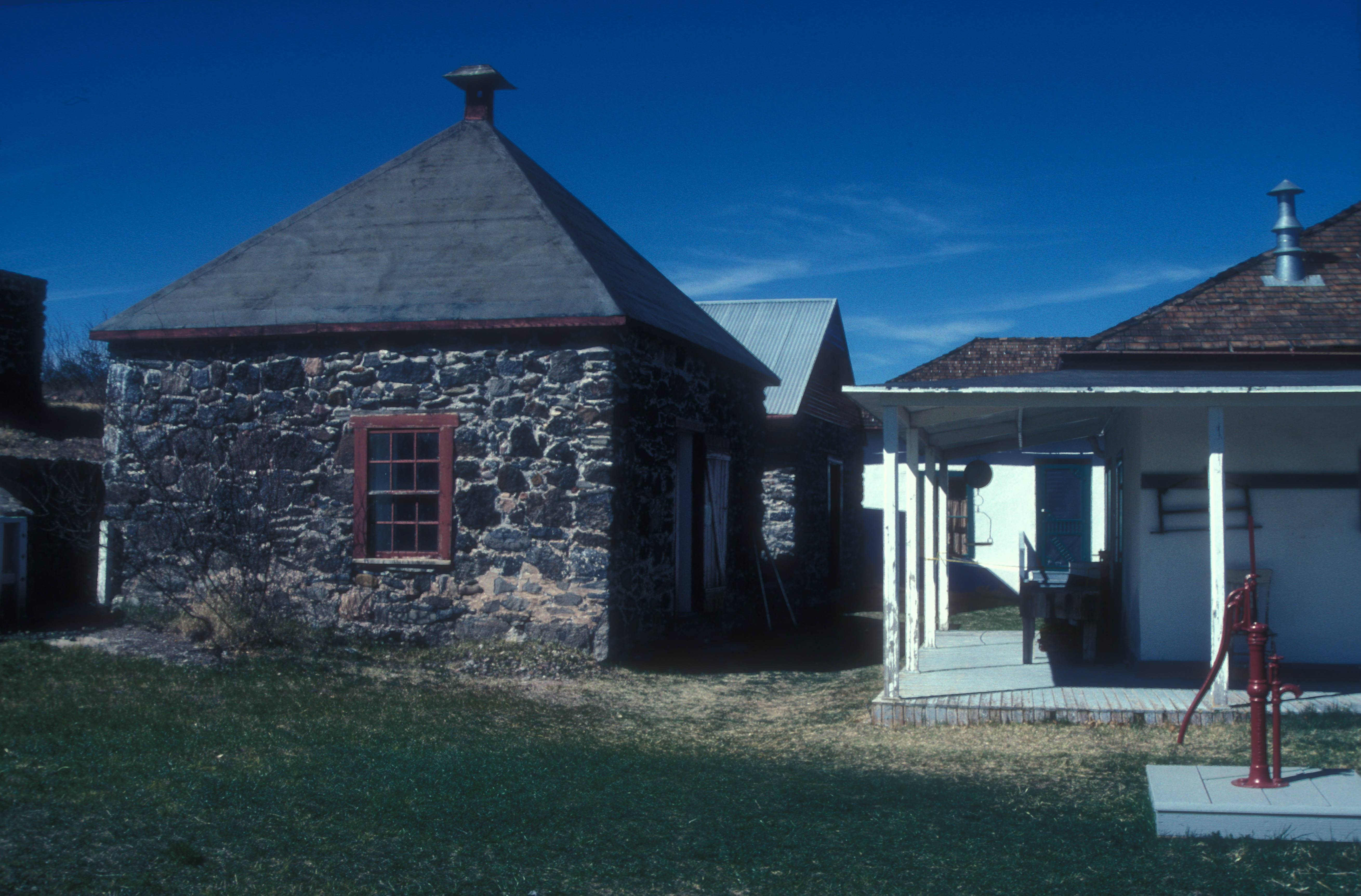
San Bernardino Ranch
A Mormon employee of John Slaughter built his house directly on the international boundary so he could keep a wife in the United States and a wife in Mexico. Two rooms, one in each country, connected by a breezeway. The ruins still stand on what is now federal wildlife refuge land, a monument to the creative problem-solving that defined life at San Bernardino Ranch. Slaughter himself owned property in both nations, two-thirds of his spread lying south of the border, and he ran his cattle operation with the same disregard for boundaries that characterized the Old West. This was the home of the man who cleaned up Tombstone after the Gunfight at the O.K. Corral, the lawman whose jail was known as the Hotel de Slaughter, who returned from chasing outlaws with only their horses and equipment.
Three Centuries of Borderland History
The San Bernardino Valley belonged to Southern Athabaskan peoples before Spanish missionaries arrived. Father Eusebio Kino visited the site in 1694, and the Marques de Rubi later proposed a garrison that stood from 1775 to 1780. Ignacio Perez purchased the original Mexican land grant in 1822 for 90 pesos, but Apache raids drove him from the property in the 1830s. The Mormon Battalion passed through in 1846 on their march to California, and prospectors followed throughout the 1840s and 1850s. The valley became American territory on June 8, 1854, when the Gadsden Purchase redrew the map. Through it all, the artesian springs that rise from the valley floor sustained travelers, soldiers, and ranchers. They still flow today, feeding endangered fish found nowhere else on Earth.
The Lawman's Domain
John Horton Slaughter arrived in 1884, a Texas cowboy and lawman who paid approximately $80,000 to the Perez heirs for land that straddled two countries. He was elected sheriff of Cochise County in 1886, two terms that transformed Tombstone from a town still reeling from the violence of 1881 into something approaching civilization. Slaughter's reputation preceded him. When he rode after outlaws, he often returned alone with their horses. The Tombstone jail bore his name as a grim joke. At the ranch, he commanded as many as 500 people during peak operations, building a community complete with its own schoolhouse, Slaughter School District No. 28. His was the first private home in southeastern Arizona with a telephone. He owned six automobiles but never learned to drive.
Apache May and the Children of the Ranch
Children defined daily life at San Bernardino Ranch. Slaughter took in foster children throughout his years here, and the most poignant story belongs to Apache May. Slaughter found her as a toddler, abandoned by her parents while he was tracking their band following killings in Arizona. He adopted her, and the two adored each other. She called him Don Juan. At age six, her dress caught fire and she died from her burns. She lies buried in the cemetery on what is now the wildlife refuge, her grave a reminder of the complicated humanity that existed alongside the violence of the frontier. The other children of the ranch swam in the pond Slaughter dammed for irrigation, ate ice cream Viola brought from the icehouse, and played in the natural artesian wells that still bubble up from the desert floor.
Border War Outpost
The Mexican Revolution brought new turmoil to the San Bernardino Valley. From 1911 to 1920, the U.S. Army established the Slaughter Ranch Outpost atop Mesa de la Avanzada, overlooking the ranch house as part of Camp Harry J. Jones in Douglas. Soldiers watched the border during the conflict known as the Border War, and the ranch found itself once again on the frontier between nations. Violence touched the Slaughters directly in 1919 when Jesse Fisher was murdered on the property by Manuel Garcia and Jose Perez. John and Viola moved to Douglas, and he died peacefully in his sleep on February 16, 1922. Viola sold the ranch around 1936. The borderland had claimed another generation.
A National Landmark Preserved
The San Bernardino Ranch received National Historic Landmark designation in 1964, entered on the National Register of Historic Places for its association with John Slaughter and the beginning of cattle ranching in southern Arizona and northern Mexico. Today the Johnson Historical Museum of the Southwest preserves the compound, its adobe ranch house with hipped roof and redwood shingles restored to its early 1900s appearance. The icehouse, wash house, granary, and commissary stand as they did when Slaughter ruled this valley. A 1915 Model T Ford, fully restored, sits in the car shed. The San Bernardino National Wildlife Refuge surrounds the museum grounds, protecting the Yaqui Topminnow and Yaqui Chub in the same artesian waters where Slaughter's foster children once swam. From the air, the ranch appears as a small cluster of historic buildings against the vast sweep of the valley, the international border visible just to the south.
From the Air
San Bernardino Ranch is located at 31.336N, 109.280W in extreme southeastern Cochise County, Arizona, near the Mexican border. The ranch compound is visible from lower altitudes as a cluster of historic buildings at the head of the San Bernardino Valley. Nearest airport is Bisbee Douglas International (KDUG), approximately 25 nm northwest. Best viewed at 2,000-4,000 ft AGL for detail of the historic structures. The San Bernardino National Wildlife Refuge surrounds the ranch, with artesian wetlands visible as green patches in the desert terrain. The Peloncillo Mountains rise to the east; Mexico lies immediately to the south. Address: 6153 Geronimo Trail, Douglas, AZ 85608.