San Blas Islands
Three centuries ago, the English buccaneer William Dampier called them "The Samballoes" -- a scattering of low coral islands perfect for hiding, for privacy, for disappearing from the Spanish navy. From 1679 to 1681, he used these cays as a rendezvous point between pirate raids along the Central American coast. Today the San Blas Islands still feel like a place apart from the world, 365 islands and cays strung along Panama's Caribbean coast east of the canal, where the Guna people have lived for over two centuries and where the biggest threat is no longer pirates or colonial police but the slow, certain rise of the sea.
A Pirate's Paradise, a People's Homeland
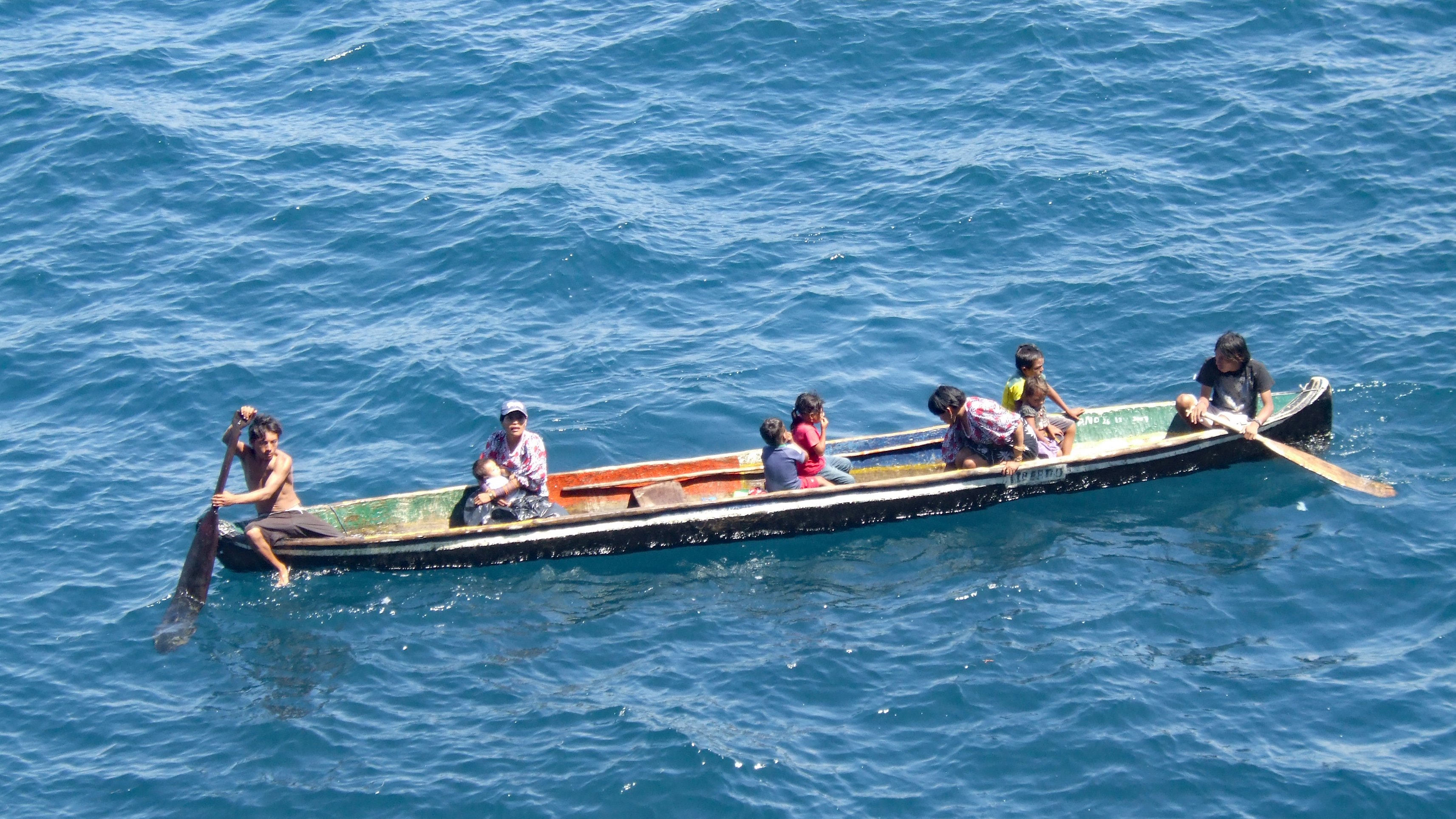
The geography that once sheltered privateers now shelters something rarer: a largely intact indigenous culture governing its own territory. The San Blas archipelago lies within the comarca of Guna Yala, where the Guna people exercise autonomous control over who enters, what gets built, and how the islands are used. Of the 365 islands, only 49 are inhabited. Some are barely larger than a house, crowned with a single palm tree. Others hold entire villages -- coral-walled settlements where dugout canoes called cayucos line the shoreline and the rhythms of fishing and mola-making shape the days. The capital, Gaigirgordub, anchors the western end of the archipelago, while Cayos Limones and Cayos Holandeses draw sailors with waters so clear the sandy bottom glows turquoise at ten feet.
Cloth That Carries Culture
Before European missionaries arrived, the Guna decorated their bodies with vivid painted designs -- geometric patterns, animal forms, symbols drawn from the natural world surrounding them. When the missionaries insisted the Guna wear clothing, the women responded with quiet subversion: they transferred those same body-paint designs onto layered fabric panels called molas, turning an act of cultural suppression into one of cultural preservation. Each mola is made through reverse applique, cutting through stacked layers of colored cloth to reveal intricate patterns beneath. The work takes weeks, and the finest examples are recognized as textile art. For many Guna families, the sale of molas is their principal income. The designs remain living art -- contemporary molas depict everything from traditional sea creatures to modern political commentary, adapting an ancient visual language to a changing world.
Where No Hurricanes Come
Sailors know the San Blas Islands for a quality nearly unique in the Caribbean: hurricanes almost never reach here. Sitting below the traditional hurricane belt at roughly 9.5 degrees north latitude, the archipelago offers shelter that has drawn vessels for centuries. The tropical monsoon climate keeps temperatures hot year-round, with a lengthy wet season stretching from May through January and a brief dry window in February through April. The surrounding waters teem with lobster, crab, squid, and octopus -- enough to support an artisanal fishing economy that sends daily planeloads of seafood to Panama City. Subsistence agriculture on the mainland produces bananas, corn, sugarcane, and coconuts, though the coconut trade, once measured in the millions of nuts shipped annually, has declined as younger Guna seek work in Panama City and Colon.
The Sea Reclaims
The same low elevation that made these islands convenient stepping-stones for fishermen and pirates now makes them dangerously vulnerable. The Panamanian government has predicted that several islands could be completely submerged by 2050, and the evidence is already visible in the flooding that regularly swamps the most crowded settlements. In June 2024, roughly 300 families from the island of Gardi Sugdub -- one of the most densely packed communities in the archipelago -- became the first Panamanians displaced by climate change, relocating to a new mainland settlement called Isberyala. The island of Carti Sugtupu, so crowded that its buildings nearly touch across every available surface, is next in line for relocation. An estimated 38,000 people across Panama's coastal communities will require similar moves in the coming decades. For a people whose culture was built on the sea, the prospect of moving inland challenges identity as much as logistics.
Faith, Family, and the Reef
The Guna worship a deity named Erragon, whom they believe came to earth and died specifically for their people. Their chief resides on Acuadup -- "rock island" -- and the community's social structure still revolves around family rotation between mainland villages and island homes. Children attend school on some of the larger islands. Most men now speak Spanish alongside Guna, but women tend to maintain older traditions more closely, carrying forward the language, dress, and craft practices that define Guna identity. Beneath the surface, the reefs that built these islands face their own pressures from warming waters and sediment carried by shifting currents. The ecosystem that created these tiny landmasses is degrading at the same time the ocean rises to reclaim them -- a double pressure that makes the San Blas Islands one of the most vivid frontlines of climate change in the Western Hemisphere.
From the Air
Located at 9.50N, 78.65W, the San Blas archipelago appears as a constellation of tiny islands scattered along Panama's northeast Caribbean coast. From 5,000 feet, the contrast between deep blue ocean, shallow turquoise reef platforms, and green palm-topped islands is striking. The chain extends roughly 100 nautical miles from northwest to southeast. Nearest airstrips include Playon Chico (MPCH), Achutupo (MPAT), and the small strips on Carti and other islands used by inter-island air services. Panama City Tocumen (MPTO) lies approximately 130 nm southwest.