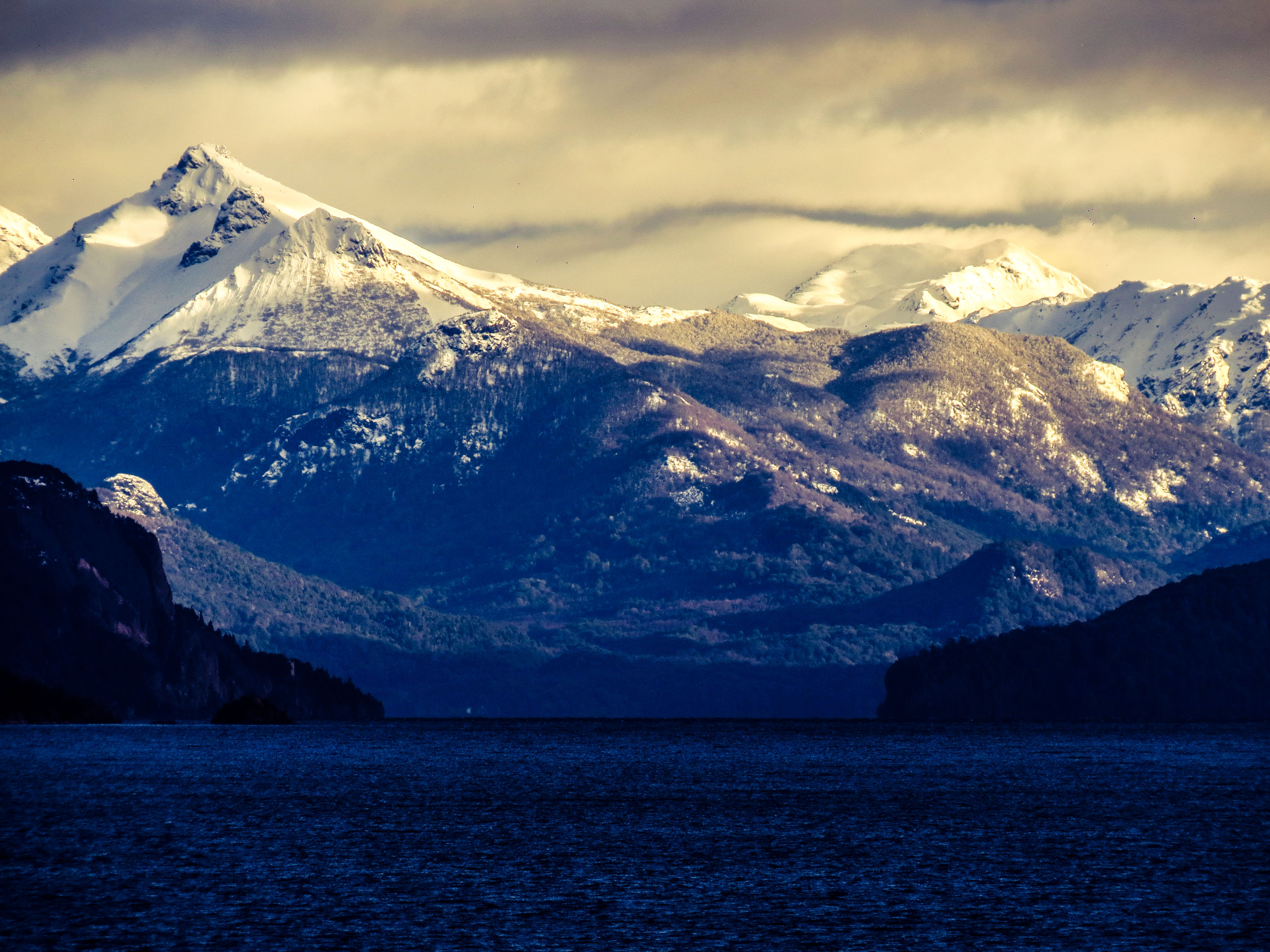
San Carlos de Bariloche
St. Bernard dogs pose patiently outside chocolate shops as tourists stream past, cameras clicking at the improbably Swiss-looking storefronts. This is Bariloche, Argentina's alpine fantasy transplanted to Patagonia's edge, where the Andes tumble down to meet glacial lakes so blue they seem borrowed from postcards. The city sprawls along the southern shore of Lake Nahuel Huapi, surrounded by an amphitheater of mountains bearing names like Cerro Catedral, Cerro Lopez, and the glacier-crowned Tronador. Here, in the Rio Negro Province, approximately 1,600 kilometers southwest of Buenos Aires, honeymooners stroll arm-in-arm past chocolate boutiques while climbers plan expeditions to nearby peaks. Bariloche has earned fame as Argentina's honeymoon capital, its chocolate capital, and the gateway to Nahuel Huapi National Park, the country's oldest protected wilderness.
Where Four Lakes Meet the Mountains
Bariloche's geography reads like a catalog of natural superlatives. Lake Nahuel Huapi, one of the largest in Argentina, stretches toward the horizon while Lakes Gutierrez, Moreno, and Mascardi offer their own pristine shores for exploration. The mountains rise dramatically from the water's edge: Cerro Catedral hosts one of South America's premier ski resorts, while Tronador's ice-clad summit guards the Chilean border. The climate here is transitional, caught between the wet Andes and arid Patagonian steppe. Summers bring long sunny days with surprisingly cold nights, while winters deliver reliable snowfall averaging 23 to 42 centimeters, perfect conditions for the ski season that defines local life from July through August.
Chocolate and Craft Beer
German and Swiss immigrants who settled this region in the late 19th century brought their confectionery traditions along with their architectural sensibilities. Today, chocolate boutiques line the main streets like jewel boxes, each offering handmade truffles filled with local fruits and liqueurs. Mamuschka, La Abuela Goye, Fenoglio, Rapa Nui, and Benroth have become pilgrimage sites for sweet-toothed travelers. But Bariloche's artisanal ambitions extend beyond chocolate. Craft breweries have flourished here, with Blest earning particular devotion among beer enthusiasts. The city's nightlife pulses with energy, fueled partly by Argentine high school students who traditionally celebrate graduation with trips here, filling sophisticated dance clubs each season.
Adventures in Every Season
Water activities dominate summer months: kayaking with outfitters like Pura Vida, rafting on glacial rivers, kite surfing across wind-whipped lakes. Mountain bikers tackle trails threading through ancient forests, while rock climbers scale granite faces. Horseback expeditions venture into backcountry valleys. A historic steam train chugs through landscapes that seem untouched since Patagonia's pioneering days. When snow blankets the peaks, attention shifts to Cerro Catedral, where ski lifts access terrain suitable for beginners through experts. Ferries connect Bariloche to Puerto Frias, offering water-level perspectives on the Andean massif. The famous Llao Llao Hotel, built in 1939 in alpine style, anchors the luxury end of the accommodation spectrum some 25 kilometers from town.
Gateway to Wilder Places
Though Bariloche itself draws millions of visitors, many use it as a launching point for deeper Patagonian exploration. An hour's drive north leads to Villa la Angostura, a picturesque village serving as gateway to Los Arrayanes National Park with its ancient forest. South lies El Bolson, a bohemian mountain town founded in the 1970s, hosting twice-weekly flea markets amid organic farms. The trekking options are limitless, with refugios dotting the high country: Refugio Frey, Refugio Lopez, Refugio San Martin, and Refugio Italia offer bunks for multi-day adventures. Register your intentions at the National Park office on San Martin Street before heading into the backcountry, a standard safety protocol in this beautiful but demanding terrain.
From the Air
Coordinates: 41.15S, 71.30W. Elevation approximately 770 meters (2,526 feet). Primary airport: San Carlos de Bariloche Airport (BRC/SAZS), located 13.5 km east of city center with commercial flights from Buenos Aires, El Calafate, and Sao Paulo. From altitude, the distinctive shape of Lake Nahuel Huapi is visible, with Cerro Catedral's ski runs appearing as cleared swaths on the mountainside. The Llao Llao peninsula creates a recognizable protrusion into the lake.