San Francisco: The City That Burned Down and Rebuilt Itself in Four Years
San Francisco exists on borrowed time and unstable ground - a city built on a peninsula prone to earthquakes, wrapped in fog that locals call Karl, generating more wealth per square mile than almost anywhere on Earth. The 1906 earthquake and fire destroyed 80% of the city; San Francisco rebuilt in four years, only to face the prospect of the next big one. The city's character emerged from that resilience: the bohemian 1950s that produced the Beats, the 1960s that created the counterculture, the 1970s that made it America's gay capital, the 2010s that made it tech's headquarters. San Francisco is 47 square miles of hills, Victorian houses, and contradictions - progressive politics and billionaire residents, homeless encampments and $4 million studios.
The Earthquake
At 5:12 AM on April 18, 1906, the San Andreas Fault ruptured beneath San Francisco. The earthquake lasted less than a minute; the fires burned for three days. The water mains broke, leaving firefighters helpless as 500 blocks burned. Over 3,000 died; 250,000 lost their homes. The city rebuilt with remarkable speed - by 1910, little evidence remained of the destruction. The next major earthquake came in 1989 during the World Series; the Cypress Freeway collapsed, 63 died. Seismologists predict a 72% chance of another major quake by 2043. San Francisco lives with this knowledge, building codes and retrofit requirements the only defense against geological inevitability.
The Hills
San Francisco's 43 hills define the city's character - Nob Hill where the railroad barons built mansions, Telegraph Hill where Coit Tower stands sentinel, Twin Peaks offering panoramic views, the famously crooked Lombard Street descending Russian Hill. The hills defeated normal urban grids; the cable cars that Kenneth brothers invented in 1873 became the solution, climbing grades too steep for horses. Three cable car lines survive, now tourist attractions rather than practical transit. The hills create microclimates - the Mission District sunny when the Sunset is fogged in, Potrero Hill warm when downtown shivers. The geography that makes San Francisco difficult to navigate also makes it beautiful.
The Bridge
The Golden Gate Bridge, completed in 1937, spans the mile-wide strait connecting San Francisco Bay to the Pacific. Chief engineer Joseph Strauss promised it could be built; skeptics said the currents, fog, and winds made it impossible. The Art Deco towers rise 746 feet; the International Orange color was chosen to be visible in fog. The bridge took four years to build and cost 11 workers' lives - a remarkable safety record for 1930s construction. It remains the most photographed bridge on Earth, the symbol of San Francisco that appears on everything from postcards to tech company logos. The toll is $9 for cars; pedestrians walk free.
The Tech
Silicon Valley lies 40 miles south, but San Francisco became tech's urban headquarters - Twitter in the Tenderloin, Salesforce Tower dominating the skyline, Uber and Airbnb and countless startups displacing the artists and activists who made the city interesting. The tech money transformed San Francisco into America's most expensive city: median home price over $1.3 million, average rent over $3,500, teachers and nurses commuting from hours away. The backlash has been fierce - Google buses blockaded, tech workers vilified, longtime residents priced into exile. San Francisco's progressive politics increasingly conflict with the industry that funds it.
Visiting San Francisco
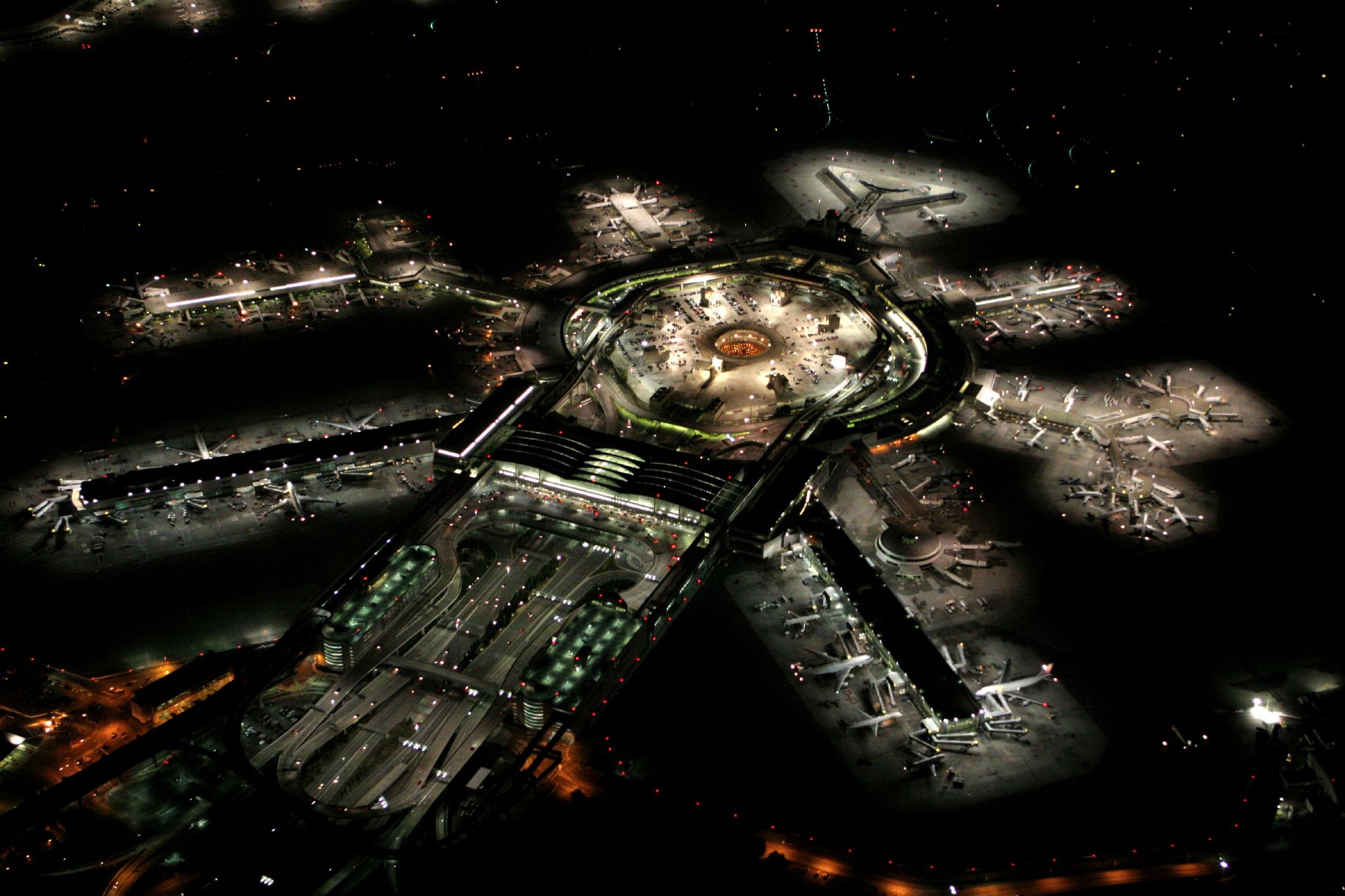
San Francisco is served by San Francisco International Airport (SFO). The cable cars run from Powell Street to Fisherman's Wharf; the California line is less crowded. Alcatraz tours require advance booking; the ferry views are part of the experience. The Golden Gate Bridge is walkable on the east sidewalk. Golden Gate Park contains the de Young Museum, California Academy of Sciences, and Japanese Tea Garden. The Mission District offers murals and burritos; North Beach offers Italian heritage and City Lights Bookstore. The fog is heaviest June through August; September and October offer the warmest weather. Dress in layers always.
From the Air
Located at 37.77°N, 122.42°W on a peninsula between San Francisco Bay and the Pacific Ocean. From altitude, the city appears as dense urban development on hilly terrain - the Golden Gate Bridge spanning the strait to Marin, the Bay Bridge connecting to Oakland, Alcatraz Island sitting in the bay. The downtown cluster of towers is visible, Salesforce Tower the tallest. What appears from altitude as a compact peninsula city is San Francisco - where earthquakes are inevitable, where the bridge is iconic, and where tech money has transformed everything except the fog.