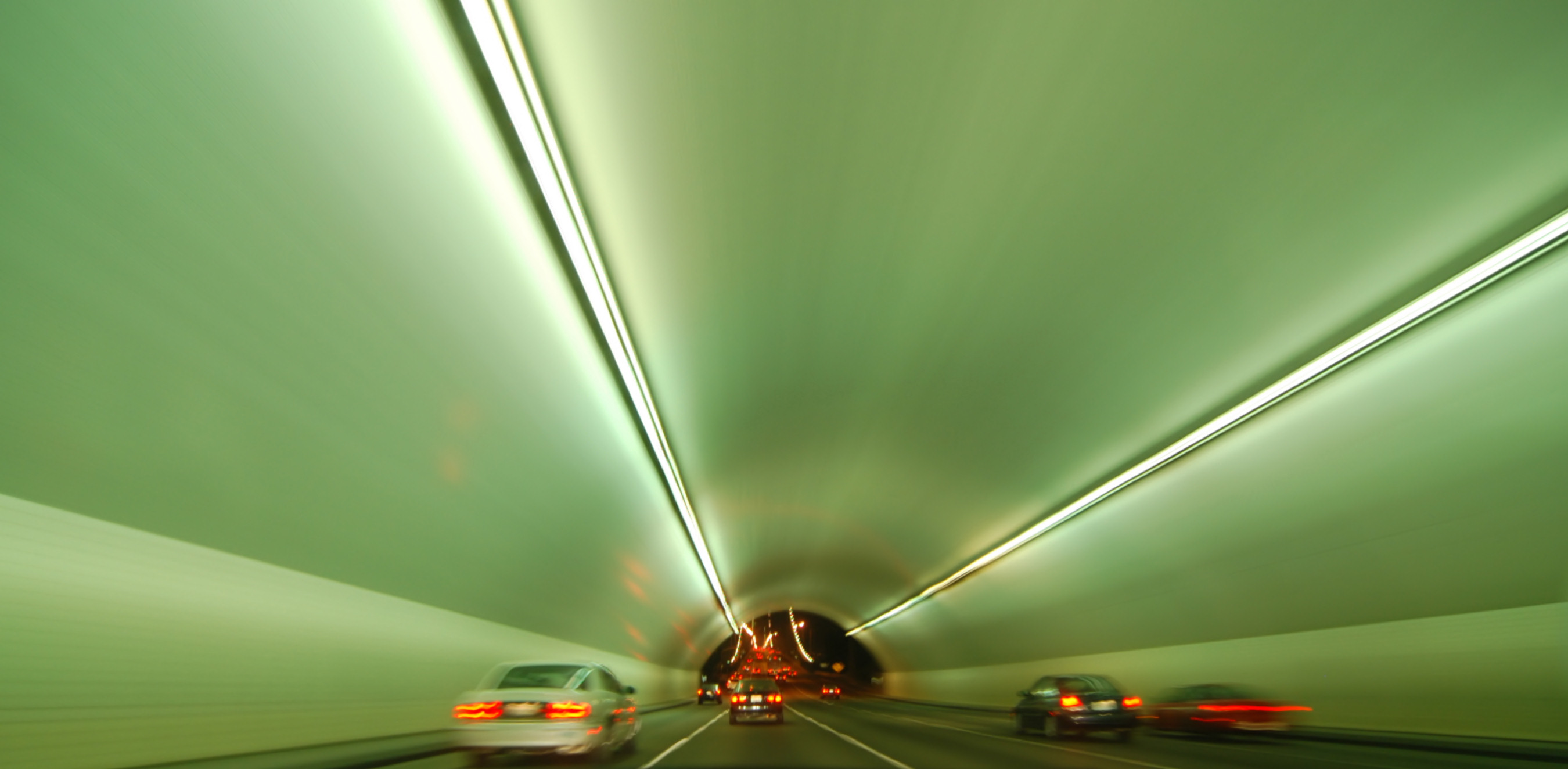
San Francisco-Oakland Bay Bridge
In September 1872, a man in a blue military uniform with gold epaulettes stood on the streets of San Francisco and issued a decree. The self-proclaimed Emperor Norton, beloved eccentric of the Gold Rush city, commanded that a suspension bridge be constructed to connect Oakland with San Francisco. It was his third such proclamation that year, and he was growing frustrated. 'Whoever fails to comply with this order,' he warned, 'will be subject to the penalties of the law.' The penalty never came. But sixty-four years later, on November 12, 1936, the bridge that Norton had imagined opened to traffic - six months before its more famous neighbor, the Golden Gate.
Wrong Side of the Bay
The need for a bridge was clear from the moment the first transcontinental railroad reached California in 1869. San Francisco, developed at the entrance to the bay, had prospered during the Gold Rush as the gateway for goods and people arriving by ship. But the railroad terminus was across the water in Oakland, and suddenly San Francisco was on the wrong side. Businessmen worried the city would lose its position as the regional center of trade. As early as 1872, a 'Bay Bridge Committee' was drafting plans for a railroad bridge. The San Francisco Real Estate Circular reported on their efforts that April, but decades would pass before technology and financing aligned. Emperor Norton kept issuing decrees, and the bay kept the cities apart.
The Double Crossing
The Bay Bridge is actually two bridges joined at Yerba Buena Island. The western section - officially named the Willie L. Brown Jr. Bridge after the former San Francisco mayor - connects downtown to the island with two complete suspension spans sharing a center anchorage. The original eastern section was a cantilever bridge linking the island to Oakland. Together they stretched over four miles, making this the longest steel bridge in the world when it opened. The bridge carried automobiles on its upper deck and trucks, buses, and commuter trains from the Key System on the lower. When the Key System abandoned rail service on April 20, 1958, the lower deck was converted to automobile traffic. By 1963, westbound traffic ran on the upper deck and eastbound below.
Fifteen Seconds of Terror
At 5:04 p.m. on October 17, 1989, the Loma Prieta earthquake struck the Bay Area with a magnitude of 6.9. Fifteen seconds of shaking collapsed a section of the eastern span's upper deck onto the lower deck. One person died. The bridge closed for a month while emergency repairs were made. But the real reckoning was just beginning. Engineers determined the original eastern span could not be adequately retrofitted for future earthquakes. What started as a $250 million seismic upgrade eventually became a complete replacement. The new eastern span - a self-anchored suspension bridge connected to a causeway - opened on Labor Day 2013 at a cost of over $6.5 billion. Demolition of the old eastern span was completed September 8, 2018.
The Daily Crossing
Today approximately 260,000 vehicles cross the Bay Bridge daily, making it one of the busiest bridges in America. The western section remains a double-decker - westbound on top, eastbound below - while the new eastern section carries all lanes on a single deck. Eighteen toll lanes on the Oakland side collect fares from westbound traffic only; all-electronic tolling eliminated the last human toll collectors in 2020. During morning rush hour, traffic backs up from the toll plaza through the MacArthur Maze interchange and onto the feeder highways. Emperor Norton would recognize none of this - not the cars, not the FasTrak transponders, not the 25,000 LED lights that illuminate the western span at night. But he would surely approve that his bridge was built, connecting the two cities he loved across the waters of San Francisco Bay.
From the Air
The San Francisco-Oakland Bay Bridge spans San Francisco Bay at 37.818N, 122.347W. Its distinctive double-crossing design is clearly visible from the air - twin suspension spans connect San Francisco to Yerba Buena Island, where the bridge tunnels through the island before continuing to Oakland. The modern eastern span features a striking single-tower self-anchored suspension bridge. Best viewed at 2,000-4,000 feet AGL. San Francisco International (KSFO) is 10nm south; Oakland International (KOAK) is 5nm southeast. The toll plaza on the Oakland side creates visible traffic patterns during commute hours.