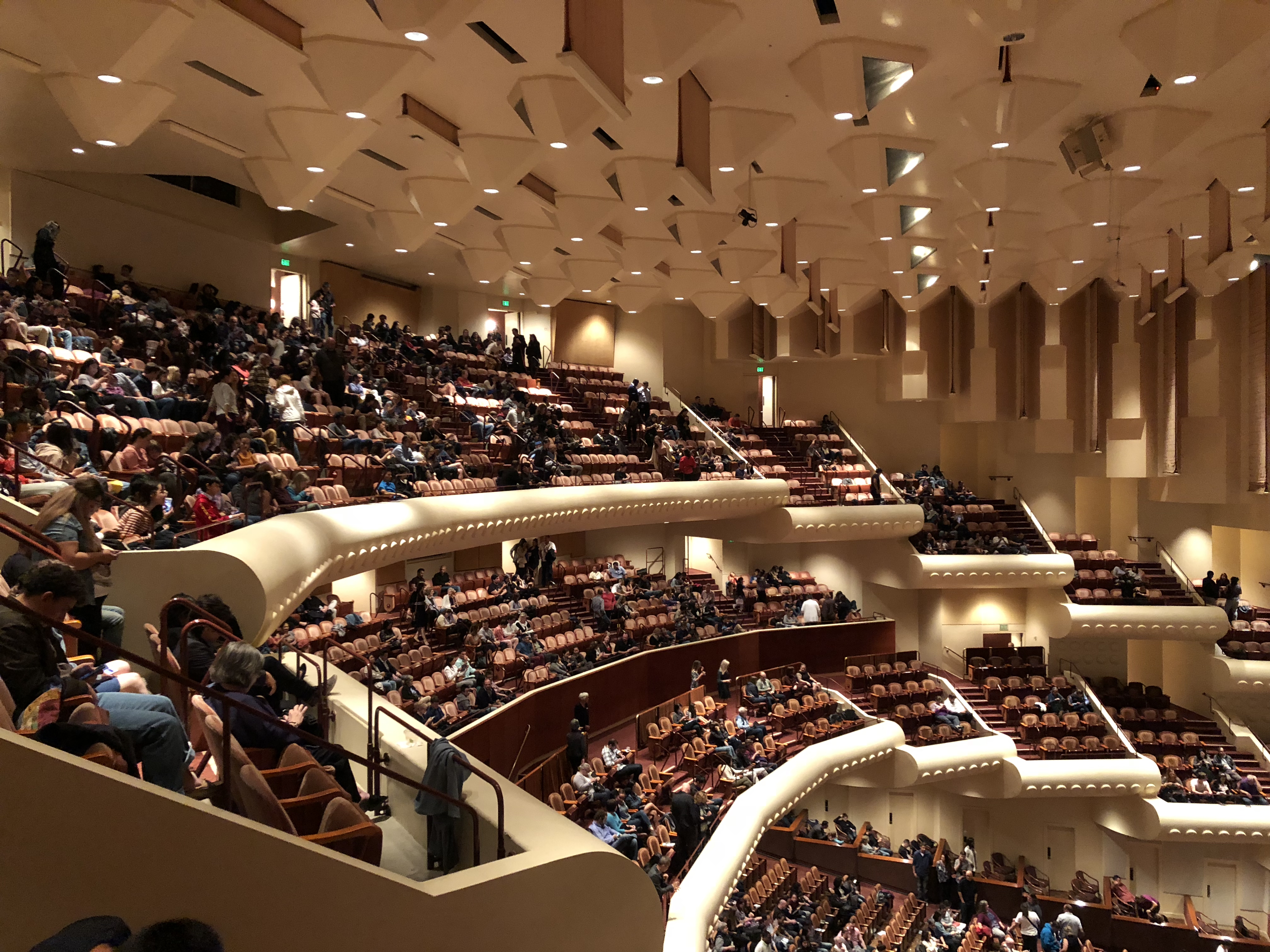
San Francisco Symphony
In 1999, the San Francisco Symphony recorded an album with Metallica. It reached number two on the Billboard 200, sold 2.5 million copies, and earned five times platinum certification. The collaboration was not a gimmick -- it was a characteristically bold move by an orchestra that had spent nearly a century refusing to be predictable. Founded in 1911 with 60 musicians and 13 concerts in its first season, the San Francisco Symphony has survived bankruptcy, the Great Depression, contentious music directors, and the constant challenge of keeping classical music relevant in a city that tends to worship the new. It has won 17 Grammy Awards, recorded with Deutsche Grammophon and RCA Victor, and been the first American symphony orchestra to broadcast on radio.
Depression, Bond Measures, and Survival
The early years were precarious. Henry Kimball Hadley led the first concerts in 1911 at the Cort Theater on Ellis Street. Alfred Hertz succeeded him in 1915, securing recording sessions with the Victor Talking Machine Company and launching radio broadcasts in 1926 on the NBC Pacific Network -- the first symphonic radio broadcasts in America. Standard Oil of California, which paid the orchestra's debts in exchange for broadcast rights, kept the orchestra alive during a period when bankruptcy loomed. But the Great Depression proved nearly fatal. The 1934-35 season was cancelled outright. In a remarkable act of civic commitment, the people of San Francisco passed a bond measure to provide public financing and ensure the orchestra's survival. Pierre Monteux, hired to restore the ensemble, succeeded so thoroughly that NBC began broadcasting concerts nationally and RCA Victor offered a new recording contract in 1941.
The Conductors Who Shaped the Sound
Each music director remade the orchestra in his image. Josef Krips, arriving in 1963, was a benevolent autocrat who would not tolerate sloppy playing and refused to record until the musicians were ready. Seiji Ozawa, beginning in 1970, convinced Deutsche Grammophon to record the orchestra and introduced staged opera performances and dance into symphonic programming. Edo de Waart led the move into the newly constructed Louise M. Davies Symphony Hall in 1980 and oversaw the orchestra's first digital recording sessions. Herbert Blomstedt, arriving in 1985, pushed for a major acoustical renovation of Davies Hall -- contributing his own money to the cause -- and built the orchestra's international reputation through complete recorded cycles of Nielsen and Sibelius symphonies on the Decca label.
The Michael Tilson Thomas Era
Michael Tilson Thomas became music director in 1995 and stayed for 25 years, the longest tenure in the orchestra's history. Under his leadership, the SFS completed a landmark cycle of all nine Mahler symphonies on its own label, SFS Media, winning seven Grammy Awards. Thomas championed American composers -- Ives, Copland, Gershwin -- and premiered works that won the Pulitzer Prize for Music, including Henry Brant's Ice Field in 2001. In 2014, Thomas led the first-ever concert performances of Leonard Bernstein's complete West Side Story score with a Broadway cast. The Metallica collaboration, S&M, was a product of this era's adventurous programming. When Thomas concluded his tenure in 2020, he had transformed the SFS from a fine regional orchestra into one with a genuinely distinctive identity.
The Ongoing Concert
Esa-Pekka Salonen took over as music director in 2020, bringing the interpretive precision that had defined his years with the Los Angeles Philharmonic. His departure in 2025, citing disagreements with the Board of Governors about the institution's future direction, opened yet another chapter. The orchestra, now resident at Davies Symphony Hall with its Fratelli Ruffatti organ of 9,235 pipes and 147 registers, continues to balance classical tradition with the kind of unexpected programming that made an album with a heavy metal band seem entirely natural. Saint-Saens conducted the orchestra in 1915. George Gershwin played his Rhapsody in Blue with Monteux in 1937. Stravinsky guest-conducted periodically from 1937 to 1967. The San Francisco Symphony has always been an orchestra that invites the unexpected through the stage door.
From the Air
Louise M. Davies Symphony Hall is at 37.78N, -122.42W, on Van Ness Avenue at Grove Street, adjacent to the War Memorial Opera House in San Francisco's Civic Center. The distinctive curved glass facade of Davies Hall is visible from the air. The Civic Center complex, including City Hall's dome, provides a clear visual landmark. Nearest airports: KSFO 11nm south, KOAK 9nm east.