San Jose Diridon Station
Alfred Hitchcock needed a train station for the opening scene of Marnie in 1964. He chose San Jose's Cahill Depot, dressing it up to stand in for Hartford, Connecticut. The deception worked because the building looks like it belongs somewhere older and grander than the edge of an industrial district in the Santa Clara Valley. With its three-story central pavilion, tapestry brick walls in English bond, and flanking two-story wings, the station has the quiet authority of a building designed to outlast the era that built it. It has.
Thirty Years in the Making
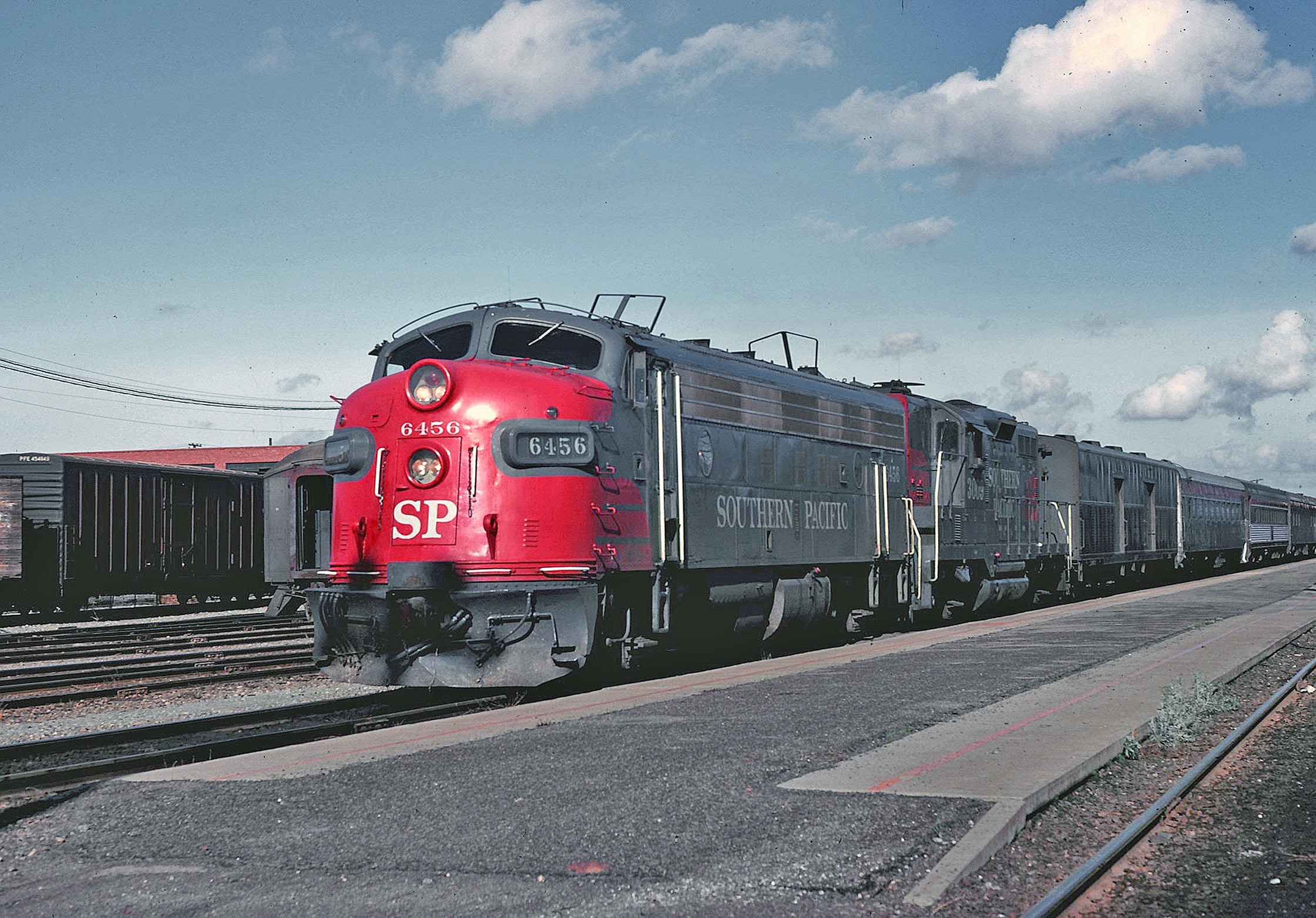
A rail station first appeared at this spot in 1878, when the narrow-gauge South Pacific Coast Railroad opened a depot. Southern Pacific took control in 1887 and folded it into their system as the West San Jose Depot. But the real transformation took three decades. The downtown rail corridor along Fourth Street had become dangerously congested, and the city spent years negotiating to relocate 4.5 miles of the Coast Line to the eastern edge of Willow Glen. The new depot finally opened in December 1935, designed by Southern Pacific architect John H. Christie. Christie had remodeled the Fresno depot in 1915 and would later contribute to Union Station in Los Angeles in 1939. His San Jose station is one of only four Italian Renaissance Revival depots in California, and the largest surviving depot on the San Francisco-San Jose line.
The Crossroads of Silicon Valley
Diridon is less a single station than a transit ecosystem. Caltrain uses it as its southern anchor for express and limited service. The Altamont Corridor Express terminates here, connecting the Central Valley across the Altamont Pass. Amtrak's Capitol Corridor links San Jose to Sacramento, while the long-distance Coast Starlight stops on its run between Seattle and Los Angeles. VTA light rail arrived in 2005, when the Vasona extension opened, and a bus plaza on the north side serves Greyhound, Amtrak Thruway, Santa Cruz METRO's Highway 17 Express, and multiple VTA routes. Named after former Santa Clara County Supervisor Rod Diridon Sr., the station is listed on the National Register of Historic Places, a distinction that makes its ongoing reinvention a careful negotiation between preservation and progress.
Brick and Steel
The building itself is a study in materials. Christie designed the central section around steel columns and trusses, giving the 40-by-80-foot waiting room its 33-foot ceiling height. The side wings are simpler, framed in wood. Outside, the walls are clad in tapestry brick of varied colors arranged in English bond, a pattern more common in Virginia colonial architecture than in a California railroad depot. At 390 feet long, the building stretches across the landscape like a procession of connected volumes, each section a different width. Vernacular sheds, a water tower, butterfly passenger sheds, and the nearby Alameda underpass all contribute to the station's listing as a historic district. The only other California depots of comparable scale from the 1930s are the Los Angeles Union Passenger Terminal and Stockton's Cabral Station.
A Hub Still Becoming
The station's most dramatic chapter may be ahead. California High-Speed Rail has designated Diridon as a stop on the planned line connecting San Francisco to Los Angeles. BART's Silicon Valley extension will bring Green and Orange Line metro service to a new underground station projected for 2036, placing Diridon between the planned Santa Clara and Downtown San Jose BART stops. Since 2019, four agencies -- CHSRA, VTA, Caltrain, and the City of San Jose -- have held public workshops to hammer out a Diridon Integrated Station Concept Plan, grappling with how to rebuild an 88-year-old station into a node that can handle intercity rail, commuter trains, light rail, rapid transit, buses, and high-speed rail simultaneously.
The Station That Played a Role
Hitchcock's decision to use Diridon as a film location was not a coincidence. The station's Italian Renaissance formality gives it a timelessness that directors find useful and commuters take for granted. Passengers rushing to catch a Caltrain may not notice the proportions Christie labored over, or the way the high waiting room catches the morning light through its upper windows. But the building was designed for exactly this kind of absent-minded appreciation -- a station that feels permanent, dignified, and slightly more important than the trips it facilitates. In a valley that tears down and rebuilds with restless speed, Diridon endures, gathering new rail lines the way old trees gather rings.
From the Air
Located at 37.330N, 121.902W in western downtown San Jose. The long roofline of the Italian Renaissance Revival depot is visible along Cahill Street near the intersection with Santa Clara Street. The rail yard and multiple track alignments make the station complex identifiable from altitude. Nearest airports: San Jose International (KSJC) approximately 1.5 nm north, Reid-Hillview (KRHV) approximately 6 nm east, Moffett Federal Airfield (KNUQ) approximately 7 nm northwest. Best viewed at 2,000-4,000 ft AGL.