San Juan Bautista (ship)
It took 800 shipwrights, 700 smiths, and 3,000 carpenters exactly 45 days to build a ship that would carry samurai to the Pope. The San Juan Bautista -- named for St. John the Baptist, built in the style of a Spanish galleon -- launched from the harbor of Tsuki-No-Ura in Ishinomaki in 1613. She was one of Japan's first Western-style sailing ships, a product of the brief and remarkable moment when feudal Japan looked outward across the Pacific. Her mission: to deliver 180 people, including samurai diplomats, to the court of Pope Paul V in Rome. The voyage would span oceans, empires, and years. And it would end in heartbreak.
A Warlord's Ambition
Date Masamune, the powerful daimyo of Sendai, commissioned the San Juan Bautista with approval from the Bakufu -- the shogun's government in Edo. The project reflected Japan's brief fascination with Western maritime technology. The shogun had already commissioned ships from the English pilot William Adams, and issued numerous permits for Red Seal ships incorporating Western design elements for Asian trade. But Masamune's ambitions ran larger. He wanted to open direct trade with New Spain and establish diplomatic relations with the Vatican. The ship was built with the help of two Spaniards: the friar Luis Sotelo, who would serve as the embassy's spiritual guide, and Captain Sebastian Vizcaino, who brought naval expertise. The Spanish government in Manila watched the project with unease, worried about Japanese shipbuilding capabilities growing beyond their control.
The Samurai Who Sailed to Rome
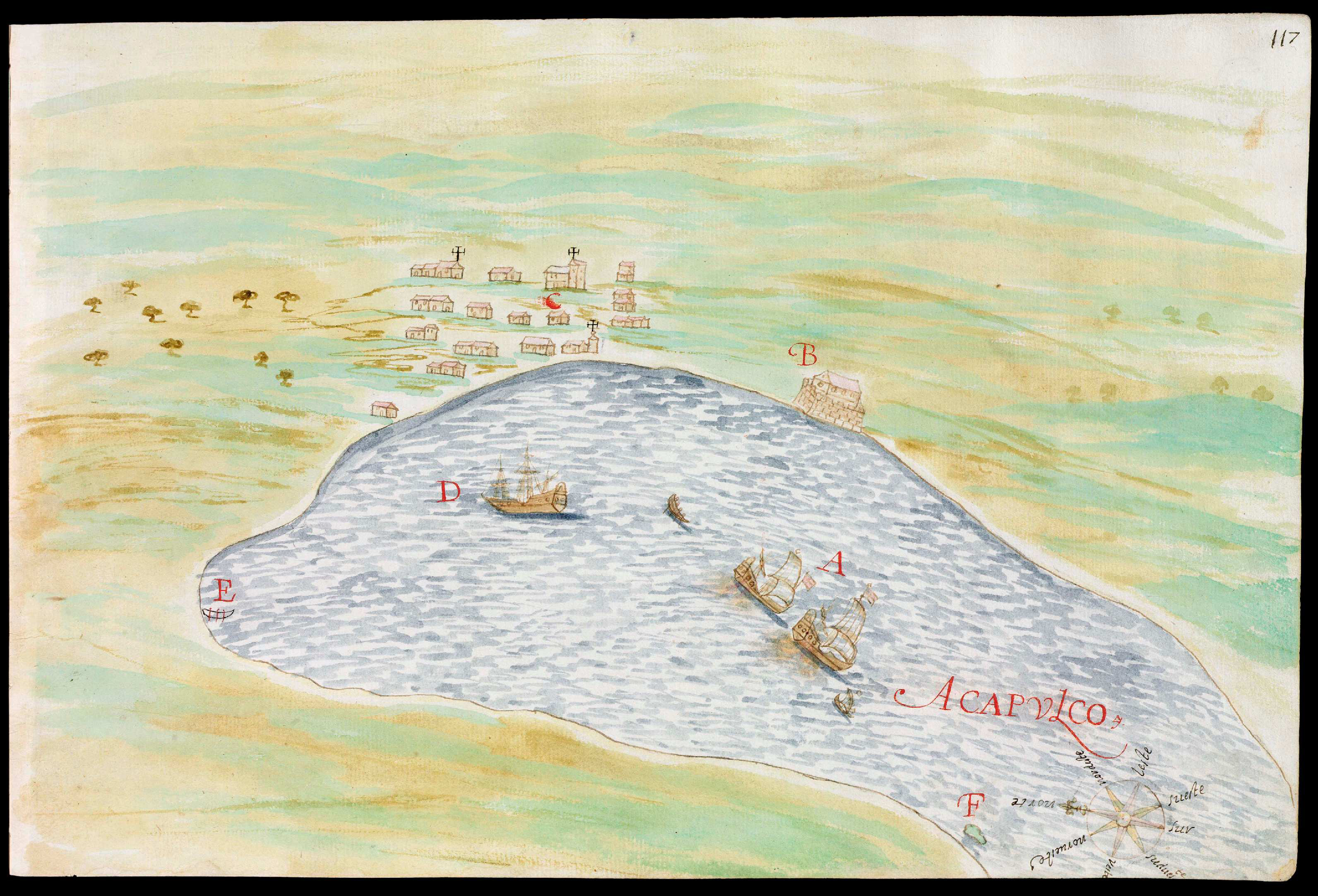
On October 28, 1613, the San Juan Bautista departed Ishinomaki carrying an extraordinary cargo: 10 samurai of the shogun led by the Minister of the Navy Mukai Shogen Tadakatsu, 12 samurai from Sendai, 120 Japanese merchants and sailors, and around 40 Spaniards and Portuguese. Leading this diplomatic mission was Hasekura Tsunenaga, a samurai retainer of Date Masamune who would become the first Japanese ambassador to the Americas and Spain. After three months crossing the Pacific, the ship reached Acapulco on January 25, 1614. Hasekura continued overland and eventually by ship to Spain and then to Rome, where he was received by Pope Paul V. The Pope, however, gave no definitive answer to the embassy's requests for trade agreements and missionaries.
Two Crossings, Then Silence
The San Juan Bautista made the Pacific crossing twice. After delivering the embassy to Acapulco, she returned to Japan in 1615, carrying about 50 Spanish mining specialists invited to develop silver mines in the Sendai region, along with a group of Franciscan friars. In September 1616, the ship headed to Acapulco a second time under Captain Yokozawa Shogen, but the voyage went badly -- around 100 sailors died en route before the ship limped into port in May 1617. After one final leg to the Philippines in April 1618, the San Juan Bautista was sold to the Spanish government there to build up defenses against the Dutch. Her sailing days were over. Hasekura finally returned to Japan in 1620 to find a nation transforming. Christianity was being systematically eradicated, and Japan was sealing itself off from the outside world. The trade agreements he had spent years pursuing were denied. He died two years later.
A Replica and a Tsunami
In 1993, a full-size replica of the San Juan Bautista was reconstructed in Ishinomaki based on surviving records from the House of Date. Though the original blueprints were lost, the ship's dimensions had been carefully documented, allowing a faithful reconstruction. The replica was displayed in a theme park near the site where the original was built, becoming a symbol of the region's maritime heritage. When the 2011 Tohoku earthquake and tsunami devastated Ishinomaki, the replica survived with damage. Hopes rose that the ship might serve as a symbol of the city's reconstruction. British Columbia lumber companies donated massive logs for new masts, and the ship was rededicated in November 2013. But the damage from floodwater ultimately proved too severe. The Miyagi prefectural government decided to demolish the replica rather than continue repairs. Dismantling began in November 2021, with plans for a smaller replacement built from fibre-reinforced plastic.
Echoes Across the Pacific
The San Juan Bautista's legacy reaches further than its wooden hull ever could. In the Spanish town of Coria del Rio, near Seville, roughly 650 residents carry the surname Japon -- descendants, they believe, of members of Hasekura's delegation who remained in Spain rather than return to a Japan that was closing its doors to Christianity and foreign contact. The ship itself represented something fleeting: a moment when Japanese feudal lords imagined global partnerships, when samurai and friars shared deck space, and when a galleon built by thousands of Japanese craftsmen could cross the Pacific carrying diplomats to the Pope. That window closed within years of the San Juan Bautista's final voyage, not to reopen for more than two centuries.
From the Air
Located at 38.41°N, 141.37°E in Ishinomaki, Miyagi Prefecture, along the coast of northeastern Japan. The original harbor of Tsuki-No-Ura where the ship was built is visible along the coastline. The nearest military airfield is JASDF Matsushima Air Base (RJST), approximately 15 km to the south. Sendai Airport (RJSS) is about 65 km to the southwest. From the air, Ishinomaki's harbor and the Kitakami River delta are prominent landmarks. The site of the former San Juan Bautista theme park sits along the coast near the Oshika Peninsula. The rebuilt city of Ishinomaki, reconstructed after the 2011 tsunami, is visible stretching along the bay.