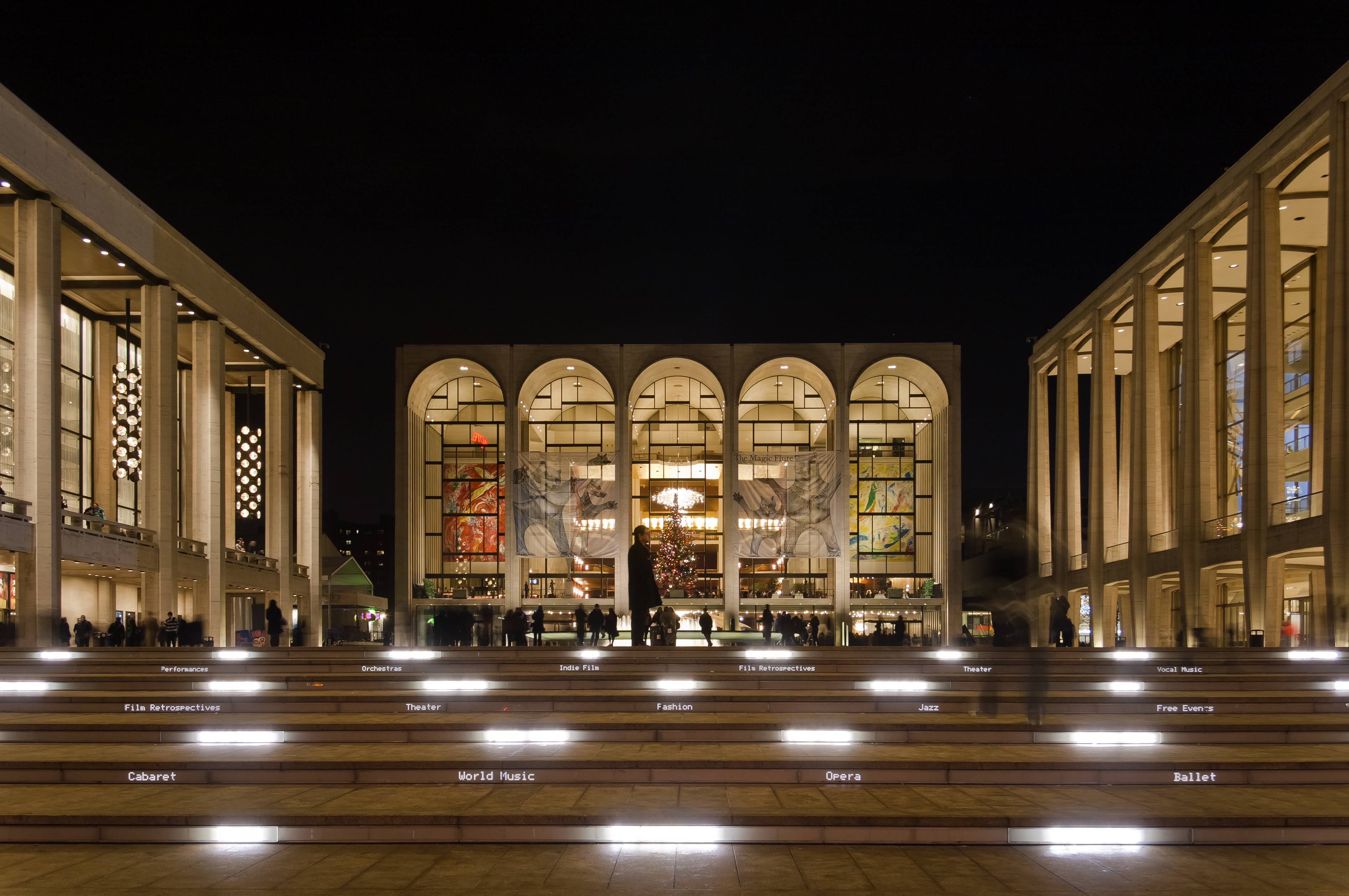
San Juan Hill, Manhattan
Before there was Harlem, there was San Juan Hill. In the basement clubs beneath the tenements between 59th and 65th streets on Manhattan's Upper West Side, jazz pianists invented the stride technique, dancers kicked the Charleston into existence, and a young Thelonious Monk grew up listening to it all from the Phipps Houses on West 63rd Street. By the 1950s, the neighborhood was gone -- bulldozed for Lincoln Center, its 17,000 residents scattered across the city. Today, the New York Philharmonic performs where families once hung laundry between fire escapes, and the Metropolitan Opera stands on ground where poolrooms and dance halls once thrummed with life.
The Jungles
The neighborhood's origins trace to the 1880s and 1890s, when African-American churches began establishing themselves in the blocks west of Amsterdam Avenue. The name "San Juan Hill" may have honored Black veterans of the Spanish-American War of 1898, or it may have referenced the fierce street battles between African-American and Irish-American gangs -- accounts differ. What is certain is that by the early twentieth century, San Juan Hill was one of the largest Black communities in New York, a dense, lively neighborhood also called "The Jungles." The Jungle Cafe, a tenement basement club, became a crucible for jazz. Pianist James P. Johnson, who moved to the neighborhood in 1908, pioneered the stride piano style here. His composition "Charleston" would define the Roaring Twenties. Willie "The Lion" Smith and Luckey Roberts were fellow stride innovators, all working within a few blocks of each other.
A Neighborhood of Many Peoples
San Juan Hill was never just one community. Between 1910 and the 1950s, a Japanese American enclave of 2,000 to 5,000 residents coexisted alongside African-American and Puerto Rican families. Many were bachelor issei drawn by affordable rents in a neighborhood where redlining excluded them from other parts of the city. During World War II, some Japanese Americans from the area were imprisoned on Ellis Island. After the war, nearly 3,000 Japanese Americans leaving internment camps resettled in San Juan Hill, joined by veterans of the decorated 442nd Regimental Combat Team. Puerto Rican families arrived in growing numbers through the 1950s, part of the massive postwar migration wave. The historian Arturo Schomburg -- whose name now graces the Schomburg Center for Research in Black Culture -- lived here with his first wife and three sons. Barbara Hillary, who would become the first African-American woman to reach both the North and South Poles, was born in these blocks.
The Wrecking Ball
In the 1940s, the New York City Housing Authority designated San Juan Hill "the worst slum district of New York City." The label sealed the neighborhood's fate. Robert Moses, the master builder who reshaped New York through highways and public works, struck a deal with the Metropolitan Opera in 1955 to develop the blocks north of Columbus Circle into a performing arts campus. What followed was a textbook case of mid-century urban renewal: the city condemned the buildings, dispersed the residents, and razed the neighborhood almost entirely. Over 17,000 people lost their homes. Fordham University, the New York Philharmonic, and the Juilliard School joined the Met in building Lincoln Center on the cleared land. The demolition was so thorough that many New Yorkers today have no idea a neighborhood ever existed on the site.
Echoes in the Rubble
The destruction of San Juan Hill left cultural traces in unexpected places. In 1961, the film crew for West Side Story shot on location among the condemned buildings, capturing real debris and half-demolished tenements as backdrop for the musical's story of gang rivalry and doomed love. Steven Spielberg's 2021 remake made the impending construction of Lincoln Center a major plot point, giving the vanished neighborhood a narrative presence it had been denied for decades. Jazz at Lincoln Center, housed in the complex that replaced the Jungle Cafe's neighborhood, continues the musical tradition -- whether its audiences know it or not. Filmmaker Stanley Nelson Jr. documented the full story in his 2024 film San Juan Hill: Manhattan's Lost Neighborhood, premiering, with pointed symbolism, at Lincoln Center itself.
A Belated Reckoning
On October 8, 2022, David Geffen Hall reopened with an explicit tribute to San Juan Hill. "Before there were seats here, there were streets here," the ceremony acknowledged. A portion of a street in the area now bears Thelonious Monk's name, honoring the jazz giant who grew up in the Phipps Houses and whose angular, unpredictable piano style seemed to carry the neighborhood's restless energy. The reckoning is incomplete -- no plaque can replace a community, and the families displaced to Harlem, the Bronx, and beyond did not get to choose whether their sacrifice served the arts. But the act of remembering matters. Lincoln Center's 16.3-acre campus of marble and travertine sits on ground that once held something equally vital: a neighborhood where people made lives, made music, and made history.
From the Air
Located at 40.77N, 73.99W on Manhattan's Upper West Side. Lincoln Center, which replaced the neighborhood, is visible from altitude as a large institutional campus between 62nd and 66th Streets, west of Broadway. Nearby landmarks include Central Park (immediately east), the Hudson River (west), and Columbus Circle. Closest airports: LaGuardia (KLGA, 8 nm northeast), JFK International (KJFK, 14 nm southeast), Teterboro (KTEB, 10 nm northwest). Best viewed at 2,000-3,000 ft AGL.