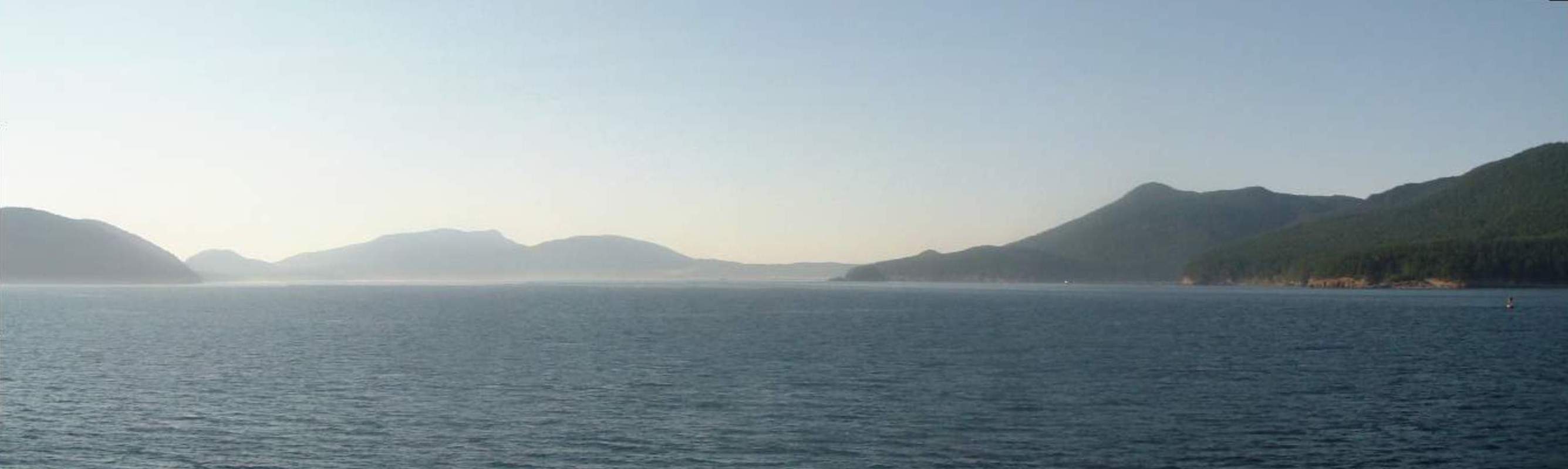
San Juan Islands
The ferry threads between forested islands, each one an emerald mound rising from waters that shimmer silver in the afternoon light. Seals watch from rocky outcrops. Bald eagles spiral overhead. And somewhere in these protected passages, a pod of orcas is hunting salmon, their distinctive black fins slicing the surface in a sight that has made the San Juan Islands famous among whale watchers worldwide. This archipelago of 172 named islands (and hundreds more rocks and reefs) occupies the waters where Puget Sound meets the Strait of Georgia, where the US-Canada border threads invisibly through passages that feel timeless. Here, communities of artists and retirees, fishermen and farmers, have chosen island life - slower, quieter, connected to the mainland only by ferry or floatplane.
The Resident Orcas
The Southern Resident orcas call these waters home. Three pods - J, K, and L - have hunted Chinook salmon through the San Juan passages for centuries, their family lines documented by researchers who can identify each whale by the unique markings on their dorsal fins. In spring and summer, the orcas gather in the channels between the islands, often visible from shore at Lime Kiln Point State Park - arguably the best land-based whale watching spot in the world.
Watching orcas breach is extraordinary, but understanding them transforms the experience. These are not random animals passing through. They're families, grandmothers teaching grandchildren the hunting routes their ancestors knew, mothers keeping calves close for years after birth. The population has declined as salmon runs have dwindled, making each sighting both a privilege and a reminder of what's at stake in these waters.
Island Hopping
Four major islands anchor the archipelago, each with its own character. San Juan Island is the most developed, home to Friday Harbor - a town of galleries, restaurants, and the ferry terminal that serves as the islands' connection to the mainland. Orcas Island, the largest, is also the most dramatic: Mount Constitution rises 2,409 feet from its center, offering views that sweep from Mount Baker to Mount Rainier on clear days.
Lopez Island is the cyclists' favorite - flatter, gentler, with quiet roads winding past farms where honor-system stands sell eggs and produce. Shaw Island, the smallest served by ferry, remains genuinely rural: the general store is run by Franciscan nuns, and visitors are few. The ferry itself is part of the experience, its route weaving between islands, offering views that change with every turn.
The Pig War Remembered
In 1859, the United States and Great Britain nearly went to war over a pig. A British-owned pig rooted in an American settler's garden on San Juan Island; the settler shot it; diplomats got involved; and for twelve years, both nations maintained military camps on opposite ends of the island while they negotiated the boundary. No shots were fired after the pig's demise. The camps became oddly friendly, officers sharing meals and celebrating each other's holidays.
Today, San Juan Island National Historical Park preserves both camps. American Camp holds lonely prairie and spectacular shoreline on the island's south end. British Camp, on the north, retains its formal English garden and white-painted buildings in a protected harbor. The absurdity of the conflict and the grace of its resolution offer a model rarely matched in border disputes - all commemorated because one pig wandered into the wrong garden.
Water Life
The San Juan Islands are for people who love being on the water. Sea kayakers glide through bioluminescent waters on summer nights, paddles trailing sparks of green light. Sailboats crowd the harbors in July, their crews drawn by reliable afternoon breezes and protected anchorages. Fishing boats pursue salmon and Dungeness crab. And the ferries - always the ferries - churn between islands on routes that feel less like transportation than ritual.
The tide pools at low water reveal universes in miniature: purple sea urchins, orange sea stars, anemones that close like fists when touched. Harbor seals haul out on rocks, their spotted coats blending with barnacles. Great blue herons stand motionless in shallows, waiting for fish. Even the driftwood tells stories - massive logs from the great forests upstream, washed to sea and deposited on beaches where they bleach silver in the salt air.
Island Time
The ferry schedule rules everything. Miss the last boat and you're staying the night - there's no bridge, no causeway, no option but patience. This enforced slowness shapes island culture. Artists thrive here, drawn by the light and the pace. Farmers work small plots, selling at Saturday markets. Retirees read on porches overlooking the water. The pace is deliberate, unhurried, connected to tides and seasons rather than schedules and deadlines.
Summer brings crowds - day-trippers from Seattle, kayakers, families on vacation - but even at peak season, the islands feel uncrowded compared to the mainland. And in the off-season, when rain curtains the views and ferries run half-empty, the islands belong to their permanent residents, the artists and dreamers and escapees who chose to live where land meets sea and time moves differently.
From the Air
Located at 48.57°N, 122.96°W in the Salish Sea between Puget Sound and the Strait of Georgia. The archipelago appears as dozens of dark green forested islands scattered across the water. San Juan Island and Orcas Island are the largest; Mount Constitution on Orcas is the highest point (2,409 ft) with a distinctive stone tower at the summit. Friday Harbor on San Juan Island shows as a small developed area with ferry terminal. The international border with Canada runs through Haro Strait to the west. Anacortes Ferry Terminal on the mainland is the main connection point. Float plane traffic is common. Nearest airports: Anacortes (74S), Bellingham International (KBLI) 25nm north, Friday Harbor Seaplane Base (W33). Weather is often better in the islands than on the mainland due to the Olympic rain shadow.