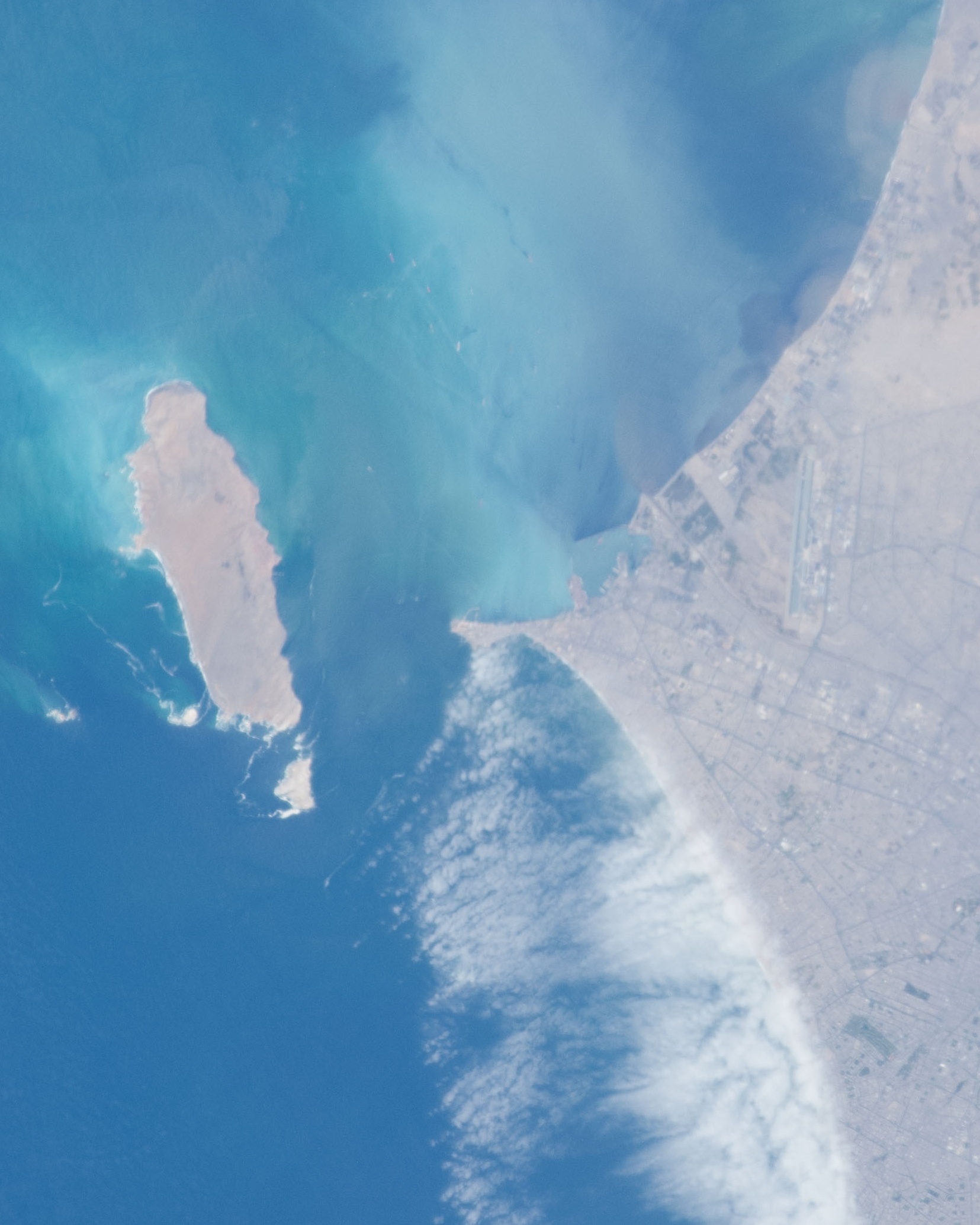
San Lorenzo Island (Peru)
There is no fresh water on San Lorenzo Island. There never has been. And yet, for at least a thousand years, people have been drawn to this barren, wind-scoured rock off the coast of Callao. The ancient Peruvians carried their dead across the channel called El Boqueron and buried them here, because in the mythology of the central coast, offshore islands belonged to the afterlife. Pirates anchored in its lee to raid the mainland. Charles Darwin walked its slopes and studied its geology. Dictators locked their enemies in its naval base. At 16.48 square kilometers, San Lorenzo is the largest island in Peru -- and one of the most storied places no one has ever called home.
An Island for the Dead
The earliest visitors to San Lorenzo came not to live but to bury. In the cosmology of Peru's central coast, islands were thresholds between the living world and whatever lay beyond it. The island's southern tip became a necropolis. Between 1906 and 1907, German archaeologist Max Uhle excavated the Caleta de la Cruz site there, unearthing metal objects and funerary bundles dating to the Late Intermediate Period and Late Horizon -- roughly 900 to 1532 AD. The finds confirmed that people from the mainland had been making the crossing for centuries, carrying offerings for the dead to a place the living never settled. In 2010, Peru's National Institute of Culture declared twenty archaeological sites on the island as Cultural Heritage of the Nation, protecting a landscape that has served as a burial ground far longer than it has served any other purpose.
Pirates, Quarries, and a Dutch Admiral's Grave
During the Viceroyalty of Peru, San Lorenzo became useful in more earthly ways. Stone quarried from the island built the Real Felipe Fortress at Callao and the Presidio that guarded the port. But the same sheltered waters that made the island a convenient quarry also made it a staging ground for raiders. Francis Drake anchored here during his circumnavigation in the 1570s. The Dutch admiral Jacques L'Hermite used it as a base for his 1624 blockade of Callao -- and never left. He died of dysentery on the island and was buried there alongside several of his crew. It is one of history's small ironies that a man who crossed the Atlantic to plunder Peru ended up interred on a waterless island within sight of the treasure he could not take.
Darwin's Visit and the Wars That Followed
In 1835, Charles Darwin landed on San Lorenzo during the voyage of HMS Beagle, drawn by the island's exposed geological strata and sparse wildlife. His observations contributed to the broader picture of South American geology he was assembling -- though the Galapagos, visited later that year, would overshadow this stop in the public imagination. Three decades later, the island played a grimmer role. After the Battle of Callao on May 2, 1866, during the Chincha Islands War, the Spanish Navy retreated to San Lorenzo to repair damaged ships and bury their dead before withdrawing from the Peruvian coast entirely. The island had become what it would remain: a place people came to when they had nowhere else to go.
Prison Without Walls
San Lorenzo's most recent chapter began in the early 1990s, during Peru's internal conflict against the Maoist Shining Path and the Tupac Amaru Revolutionary Movement. The naval base on the island was converted into a temporary high-security prison for captured insurgent leaders, including Abimael Guzman, the founder of Shining Path, and Victor Polay, who led the MRTA. The logic was ancient and obvious: an island with no fresh water, surrounded by cold Pacific currents, needed no walls. The prisoners were held there while permanent maximum-security facilities were built on the mainland. Today, the naval base remains the island's only active installation. San Lorenzo sits in the Pacific just off Callao, visible from Lima's coastline, near the Palomino Islands and their colonies of sea lions. Plans have surfaced repeatedly over the past century to connect the island to the mainland -- a dike proposed by President Guillermo Billinghurst in 1912, studies by Dutch and Danish engineering firms in 1914 and 1958 -- but none have been realized. The island remains what geography made it: isolated, uninhabited, and quietly accumulating history.
From the Air
San Lorenzo Island is located at 12.09S, 77.22W, approximately 5 km off the coast of Callao in the Pacific. The island is 8 km long and 2.2 km wide, rising to 396 meters at Cerro La Mina. Best viewed from 2,000-3,000 feet AGL approaching from the east, where the island's profile stands out against the open ocean. Jorge Chavez International Airport (SPJC) is approximately 8 nm to the northeast. The Palomino Islands and El Fronton are visible nearby.