San Mateo County History Museum
Look up when you walk into the San Mateo County History Museum in downtown Redwood City. Above you rises a stained-glass dome thought to be the largest of its kind on the West Coast, a relic of the City Beautiful Movement that swept American architecture between 1893 and 1920. The building was constructed in 1910 as the San Mateo County Superior Court, and its courtroom grandeur now frames exhibits about grizzly bears, maritime history, and the California Dream of suburban life.
From Classroom to Courthouse
The San Mateo County Historical Association was founded in 1935. One of its early champions was Dr. Frank Stanger, a history professor at San Mateo Junior College, now the College of San Mateo. Through Stanger's efforts, the museum was founded in a college classroom in 1963. For 35 years, it operated from that academic setting before moving to its current home, the former courthouse, which opened as a museum on February 6, 1999. The move gave the museum the kind of space its collections deserved: approximately 420,000 items spanning two and three dimensions, from photographs and documents to tools and artifacts of Peninsula life.
Grizzlies, Ships, and Dreams
The permanent exhibitions weave together the strands of San Mateo County's identity. Nature's Bounty explores how the early people of the Peninsula used natural resources to support daily life and build San Francisco. Journey to Work traces how transportation transformed the county from frontier to suburb. Living the California Dream uses an object theater with lighting effects and video projection to trace the evolution of suburban life through artifacts. A 1999 exhibition about San Mateo County's grizzly bear history remains one of the museum's most memorable installations, reminding visitors that the state animal once roamed the same hills that now hold tract homes and shopping centers.
The Adobe and the Store
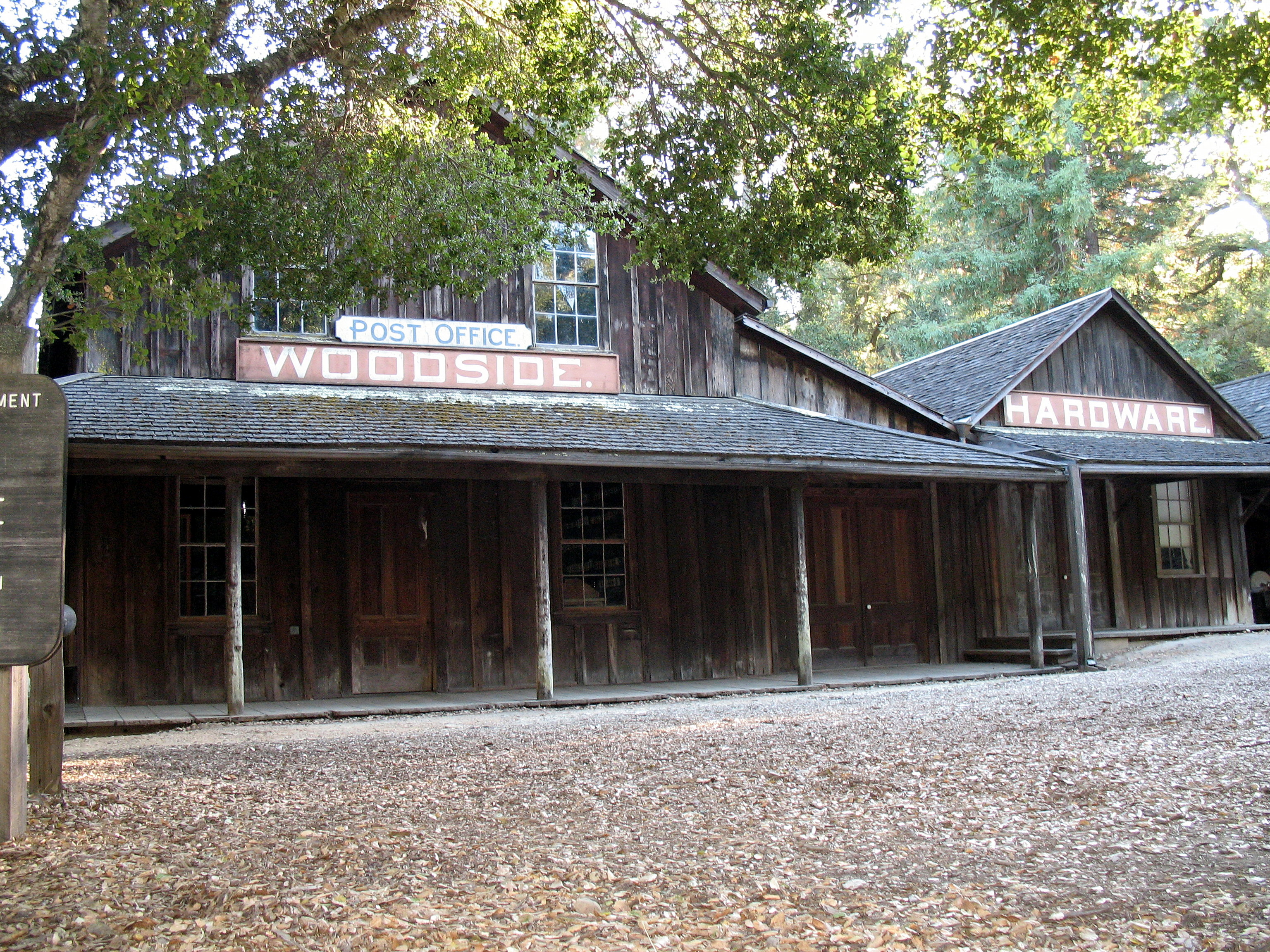
The Historical Association also operates two historic sites that extend the museum's story into the landscape. The Woodside Store, one of the earliest commercial buildings on the Peninsula, tells the story of frontier trade. The Sanchez Adobe, completed in 1846 by Francisco Sanchez, one-time alcalde of Yerba Buena, sits on a site of even deeper significance. During Native California times, the Aramai people established the village of Pruristac there. During the Spanish colonial period, it served as an agricultural outpost. Extensive archaeological investigations since 1978 have revealed layers of habitation stretching back centuries. In 2016, the association conducted school programs for nearly 20,000 children across its three locations.
From the Air
Located at 37.49°N, 122.23°W in downtown Redwood City. San Carlos Airport (KSQL) is approximately 2 miles west. The museum is housed in the former courthouse at Courthouse Square, identifiable from the air by its dome. The Caltrain corridor runs nearby, and the downtown Redwood City commercial grid provides orientation.