San Miguel del Bala
The name means Saint Michael of the Bullet -- bala in Spanish -- after a gap in the nearby mountain range that looks like a shot hole punched through rock. To reach San Miguel del Bala, you board a boat in the frontier town of Rurrenabaque and motor 45 minutes upstream on the Beni River, trading pavement and cell signal for the green walls of the Bolivian Amazon. At the end of the trip, 32 families are waiting. They are Tacana people, and they have done something remarkable: built and operated their own eco-lodge on the edge of Madidi National Park, one of the most biodiverse places on Earth, without surrendering control to outside investors.
A Lodge Built on Ownership
The San Miguel del Bala Eco-lodge was constructed by the community itself with support from NGOs including CARE, Conservation International, the United Nations Development Programme, and the Wildlife Conservation Society. Seven cabins with private bathrooms and electricity scatter through the forest, each with three beds custom-built extra long -- a thoughtful detail for tall travelers accustomed to South American mattresses that end at the shin. An eight-bed dormitory with shared bathrooms offers a budget option. The cabins are deliberately spaced apart, so guests fall asleep to the sound of insects and flowing water rather than neighboring conversations. In a traditional round-house, an interpretation center displays exhibits on Tacana culture and history. Every booking, every meal served, every guided walk feeds directly back into the community.
Into the Canopy and the Canyon
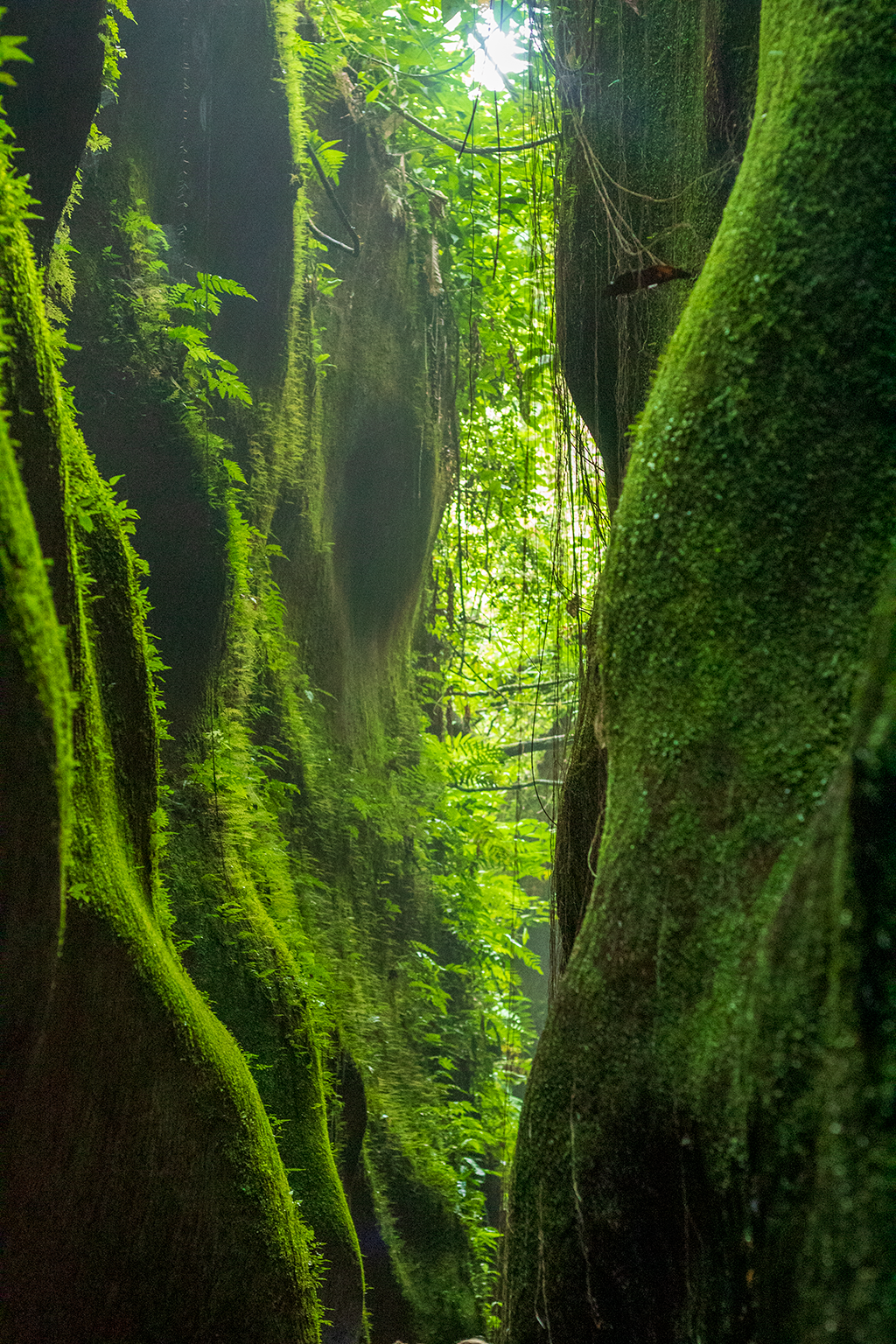
Trails radiate from the lodge into primary and secondary rainforest, each designed to teach something different. One path follows ancient Tacana hunting routes, where guides explain techniques passed down through generations. Another leads to a salitral -- a cave of mineral-rich earth that attracts tapirs, macaws, and other wildlife drawn to the salts. A third climbs to a viewpoint fifty meters above the canopy, where the Bala Gorge opens below and the Beni River curves between mountain ranges cloaked in unbroken green. Perhaps the most memorable trail threads through a 150-meter-long canyon, cool and dark, where the humidity hangs heavy enough for hummingbirds to build their nests on the rock walls. The lodge has expanded its reach with newly built cabins inside Madidi National Park along the Tuichi River, allowing guests to spend nights deeper in the wilderness.
Living with the Tacana
What sets San Miguel apart from conventional jungle lodges is the invitation to participate in daily life rather than simply observe scenery. Visitors can join a family in their home of palm leaves and bamboo, help process sugar cane into juice, work alongside farmers in the fields, or sit with artisans crafting handicrafts. Children become impromptu hosts, pulling visitors into games. Meals at the lodge restaurant double as cultural education -- guides explain how the Tacana prepare different foods from the forest and rivers, and which dishes are reserved for specific community events. The natural juices served at the bar are pressed from fruit picked in the surrounding jungle. It is tourism designed not to extract from a place but to share it.
At the Edge of Madidi
San Miguel del Bala sits just outside the boundaries of Madidi National Park, which is recognized as one of the most biologically diverse protected areas on the planet. The Beni River, wide and brown with sediment, serves as both highway and border. Upstream and downstream, the rainforest stretches unbroken toward the Andean foothills. Canoeing the river at dawn, when mist rises off the water and macaws cross overhead in pairs, the isolation feels total. Rurrenabaque, the nearest town, is accessible only by boat or by a small-aircraft flight from La Paz -- there is no road connection that qualifies as reliable. That remoteness has protected both the forest and the Tacana way of life, and the community's bet on eco-tourism suggests they intend to keep it that way.
From the Air
Located at approximately 14.51S, 67.49W on the west bank of the Beni River in Bolivia's La Paz Department, just outside Madidi National Park. From the air, the Beni River is the dominant feature -- a wide brown ribbon cutting through dense green rainforest. The Bala Gorge, a narrow gap in the mountain range, is a distinctive visual landmark. Rurrenabaque Airport (SLRU) is the nearest airstrip, served by small commercial flights from La Paz. The terrain rises sharply to the west toward the Andes. Best observed at 10,000-15,000 feet where the gorge and river confluence are clearly visible.