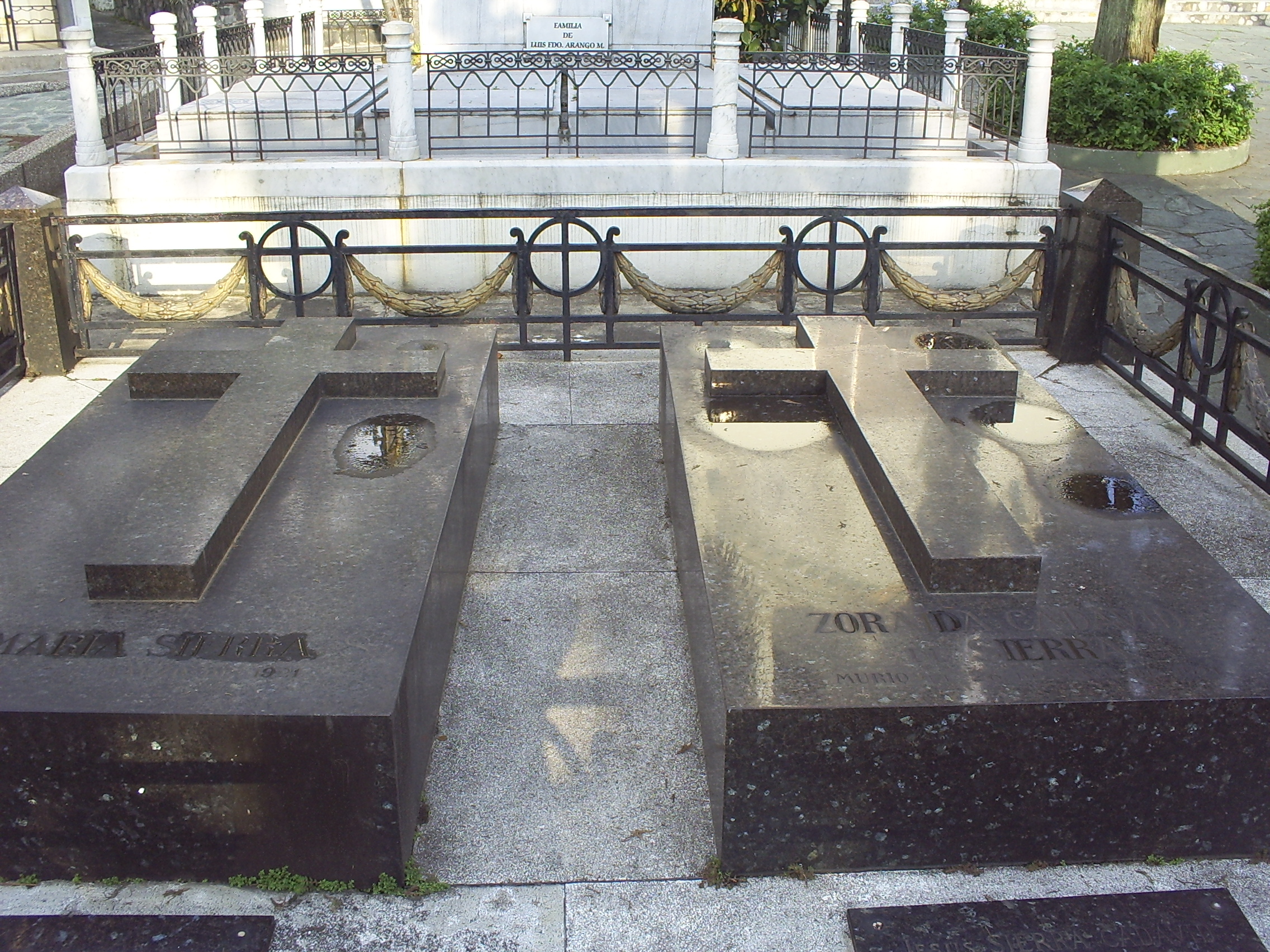
San Pedro Cemetery Museum
On full-moon nights, music drifts among the tombs. The Cementerio Museo de San Pedro in Medellin has been staging cultural events under moonlight since 2000, turning a 19th-century burial ground into something few cemeteries become: a place people visit not to mourn but to listen, watch, and remember. Founded in 1842 when Medellin was still a small town called La Candelaria with just 9,000 inhabitants, San Pedro was never an ordinary graveyard. It was built by the city's elite, filled with Carrara marble shipped from Pietrasanta, Italy, and designed to announce that Antioquia's leading families intended to leave monuments behind them.
A Cemetery for Ambition
On July 8, 1842, Pedro Uribe Restrepo called together the prominent families of the Villa de la Candelaria. The existing Cemetery of San Lorenzo, founded just fourteen years earlier in 1828, was too small and, frankly, too common for the commercial and political elite driving Medellin's transformation. They agreed to build a private cemetery worthy of their station. A plot of land on the ridge of El Llano -- today's Bolivar Street -- was purchased: 125 yards long by 200 yards wide. The deed was signed on September 30, 1842. Initially called the New Cemetery, or the Cemetery of San Vicente de Paul, the grounds took their current name in 1871. By then, the nickname had already stuck: the "white city," for the gleaming Carrara marble mausoleums that filled its pathways.
Marble Shipped Across the Atlantic
The marble came from Pietrasanta, Italy, the same Tuscan quarry town that supplied Michelangelo. Medellin's elite families commissioned sculptors to carve angels, saints, and classical figures, then shipped them across the Atlantic and up through the Colombian interior -- a journey that, in the mid-19th century, meant navigating the Magdalena River by steamboat before reaching the mountain valley. Each mausoleum was a declaration of wealth and permanence. Walking among them today, you encounter a compressed history of Colombian funerary art spanning nearly two centuries, from neoclassical restraint to ornate Victorian excess to the sober geometry of the 20th century.
The Architect Returns
In the 1920s, the cemetery underwent significant expansion. The Belgian architect Agustin Goovaerts -- the same man designing the Rafael Uribe Uribe Palace of Culture across town -- created San Pedro's chapel in 1925 and a monument to Camilo Restrepo in 1926. Goovaerts left his mark across Medellin during this decade, and finding his hand in both the city's grandest civic building and its most prestigious cemetery speaks to how completely the Belgian shaped Medellin's architectural identity. The first gallery, San Lorenzo, was built on the southwest side of the main courtyard, and its design became the template for subsequent gallery construction throughout the grounds.
Presidents, Poets, and Painters
The list of those interred at San Pedro reads like a syllabus in Colombian history. Mariano Ospina Rodriguez and Pedro Nel Ospina -- father and son, both presidents of Colombia -- rest here. So does Pedro Justo Berrio, the governor who consolidated Antioquia's power during the 19th-century civil wars. Jorge Isaacs, author of the foundational Colombian novel "Maria," is buried alongside Francisco Antonio Cano, the painter whose work defined Antioqueno visual identity. The sculptor Marco Tobon Mejia, the muralist Pedro Nel Gomez, the journalist Fidel Cano -- each tomb is a chapter. Together they map the network of families, rivalries, and ambitions that built modern Medellin from a mountain village into Colombia's second city.
From Decay to Living Museum
By the mid-1990s, the cemetery's monuments were deteriorating badly. Between 1996 and 1997, an investigation found that protective measures were urgently needed. In 1997, the institution Colcultura was petitioned to declare San Pedro a national monument, and the formal declaration followed in 1999. The cemetery was officially named a museum in 1998, and cultural programming expanded. The "Noche de Luna Llena" series, launched in 2000, brought theater, dance, and storytelling to the grounds under the full moon. More recently, the format has evolved into "Atardeceres en el Cementerio" -- Sunsets in the Cemetery -- held monthly. What began as a place to inter the powerful has become a space where the living come to encounter art among the dead, a transformation that the founding families, with their taste for grand gestures, might well have appreciated.
From the Air
Located at 6.2659N, 75.5614W in central Medellin, approximately 1.5 km north of the city center. The cemetery's white marble monuments and regular grid layout are visible from low altitude. Nearest airports: Olaya Herrera Airport (SKMD, 4 km south) and Jose Maria Cordova International Airport (SKRG, 20 km southeast). Best viewed at 2,000-4,000 feet AGL. The white marble creates a distinctive pale rectangle in the surrounding urban fabric.