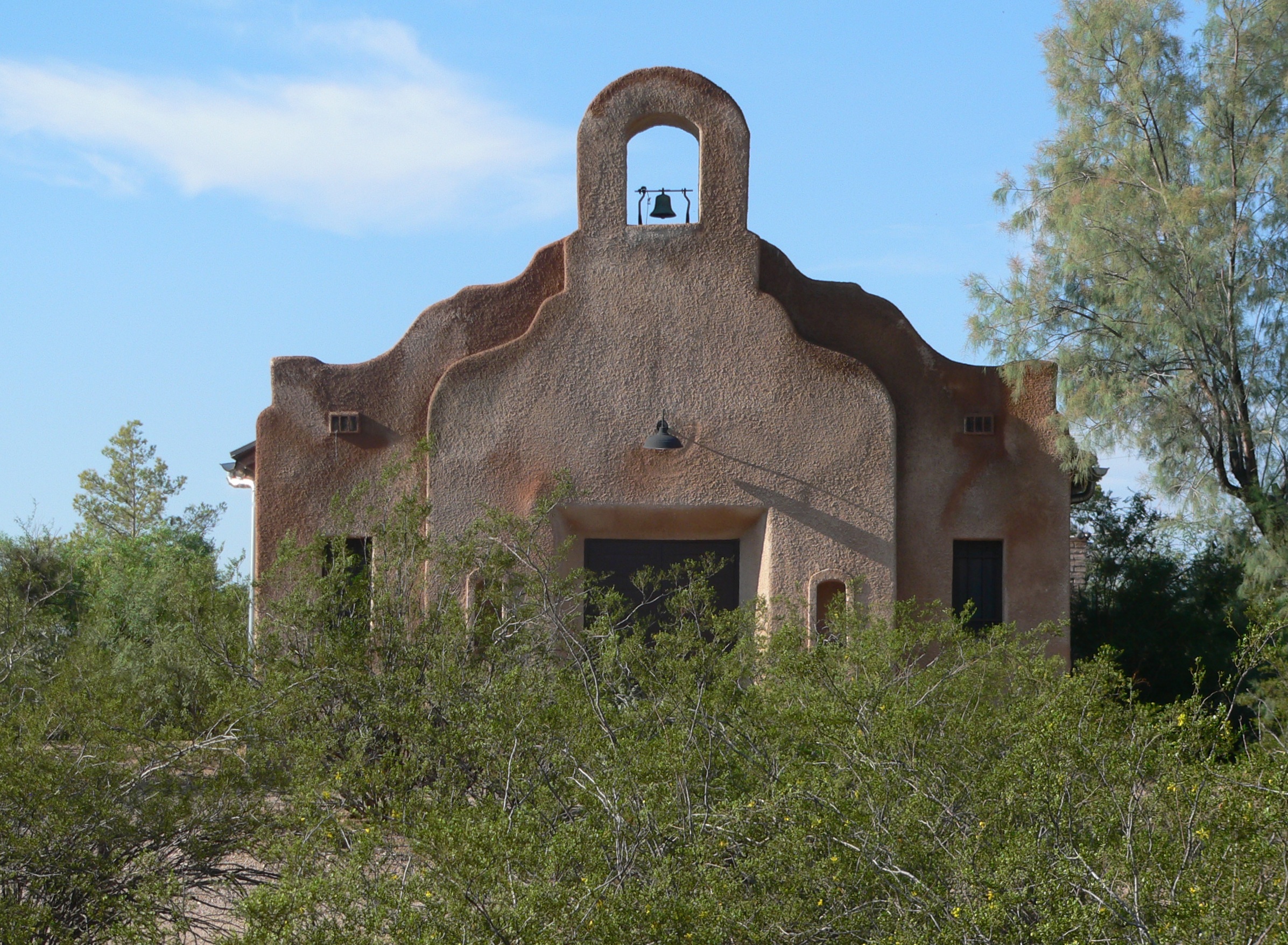
San Pedro Chapel
The brass bell that hangs in the tower came from a mission church somewhere in the Caribbean. The pews below were made from missile crates by a neighbor named Cuauhtemoc Garcia. And the adobe walls themselves rose during the depths of the Great Depression, built by men working weekends with bricks they molded on-site. San Pedro Chapel exists because a Sicilian widow named Gios Mule gave away her land three times for three different churches, refusing to let a cyclone have the final word. In a city that began as a Spanish presidio, this little chapel in the Fort Lowell neighborhood became Tucson's first designated historic landmark, a distinction it earned in 1982 by simply surviving while the world changed around it.
The Sicilian and the Settlement
Egnazio Mule arrived at Fort Lowell around 1908, a Sicilian immigrant seeking relief from illness in California's climate. He brought his wife Gios, established a store and truck garden, and homesteaded a quarter section of land on the outskirts of an abandoned military post. The U.S. Army had left Fort Lowell, but Mexican and Sicilian immigrants stayed, building a village they called El Fuerte. Egnazio became postmaster in 1911 but died of pneumonia at age 38. The same day he died, burglars robbed their store. Gios stayed. She would spend the rest of her life giving away pieces of that homesteaded land for houses of worship, determined to build a community from the fragments left by grief and misfortune.
Three Chapels, One Vision
The first structure went up in 1915: La Capillita, an adobe room measuring eight feet by nine, large enough only for an altar and a priest. The men of the neighborhood made the bricks from desert soil. Communicants gathered under mesquite trees while a Carmelite father rode out from Holy Family Parish once a month. A year later, in 1916, Bishop Henry Regis Granjon blessed a proper chapel, known variously as Iglesia del Rillito and La Capilla de Fort Lowell. The village came alive each year with fiestas: San Antonio de Padua in June, Los Santos Angeles in October, San Isidro in May. Then on August 4, 1928, a cyclone destroyed it all, tearing the roof away and scattering sacred images across the desert.
Rising from Ruins
The Depression had gripped the nation, but the men of Fort Lowell gathered on weekends to rebuild. Gios Mule led the effort, donating land once more. They made adobes by hand on the same ground where the chapel would stand, working in spare hours between shifts at jobs they were lucky to have. By 1931, San Pedro Chapel rose over the ruins of its predecessor, facing north toward the Santa Catalina Mountains. The Mission Revival architecture echoed California missions, but the labor was purely local. On September 27, 1931, Bishop Daniel James Gercke dedicated the chapel to Saint Peter at four o'clock, blessing a building that immigrant determination had willed into existence.
Haunted House to Historic Landmark
For nearly two decades, San Pedro Chapel served the Fort Lowell community. Then in 1948, St. Cyril's Church opened in Tucson, and the little chapel was deconsecrated. It became a movie house briefly, then stood empty, occasionally hosting neighborhood children playing at ghosts. In 1965, abstract expressionist artist Nik Krevitsky bought the abandoned building and converted it to a residence and studio, calling his renovation project "Mission Impossible." The City of Tucson recognized what Krevitsky had preserved, designating San Pedro Chapel as the city's first historic landmark in 1982. The National Register of Historic Places added it in 1993. Today the Old Fort Lowell Neighborhood Association owns the property, hosting weddings and events beneath the Caribbean bell that still rings from the tower. The pews fashioned from missile crates remain, a reminder that sacred space can be built from whatever materials faith provides.
From the Air
Located at 32.26N, 110.88W in the Fort Lowell neighborhood of northeast Tucson. The small Mission Revival chapel is difficult to spot from altitude but sits in a historic district that includes the ruins of the original Fort Lowell military post. Best viewed from 2,000-3,000 feet AGL. Nearby airports: KTUS (Tucson International, 12nm southwest), KDMA (Davis-Monthan AFB, 5nm south). The Rillito River wash, referenced in the chapel's historical names, runs east-west just south of the site.