San'ya: Tokyo's Erased Neighborhood
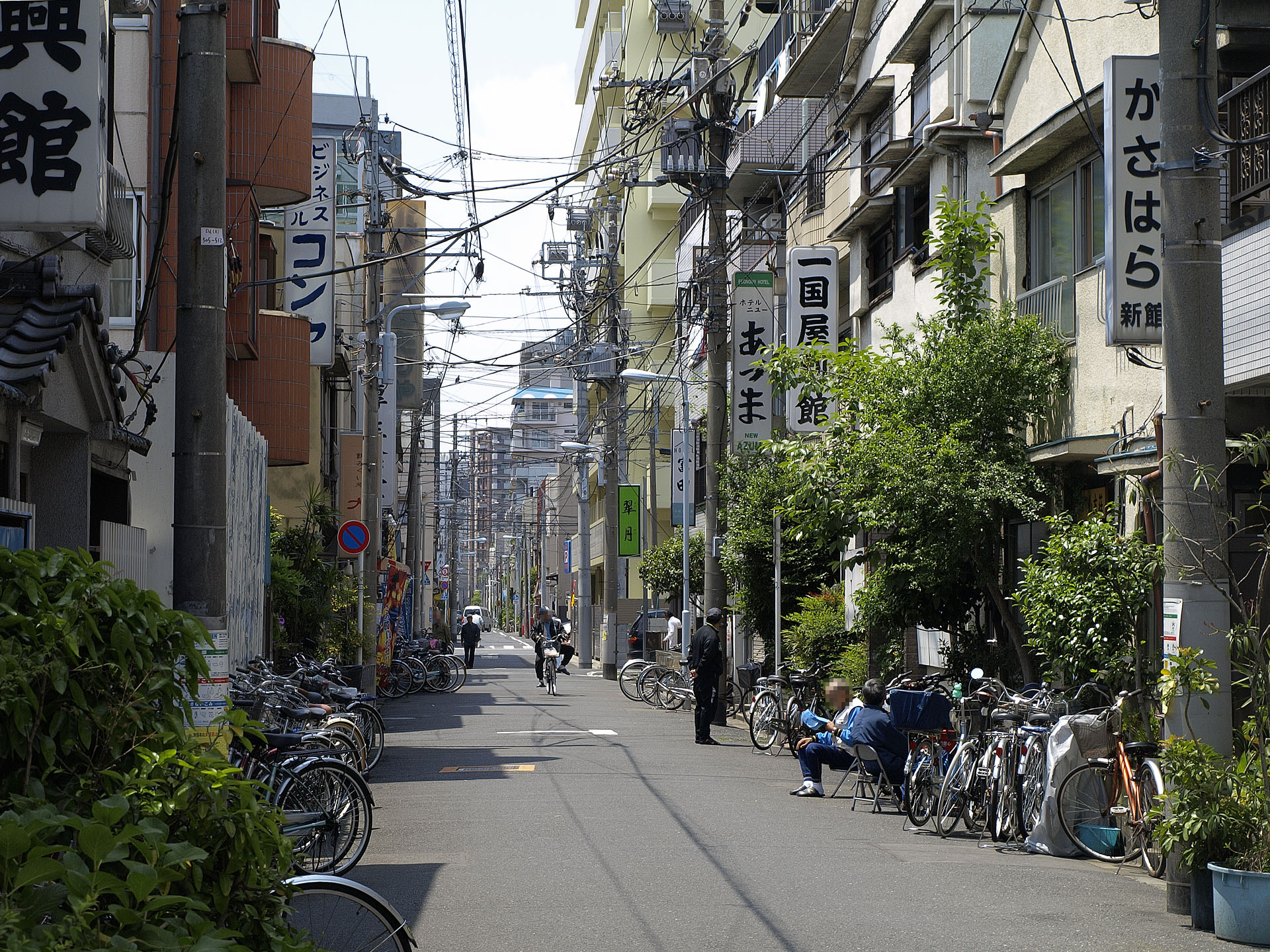
The name itself is an act of defiance. In 1966, the Tokyo metropolitan government erased San'ya from every official map, splitting it across the Taito and Arakawa wards and scattering its addresses into sanitized administrative designations. The intention was clear: if the name disappeared, perhaps the stigma would follow. It did not. More than half a century later, the intersection at Namidabashi -- the Bridge of Tears -- still anchors a neighborhood where day laborers gather before dawn, where cheap lodging houses line streets barely wide enough for a delivery truck, and where the word San'ya carries a weight that no bureaucratic renaming can dissolve. This is a place that Edo-era authorities once reserved for butchers, tanners, and leatherworkers -- occupations considered impure under Buddhist doctrine. It has been a site of execution, a gateway to the Yoshiwara pleasure quarter, and the staging ground for Japan's postwar economic miracle, one anonymous laborer at a time.
The Bridge of Tears
Namidabashi sits on the old boundary of Edo, straddling present-day Taito and Arakawa wards. The name predates the modern neighborhood by centuries, marking the spot where condemned prisoners were led past weeping families toward the execution grounds at Kozukappara to the north. By the Edo period, the area south of this crossing had become a dumping ground for those the feudal order deemed unclean. The Buddhist caste hierarchy assigned butchers, tanners, and leatherworkers to this marshy lowland along the Oshu Kaido and Nikko Kaido highways. They built kichinyado -- bare-bones inns that offered nothing but floor space -- to serve travelers unwilling to pay full inn prices. The architecture of deprivation became the architecture of the neighborhood itself, and four centuries later, the rooming houses of San'ya still descend from that tradition.
Twenty Thousand Men, Three Hundred Rooftops
San'ya's modern identity was forged in the rubble of 1945. When the war ended, tent villages sprang up to shelter the displaced, and these improvised shelters hardened into permanent lodging houses as Japan's postwar reconstruction created an insatiable appetite for manual labor. By 1961, roughly 300 simple-lodging establishments packed the district, housing approximately 20,000 workers who poured out each morning to build the highways, stadiums, and skyscrapers of a country reinventing itself. The lodgings offered a futon and a roof -- no meals, no kitchens. Signs advertising 'Color TV in Every Room' and 'Air Conditioned and Heated Rooms' hung outside nearly every building, a peculiar formality that persisted for decades. But the work was brutal and the margins razor-thin. Yakuza syndicates controlled much of the labor dispatching, skimming wages and enforcing discipline through intimidation.
Riots, Ballads, and a Dangerous Film
The 1960s brought open revolt. Riots involving thousands of laborers erupted with enough regularity that authorities built the Sanya District Police Station -- locals called it the Mammoth Station -- to maintain order. In 1969, folk singer Okabayashi Nobuyasu released 'Sanya Blues,' a mournful ballad capturing the grief of men whose labor built a nation that refused to see them. Okabayashi later admitted he had spent barely a week in the district, but the song became an anthem. The most dangerous act of witness came from two documentary filmmakers who began shooting 'Sanya -- Attack to Attack,' a film exposing yakuza infiltration of the day-labor market. In 1984, one filmmaker was murdered. In 1986, his successor on the project was assassinated as well. Both killings were attributed to members of the Kokusuikai yakuza group. The film was eventually completed and released, a testament paid for in blood.
The District of Abandoned People
By the 1990s, Japan's bubble economy had burst, and the construction jobs that sustained San'ya dried up. In 1996, Tokyo's twenty-three wards agreed to entrust their homeless populations to San'ya as a temporary measure while permanent housing was arranged. The permanent housing never materialized. More homeless were transferred in, left without guarantors or fixed addresses, and forgotten. San'ya earned a bitter new nickname: the district of abandoned people. The aging of its original day-laborer population -- men who had arrived in their twenties and never left -- transformed the neighborhood's character from a place of rough vitality to one of quiet welfare dependency. Churches, both Catholic and Protestant, had long since established missions in the neighborhood, providing emergency food and humanitarian services. They became, for many residents, the last reliable institution.
New Guests, Old Walls
The 2002 FIFA World Cup brought an unexpected wave of foreign backpackers hunting for cheap Tokyo accommodation, and San'ya's rooming houses -- now just a seven-minute walk from Minami Senju Station on the Hibiya Line -- suddenly had a new clientele. English-language signs appeared in lobbies. Owners began advertising online. Brand-new budget lodgings rose alongside the weathered postwar originals, and international young travelers discovered that from San'ya they could reach Ueno, Akihabara, and Ginza in minutes. The neighborhood that the government tried to erase from the map had reinvented itself without permission. San'ya's name may not appear on any official address, but it endures in the faded signage of a few surviving institutions, in the Sanya Elementary School in far-off Shibuya ward, and in the stubborn memory of a city that has always depended on the labor of those it prefers not to acknowledge.
From the Air
Located at 35.729N, 139.799E in northeastern Tokyo, straddling the Taito and Arakawa ward boundary. From altitude, the area is identifiable by the dense grid of low-rise buildings between the Sumida River to the east and the rail lines converging at Minami Senju Station. The neighborhood sits roughly 12 nautical miles north-northeast of Tokyo Haneda International Airport (RJTT). Narita International Airport (RJAA) is approximately 33 nautical miles to the east-northeast. Best viewed from 2,000-4,000 feet AGL; the low-rise character of San'ya contrasts noticeably with taller development in surrounding areas. The Sumida River and Arakawa River to the east serve as primary visual references.