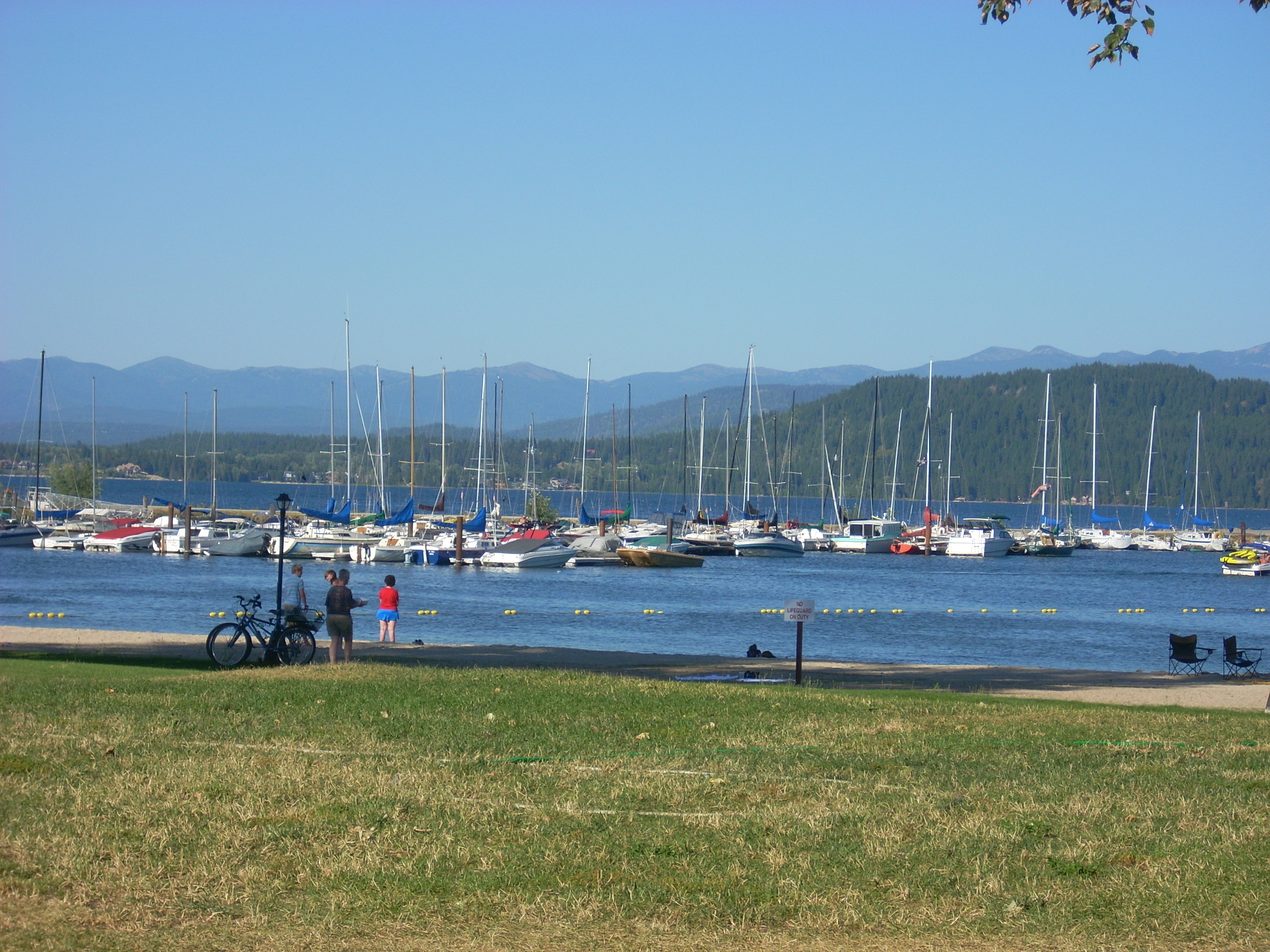
Sandpoint
The train still stops in Sandpoint late at night. Amtrak's Empire Builder passes through on its daily run between Seattle and Chicago, pausing at the restored 1916 depot while most of the town sleeps. It's a connection to an older version of this place, when railroads brought tourists to the lake resorts and timber barons built summer homes along the shore. Sandpoint has changed since then - the Coldwater Creek catalog company rose and fell here, the ski resort at Schweitzer Mountain transformed winter into a second tourist season, and housing prices have climbed beyond what timber wages could afford. But the essential appeal remains what it was a century ago: Lake Pend Oreille stretching toward distant mountains, water so clear you can see the bottom in twenty feet, a climate that splits the difference between the arid Columbia Plateau and the wet Pacific Coast. The train's late-night stop captures something essential. Sandpoint is a waypoint, a place travelers discover on the way somewhere else, then return to deliberately.
Lake of the Ear Pendants
Lake Pend Oreille - pronounced Pond-or-AY, with the French roughly translating to 'ear pendant' for the shell jewelry worn by the Kalispel people - is Idaho's largest lake by surface area and one of the deepest in the country. The depths reach 1,150 feet, cold and dark enough that the U.S. Navy has used them for submarine acoustic testing since World War II. Above those depths, the lake offers gentler pleasures. Sandy beaches line the northern shore near Sandpoint. The Pend Oreille Scenic Byway traces the eastern edge through small communities with names like Hope and Beyond Hope. Houseboats cluster in protected bays. Sailboats tack across the summer afternoon wind. And trophy fish - Kamloops rainbow trout running to double-digit pounds - draw anglers who measure success in bragging rights as much as fillets.
Schweitzer Mountain
The ski resort above Sandpoint carries a peculiar history. It's named not for Swiss heritage but for a Swiss hermit who homesteaded the mountain in the early 1900s, living alone in a cabin until his death. The resort that now covers his former solitude offers 2,900 acres of skiable terrain, 92 runs, and views that stretch from Lake Pend Oreille to the Cabinet Mountains and beyond. Schweitzer isn't as famous as Sun Valley, lacks the international clientele of Vail or Aspen, but it receives prodigious snowfall - over 300 inches in a good year - and the crowds remain manageable even on holiday weekends. For Sandpoint, the mountain means winter is no longer a season to survive but a second economy to cultivate. The lodges fill with skiers. The restaurants stay open year-round. The town that timber built has found new timber: the fresh tracks on a powder morning.
Huckleberry Everything
Every small town needs a specialty, and Sandpoint's is the huckleberry. This wild mountain berry, impossible to cultivate commercially, grows in profusion on the surrounding slopes every summer. Locals pick them for personal use; entrepreneurs purchase from foragers to supply the tourism industry. The result is huckleberry everything: pie, syrup, ice cream, candy bars, daiquiris, barbecue sauce. The flavor is distinctive - somewhere between blueberry and blackberry, but sharper, more complex, unmistakably wild. Visitors develop mild obsessions. The huckleberry business has grown from roadside stands to a significant economic sector, one more way that Sandpoint has learned to convert natural abundance into sustainable income. Not everything works - Coldwater Creek's bankruptcy left hundreds unemployed - but the huckleberry economy persists because it can't be outsourced. The berries grow here or they don't grow at all.
The Sunday Silence
Sandpoint occupies an unusual cultural position. It sits in the Pacific time zone despite being in Idaho, closer to Spokane than to Boise, with politics that skew libertarian in ways that confound simple left-right categorization. The town has attracted both creative professionals fleeing expensive coastal cities and back-to-the-landers seeking distance from modernity. These communities coexist, sometimes uneasily, in a place too small to fully segregate by ideology. What unites them, perhaps, is appreciation for what Sandpoint is not: not suburban, not congested, not easily accessible. The nearest commercial airport of any size is Spokane, two hours southwest. The Empire Builder runs once daily in each direction. Getting here requires intention. Staying requires adaptation to a pace that the connected world finds disorienting - limited cell coverage in the hills, neighbors who don't ask what you do for a living, winter darkness that arrives by four o'clock. Sandpoint is beautiful, but it isn't easy. That's the point.
From the Air
Located at 48.28N, 116.56W on the northern shore of Lake Pend Oreille, elevation 2,086 feet. Sandpoint Airport (SZT) is a small uncontrolled field 3nm northwest with a 5,500-foot runway oriented 01/19. From altitude, the lake dominates the view - 43 miles long, with a distinctive shape that includes a large western bay extending toward the town of Hope. Schweitzer Mountain ski area is visible on the peaks 11nm northwest, reaching 6,400 feet. The town sits where the Pend Oreille River exits the lake's northern end. Spokane International (GEG) is the nearest commercial airport at 65nm southwest. The area receives significant snow November through March; IFR conditions common in winter. The Cabinet Mountains rise to 8,738 feet (Snowshoe Peak) east of the lake.