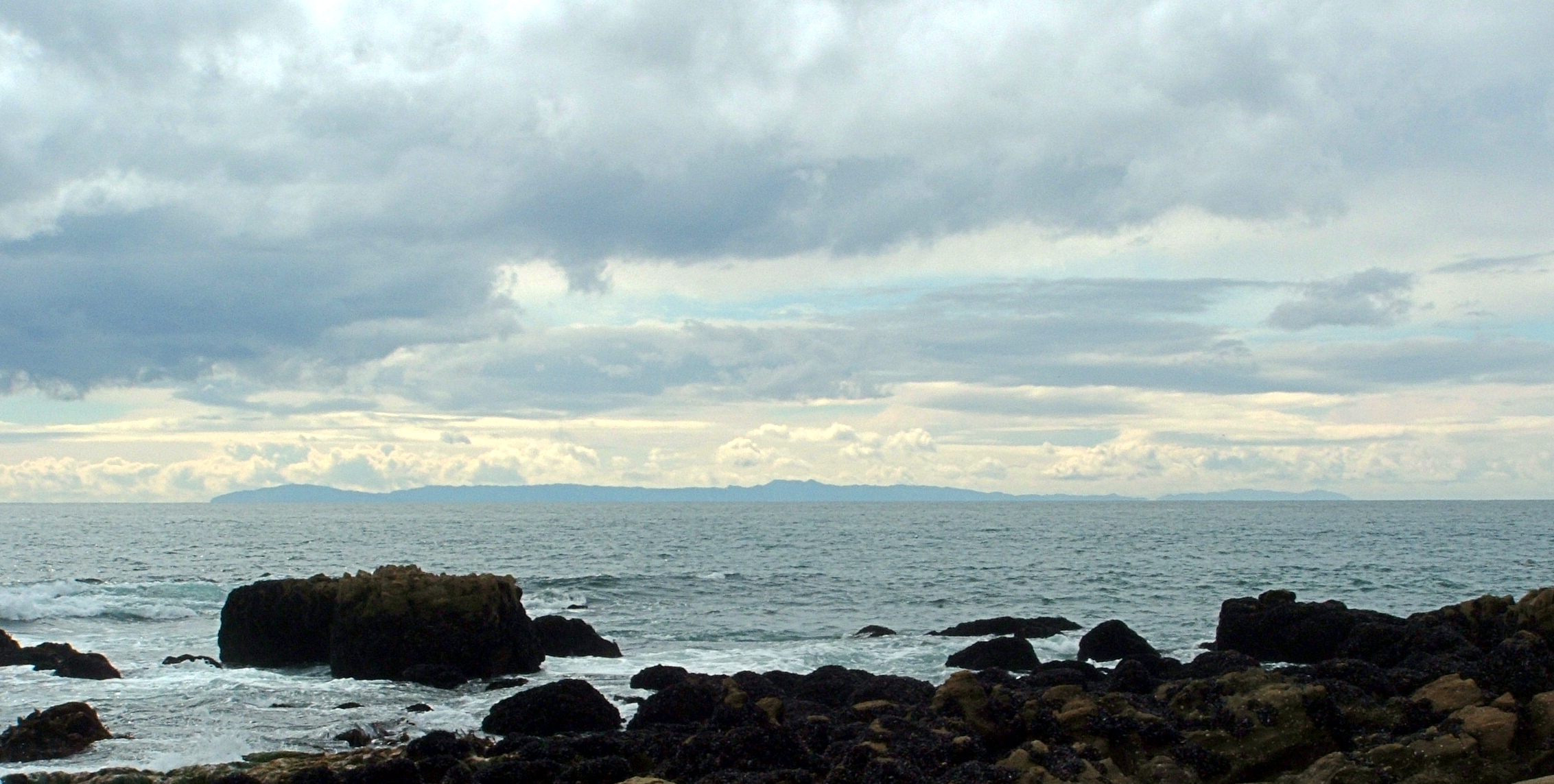
Santa Catalina Island
The homing pigeons arrived in 45 minutes. In 1864, gold prospectors on Santa Catalina Island found that their feathered couriers could reach the mainland in less than an hour, while regular mail took ten days by boat. This detail captures something essential about Catalina: an island close enough to see the Los Angeles skyline on clear days, yet isolated enough to develop its own rhythms, its own species, its own way of measuring time. The Tongva people understood this for millennia, paddling their plank canoes to this rocky island they considered a sacred ceremonial center. Spanish explorers claimed it on Saint Catherine's Day in 1602. Chewing gum magnate William Wrigley Jr. transformed it into a resort destination in the 1920s. And now, 88 percent of its 75 square miles belongs to the Catalina Island Conservancy, protected from the development that consumed the facing mainland.
Where Schist Tells Stories
Santa Catalina was never connected to mainland California. The island emerged from the collision of tectonic plates along the San Andreas Fault system, pushed up from ancient volcanic activity and metamorphic transformation over 95 to 109 million years. Catalina Schist, the distinctive metamorphic rock found nowhere else, records this violent geological birth. The island rises dramatically from the sea, its highest point Mount Orizaba reaching 2,097 feet above the Pacific. Steep cliffs, marine terraces, and sea caves line the 54 miles of coastline. Some beaches glitter with silvery-grey sand, rich with quartz eroded from the island's interior. Geologists travel here to study these formations, reading in the rock the story of California's tectonic history written in stone.
The Bison That Stayed
In the 1920s, a film crew brought several American bison to Catalina for a movie production. When filming wrapped, shipping the massive animals back to the mainland proved more expensive than simply leaving them behind. So they stayed. The herd grew over decades, at times exceeding 600 animals, their shaggy forms improbably grazing the golden hills of a Mediterranean island. Today the Catalina Island Conservancy manages approximately 80 bison. The herd stopped reproducing after a contraception program proved unexpectedly effective; the last calf was born in 2013. Wildlife biologists estimate that within 20 to 40 years, the American bison will disappear from Catalina entirely through natural attrition. Until then, they remain the island's most surreal inhabitants, a living accident of Hollywood economics grazing beneath the California sun.
The Fox That Nearly Vanished
The Catalina Island fox evolved in isolation, becoming smaller and more trusting than its mainland relatives. By 2000, a virulent strain of canine distemper had reduced the population from 1,300 to approximately 157 individuals. The species stood at the edge of extinction. What followed was one of the most successful conservation efforts in American history. Captive breeding programs, vaccination campaigns, and constant monitoring by Conservancy biologists slowly rebuilt the population. By 2024, nearly 2,000 foxes roamed the island's chaparral and oak woodlands. Yet the Catalina fox faces new threats: mysterious ear tumors continue to plague the population, and road strikes have become the leading cause of death. Three wildlife biologists still trap, tag, and vaccinate 300 foxes annually, watching for signs of new disease outbreaks.
Wrigley's Island Paradise
William Wrigley Jr. bought controlling interest in the Santa Catalina Island Company in 1919, and the chewing gum magnate proceeded to transform the island into a resort destination. He invested millions in infrastructure, building the iconic Catalina Casino, which opened on May 29, 1929. Despite its name, the Art Deco masterpiece has never hosted gambling; casino derives from the Italian word for gathering place. The circular building housed the largest circular ballroom in the world and a theater seating 1,184. Wrigley also brought his Chicago Cubs here for spring training, building a baseball diamond that hosted the team from 1921 to 1941 and again from 1946 to 1951, with a wartime hiatus when the military used the island. His son Philip continued developing the island until 1975, when he deeded 42,000 acres to the Conservancy he had helped establish. The Wrigley family's legacy persists in the USC Wrigley Marine Science Center at Big Fisherman's Cove.
Island Time
The use of motor vehicles on Catalina remains strictly restricted; a 25-year waiting list exists for permits to bring a private car. Residents navigate by golf cart, bicycle, or on foot. Children in Avalon attend Long Beach schools, commuting across the channel for their education. The Two Harbors one-room schoolhouse closed in 2014. Ferries from Long Beach and San Pedro take just over an hour, yet the crossing feels like traveling backward through decades of California development. Glass-bottom boats reveal kelp forests where bright orange garibaldi, the state marine fish, patrol their territories. Scuba divers explore shipwrecks and the Avalon Underwater Dive Park, the first non-profit underwater park in the United States. And on clear nights, away from Avalon's modest lights, the stars appear as they did when the Tongva navigated by them, when Catalina was Pimu, when 45-minute pigeon mail seemed like a miracle of speed.
From the Air
Located at 33.38N, 118.42W, approximately 22 miles south-southwest of Long Beach. The island stretches 22 miles long and 8 miles wide, clearly visible from cruising altitude on clear days. Catalina Airport (KAVX) sits at 1,602 feet elevation on the island's central ridge. Nearest mainland airports include Long Beach (KLGB), John Wayne-Orange County (KSNA), and Los Angeles International (KLAX). The distinctive circular Casino building in Avalon is visible on the eastern shore. Two Harbors sits at the narrow isthmus on the western end. Mount Orizaba rises to 2,097 feet in the island's interior.
Sources
- Santa Catalina Island - Wikipedia
- Santa Catalina Island - Britannica
- Catalina Island bison herd - Wikipedia
- Catalina Island bison future - National Geographic
- Island Fox Status Update 2024 - Friends of the Island Fox
- Chicago Cubs on Catalina Island - Love Catalina
- William Wrigley Jr. - Catalina Island History