Santa Fe: America's Oldest Capital Where Adobe Is Religion
Santa Fe is America's oldest capital and feels like it - the adobe buildings, the narrow streets, the sense of history that begins not with English colonists but with Spanish conquistadors. The Spanish founded Santa Fe in 1610, a decade before the Pilgrims landed; the Pueblo people had been here for centuries before that. The city of 87,000 has cultivated its antiquity into an industry: the Adobe building codes that mandate earth-colored exteriors, the galleries that line Canyon Road, the art market that draws collectors from everywhere. Santa Fe is beautiful, expensive, touristified, and somehow authentic despite the performance. The high desert light that drew the first painters continues drawing artists who can afford to live here and tourists who come to look.
The Adobe
Santa Fe's Pueblo Revival architecture is enforced by ordinance - new buildings must use earth tones and recall traditional forms. The result is a city that looks like nowhere else, the brown and tan buildings blending with the landscape, the rounded corners and vigas (wooden beams) creating visual coherence. The style was codified in the 1920s when boosters decided Santa Fe's character was marketable; the enforcement has prevented the visual chaos of most American cities. The architecture that began as practical (adobe is insulating and local) became aesthetic, then commercial. The buildings that look ancient are often recent; the style matters more than the age.
The Art
Santa Fe has more art galleries per capita than any American city - over 250 galleries in a city of 87,000. Canyon Road alone has 80 galleries in a mile, ranging from Native American art to contemporary installations. The art colony began in the early 1900s when painters discovered the light; Georgia O'Keeffe, who lived nearby, became the most famous. The galleries now range from genuine to tourist schlock, the prices from accessible to absurd. The Santa Fe Opera, performing in an open-air theater with mountain views, represents the high culture that art money enables. Art is Santa Fe's industry; the question is whether it's production or consumption.
The History
Santa Fe's history is layered - Pueblo people first, then Spanish colonization in 1610, then Mexican rule, then American conquest in 1846. The Palace of the Governors, built in 1610, is the oldest continuously occupied public building in America; Native vendors still sell jewelry under its portal. The Pueblo Revolt of 1680 expelled the Spanish for 12 years; the Spanish return created the culture that persists. The Navajo and Apache raids, the Santa Fe Trail, the Atchison, Topeka and Santa Fe Railway - each era left marks. Santa Fe's history is genuinely significant, which makes its cultivation as tourist product more complicated than mere invention.
The Food
New Mexican cuisine is distinct from Mexican food elsewhere - the red and green chiles that flavor everything, the question 'red or green?' that accompanies every order (the answer 'Christmas' gets you both). The cuisine developed from Spanish, Pueblo, and Mexican influences, creating dishes like posole, carne adovada, and sopapillas that taste different here than anywhere else. The chiles are local - grown in Hatch and other New Mexico valleys, dried in ristras that hang from every portal. The food is one of the few aspects of Santa Fe culture that's genuinely local rather than imported for tourists.
Visiting Santa Fe
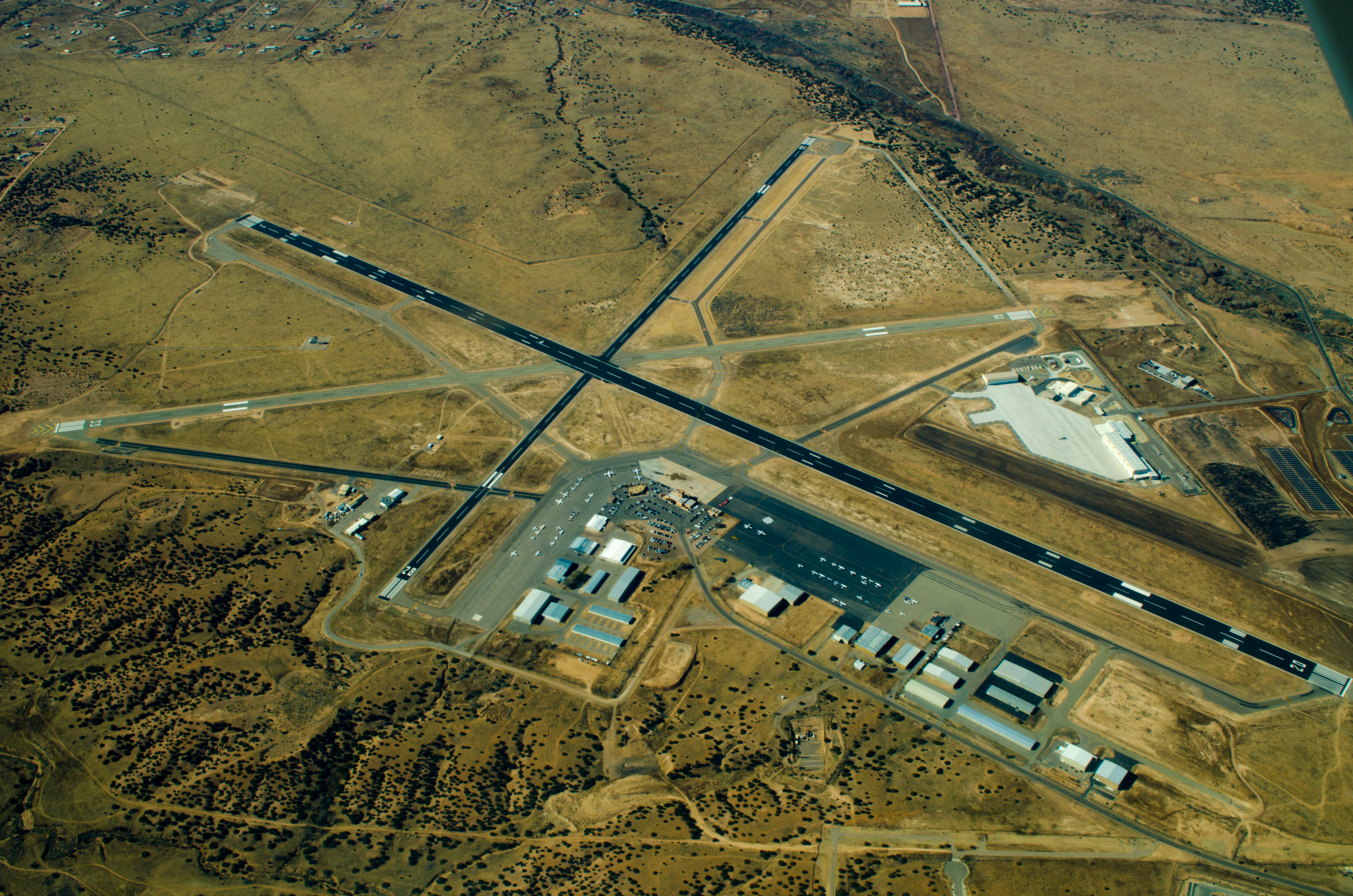
Santa Fe is served by Santa Fe Regional Airport (SAF) with limited flights; most visitors fly to Albuquerque (60 miles south). The Plaza is the center; the Palace of the Governors and St. Francis Cathedral anchor the colonial history. Canyon Road offers gallery wandering. The Georgia O'Keeffe Museum presents her work in context. The Meow Wolf immersive art installation in an old bowling alley is polarizing but popular. For food, try multiple restaurants to sample the chile variations. The elevation (7,000 feet) causes altitude symptoms for some. Summer is festival season; fall offers balloon fiesta spillover and beautiful weather; winter brings skiing nearby.
From the Air
Located at 35.69°N, 105.94°W at 7,000 feet in the Sangre de Cristo Mountains of northern New Mexico. From altitude, Santa Fe appears as development in a high mountain valley - the adobe-colored buildings distinctive, the mountain backdrop visible, the Sangre de Cristos rising to the east. What appears from altitude as a small Southwestern city is America's oldest capital - where adobe is enforced by law, where art galleries line Canyon Road, and where the high desert light has drawn painters for a century.