Santa Fe: The Oldest Capital City in America
Santa Fe was a capital before Jamestown was stable, before Plymouth was settled, before most of what became the United States was even explored. The Spanish established it in 1610 as the capital of Nuevo México, and it has been a capital continuously since - the oldest in the nation. The adobe buildings, the plaza, the turquoise and silver, the high desert light - Santa Fe created an aesthetic that has been imitated everywhere but belongs only here. Three cultures - Indigenous Pueblo, Spanish colonial, and Anglo American - collided and merged into something found nowhere else. Santa Fe's age isn't just chronological; it's experiential, walking streets where history is measured in centuries rather than decades.
The Founding
Don Pedro de Peralta established Santa Fe in 1610, a decade after the Oñate expedition first colonized New Mexico. The city was capital from the beginning, seat of Spanish authority in a territory that stretched from Texas to California. The Palace of the Governors, on the plaza's north side, served continuously as government seat for over 300 years - the oldest public building in continuous use in the United States. The Pueblo Revolt of 1680 drove the Spanish out; reconquest in 1692 restored colonial control. Through Spanish, Mexican, and American sovereignty, Santa Fe remained capital. The governance changed; the city persisted.
The Architecture
Santa Fe's adobe style is both ancient and artificial. Traditional adobe construction - mud bricks, thick walls, vegas (exposed ceiling beams), portales (covered walkways) - reflects Indigenous and Spanish heritage. But much of what appears historic is deliberate preservation. A 1957 ordinance requires new construction in the historic district to conform to 'Santa Fe Style' - earth tones, flat roofs, rounded corners. The result is aesthetic continuity that critics call Disneyfication and defenders call stewardship. The adobe look that defines Santa Fe worldwide is both genuine heritage and enforced brand. Walking the plaza, the distinction blurs; the effect is timeless regardless of the building's actual age.
The Art
Santa Fe became an art colony in the early 1900s, when Eastern artists discovered the light. The high altitude (7,000 feet) and dry climate create a clarity that painters found irresistible. The Taos Society of Artists drew attention; Georgia O'Keeffe arrived in 1929 and stayed. Today Santa Fe has more art galleries per capita than any American city - over 200 in a town of 85,000. Canyon Road is gallery concentration made physical, a mile of art in converted adobes. The art ranges from traditional Southwestern (Native pottery, weaving) to contemporary (the SITE Santa Fe biennial). The market supports diversity; the light keeps attracting those who want to capture it.
The Cultures
Three cultures inhabit Santa Fe: Pueblo peoples whose ancestors built nearby settlements before Columbus sailed; Hispanic New Mexicans whose families arrived with the conquistadors; and Anglo Americans who arrived after Mexican cession in 1848. The interactions have been productive and painful. The Plaza was built over Pueblo settlements; the Spanish mission system disrupted Indigenous life; American conquest displaced Hispanic authority. Yet the cultures persist and mingle. Spanish remains widely spoken. Pueblo pottery and dance are living traditions. The fiesta commemorating the reconquest has been renamed 'Entrada' and reframed. Santa Fe's identity is tri-cultural conflict turned into distinctive synthesis.
Visiting Santa Fe
Santa Fe is located in north-central New Mexico, approximately 60 miles north of Albuquerque via Interstate 25. The Plaza is the historic heart, surrounded by museums, restaurants, and the Palace of the Governors. Canyon Road offers gallery concentration; plan several hours to explore. The New Mexico Museum of Art and the Georgia O'Keeffe Museum anchor the downtown art experience. The historic San Miguel Mission claims oldest church status. Meow Wolf, the immersive art installation, offers contemporary contrast. Elevation (7,000 feet) affects some visitors; hydrate. The culinary scene emphasizes New Mexican cuisine - green versus red chile is serious business. Lodging ranges from historic hotels to chain properties. Allow multiple days; Santa Fe rewards slow exploration.
From the Air
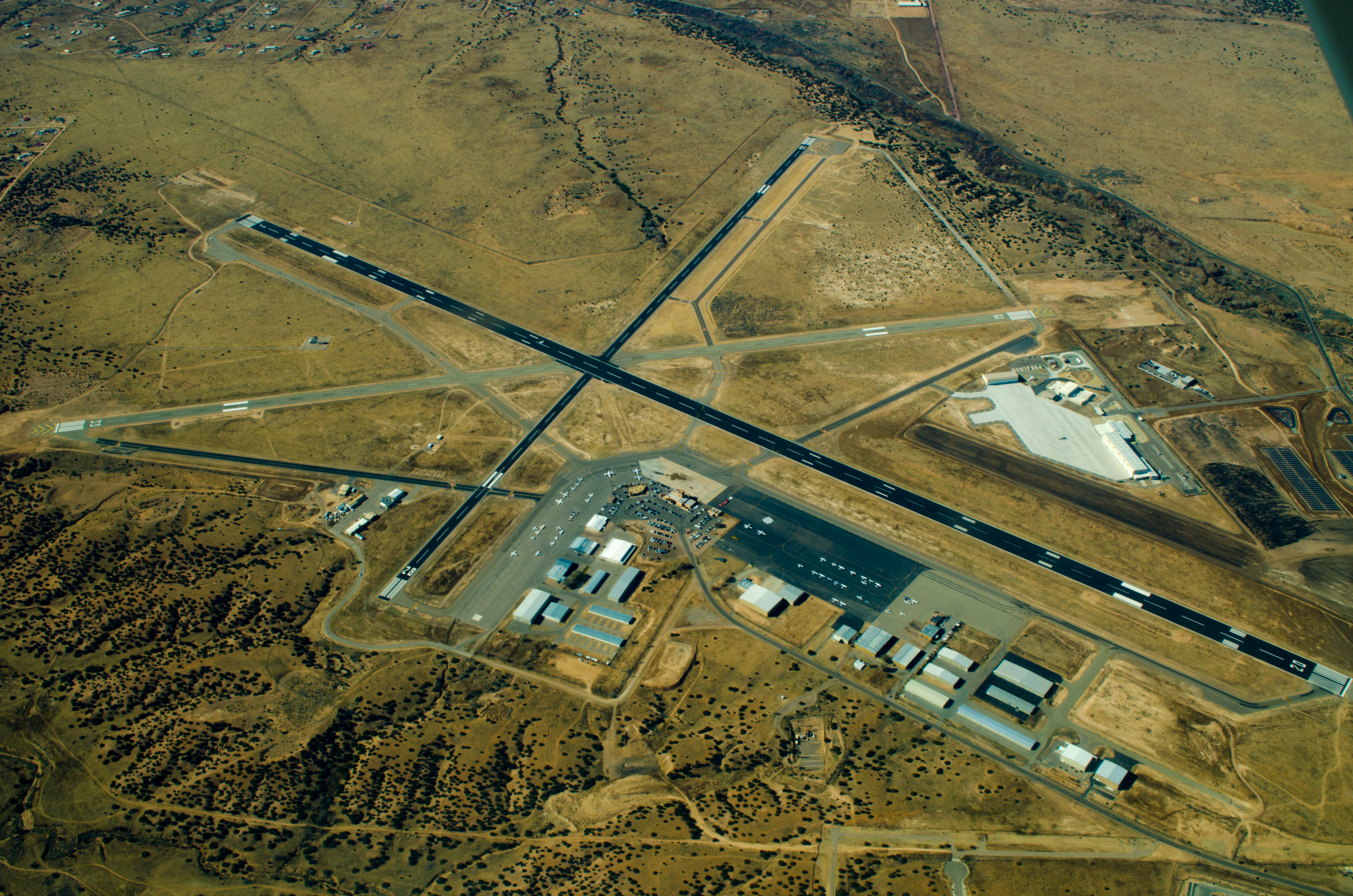
Located at 35.69°N, 105.94°W in the Sangre de Cristo foothills of north-central New Mexico. From altitude, Santa Fe appears as a modest city in a high desert basin, surrounded by mountains rising to 12,000 feet. The earth-toned buildings blend with the landscape; the uniform color is visible even from significant height. The downtown grid around the plaza is apparent. The ski basin is visible in the mountains to the northeast. Los Alamos lies to the northwest on the Pajarito Plateau. Albuquerque sprawls to the southwest in the Rio Grande valley. What appears from altitude as a small city in dramatic terrain is the oldest capital in the nation, where the architecture and the landscape achieve a harmony visible even from miles above.