Santa Fe Opera
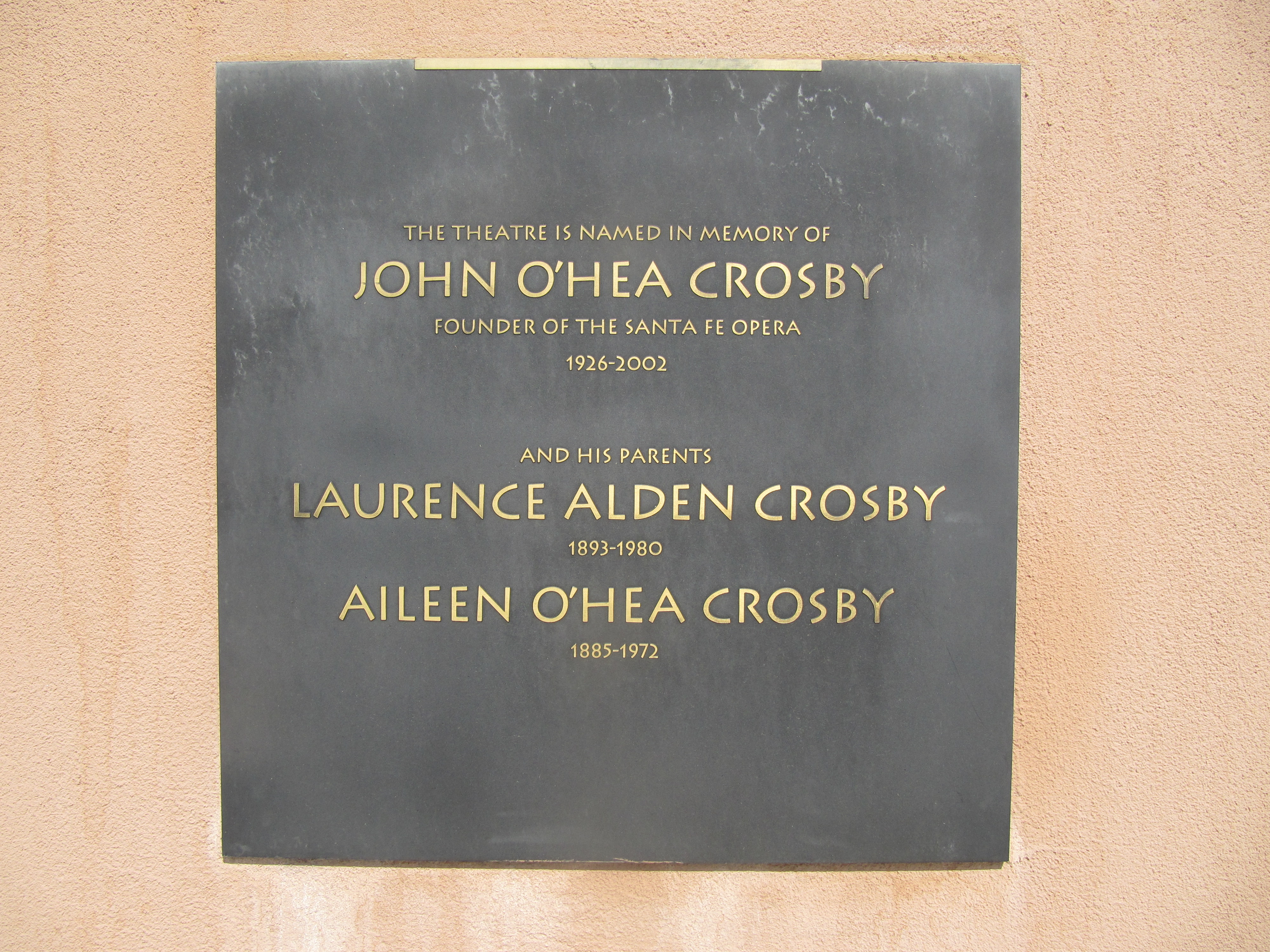
The founding of the Santa Fe Opera began with gunfire. In 1956, a New York conductor named John Crosby and an acoustician friend tramped across a former guest ranch north of Santa Fe, firing rifle shots into the desert air, listening for the perfect natural echo. When they found it, on a mesa overlooking the Jemez Mountains, Crosby built an open-air theater for $115,000 and 480 seats. On July 3, 1957, Puccini's Madama Butterfly played to a sold-out crowd, and the New Mexico desert had an opera company that would become one of the most celebrated in the world.
A Stage Open to the Sky
What makes the Santa Fe Opera physically unlike any other opera house is simple: the walls are missing. Three successive theaters have occupied the same mesa site since 1957, and every one has kept its sides open to the elements. There is no fly system for scenery, no proscenium arch, no curtain. The rear of the stage can be opened completely, framing the western horizon. Performances begin near sunset, so the fading light becomes part of the production. Audiences watch arias unfold against thunderheads rolling over the Sangre de Cristo foothills, or beneath a canopy of stars. The tradition of tailgate dining in the parking lot before curtain has become as much a ritual as the opera itself. The current Crosby Theatre, designed by James Polshek and completed in 1998, seats 2,128 plus 106 standees, yet retains a strikingly intimate feel thanks to its cable-supported roof and open clerestory window.
Born from Fire
The original 480-seat theater lasted a decade. On July 27, 1967, four weeks into the summer season, fire destroyed it completely. Rather than cancel, the company commandeered a local high school gymnasium, dubbed it the Sweeney Opera House, and finished the season without most of its costumes or sets. Igor Stravinsky helped lead a fundraising campaign that raised $2.4 million, and a new 1,889-seat open-air theater opened less than a year later, on June 26, 1968. In a gesture that became tradition, opening night featured Madama Butterfly, the same opera that had christened the original house in 1957. When the Crosby Theatre replaced that second house in 1998, it too opened with Butterfly. Three theaters, three decades apart, each born with the same Puccini score drifting into the desert night.
The Premiere Factory
Since its founding, Santa Fe Opera has staged 45 American premieres and 19 world premieres. John Crosby, a devoted champion of Richard Strauss, regularly programmed the composer's lesser-known works, including the 1964 U.S. premiere of the 1938 opera Daphne. That adventurous spirit continues: the company premiered Jennifer Higdon's Cold Mountain in 2015, Mason Bates and Mark Campbell's The (R)evolution of Steve Jobs in 2017, and most recently Gregory Spears and Tracy K. Smith's The Righteous. The programming formula, established by Crosby and still followed, balances two popular operas, one American or world premiere, one rarely performed work, and one classic, all rotating in repertory across a summer season running from late June through mid-August.
Where Careers Take Flight
In 1957, Crosby created the Apprentice Singer Program with eight young performers. His reasoning was blunt: in America, young artists faced the impossible task of gaining experience without a stage to gain it on. The program gave them living expenses, small roles, and the chance to understudy leads alongside established professionals. Over 2,000 singers have since passed through the program, and the alumni list reads like an honor roll of American opera: Joyce DiDonato, Samuel Ramey, Sherrill Milnes, Susanna Phillips, and many more. A Technical Apprentice Program, added in 1965, is the only one of its kind at a U.S. opera house with a budget exceeding $15 million. Today, roughly 40 singers and 85 technical apprentices are chosen each summer from over 1,600 applicants. Many return years later to sing lead roles on the same stage where they once stood in the chorus.
Crosby's Long Shadow
John Crosby served as general director from 1957 to 2000, the longest such tenure in U.S. opera history, simultaneously acting as principal conductor for the company's first four decades. Only three directors have followed him: Richard Gaddes, Charles MacKay, and Robert K. Meya, who took the helm in 2018 alongside music director Harry Bicket. The campus itself has grown to roughly 150 acres, encompassing eight rehearsal halls, the three-level Stieren Orchestra Hall, and the Dapples Pavilion cantina. Solar panels now line the roof of Stieren Hall as the company moves toward renewable energy. But the core experience remains what Crosby discovered with a rifle and a good ear: the acoustics of a New Mexico mesa, where music and landscape are inseparable.
From the Air
Located at 35.764N, 105.947W, roughly 7 miles north of downtown Santa Fe along US-84/285. The distinctive curved roof of the Crosby Theatre is visible from altitude on its mesa perch. Nearest airports: Santa Fe Municipal (KSAF, 8 nm south), Los Alamos (KLAM, 25 nm northwest). Recommended viewing altitude: 3,000-5,000 ft AGL. The open-air theater structure is best spotted in late afternoon light. The surrounding Sangre de Cristo Mountains and Jemez range provide dramatic backdrop.