The Depot That Refused to Die
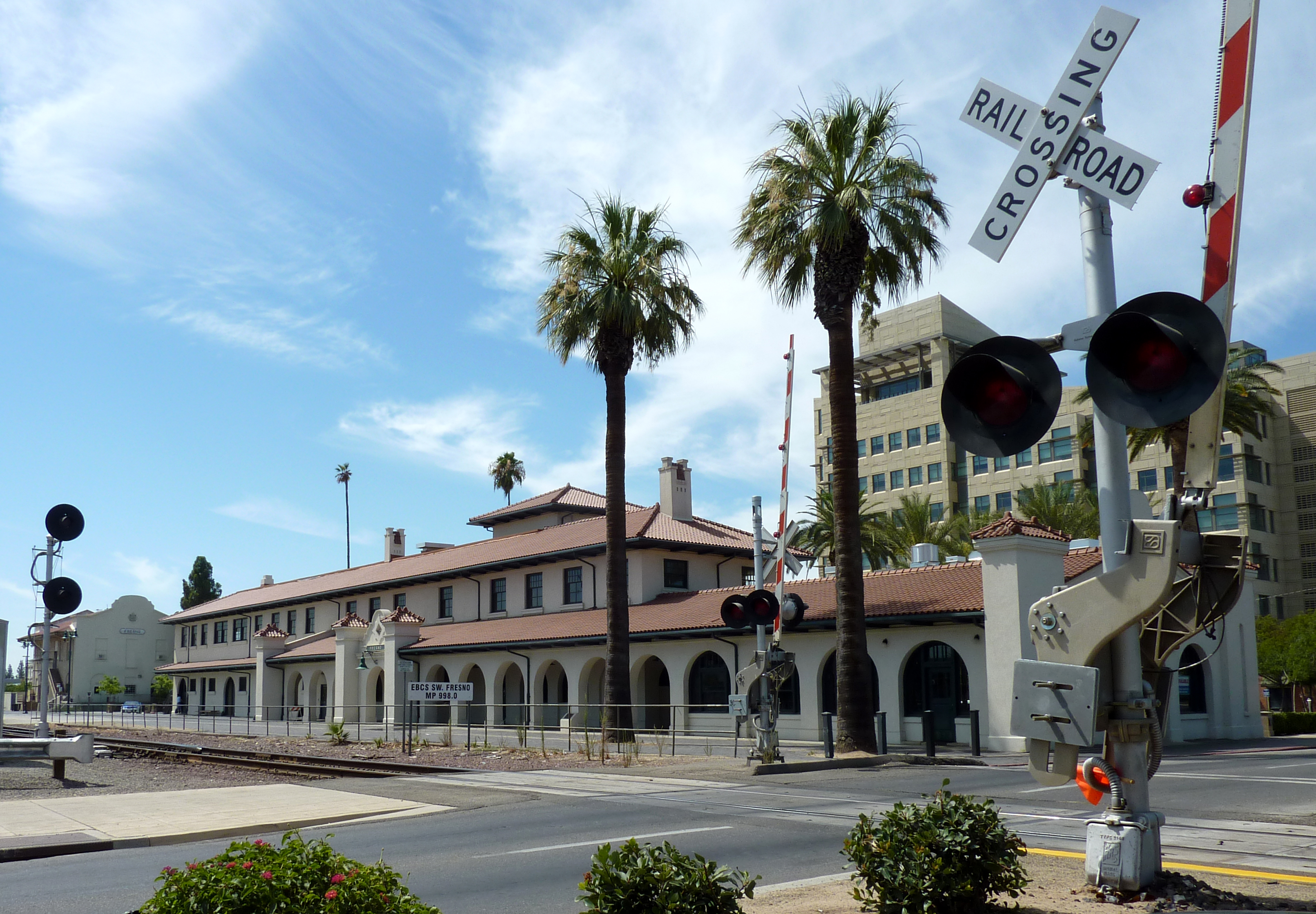
They shuttered the building in the early 1990s and walked away. By the time the city of Fresno bought the Santa Fe Passenger Depot in 2003, more than a century of valley heat, deferred maintenance, and institutional neglect had done what neither two world wars nor the rise of the automobile could accomplish: the station was dying. But Fresno had a stubborn attachment to the old depot at 2650 Tulare Street, the one William Benson Storey designed in 1899 for the San Francisco and San Joaquin Valley Railroad, the one the Santa Fe Railway once used as its Valley Division Headquarters. When the renovation was finished in 2005, the building looked almost exactly as it had when the first passengers stepped through its doors at the turn of the twentieth century. The tracks still ran. The trains still stopped. The depot had simply outlasted the people who tried to close it.
A Station at the Crossroads
Fresno in 1899 was a city that owed its existence to the railroad. The Southern Pacific had platted the town three decades earlier, laying out streets around the tracks and selling lots to anyone who would build beside them. When the San Francisco and San Joaquin Valley Railroad arrived as a competitor, it needed a station worthy of the challenge. Storey delivered one in the Mission Revival style -- arched windows, broad eaves, thick stucco walls designed to shrug off the Central Valley sun. The building sat at Tulare and Santa Fe Streets, across from what would eventually become Fresno City Hall, nestled in a rough triangle formed by three freeways that did not yet exist. From that spot, the Santa Fe's trains carried passengers north to Oakland and south to Bakersfield, linking Fresno to the rest of California in an era when the link meant everything.
The Chiefs and the Valley Division
For more than sixty years, the depot served as a vital node in the Atchison, Topeka and Santa Fe Railway's western network. The famous San Francisco Chief paused here on its run between Chicago and the Bay Area, and the Oakland-Barstow line passed through daily. The station was expanded or renovated nine times between 1908 and 1985 -- new waiting rooms, new platforms, new configurations to handle the shifting demands of rail travel. But the automobile was eroding that demand year by year. Santa Fe closed the station for passenger service in 1966, three decades before the building itself was abandoned. When Amtrak inherited the nation's intercity passenger rail system in 1971, Fresno was left off the map entirely. For three years, no train stopped here at all.
The Long Silence
Passenger service returned on March 5, 1974, when Amtrak launched the San Joaquin route between Oakland and Bakersfield. But the new trains did not use the old depot. Instead, passengers boarded from a space in the nearby freight house -- a makeshift arrangement that lasted for decades while the Storey-designed station deteriorated across the tracks. The Santa Fe continued to own the building through the 1970s and 1980s, using it for operational purposes even as the interior crumbled. By the time the railroad fully abandoned the structure in the early 1990s, the depot had been added to the National Register of Historic Places for sixteen years. The designation, granted in 1976, recognized what the building had been. It could not save what the building was becoming.
Restoration and Return
The city of Fresno purchased the depot in 2003 and undertook a restoration that peeled away a century of alterations to reveal Storey's original 1899 design. The renovated station reopened on February 12, 2005, with 5,400 square feet dedicated to passenger service and another 12,300 square feet available for lease. An indoor waiting room now operates from 5:45 a.m. to 10:00 p.m. daily, with a staffed ticket counter, baggage check, and automated kiosk. The station sits at the heart of a transit network that connects Fresno Area Express buses, Fresno County Rural Transit Agency routes, Greyhound intercity coaches, and Amtrak's Gold Runner trains -- the rebranded San Joaquin service. Excluding passengers transferring to connecting buses, Fresno has the highest ridership of any station on the Gold Runner corridor.
Tracks Into Tomorrow
The depot's next chapter may be its most dramatic. California's high-speed rail project, which will connect Los Angeles and San Francisco through the Central Valley, is expected to pass through Fresno. When that service begins, the Gold Runner trains that currently use the station will cease operating here, replaced by trains running at speeds the Santa Fe's engineers never imagined on tracks they helped lay more than a century ago. The station itself -- Storey's 1899 design, restored to its original appearance -- will either adapt again or become a monument to every previous era of rail travel it has already survived. Given its track record, the smart money is on adaptation. The depot at Tulare Street has been closed, abandoned, repurposed, restored, and reinvented. It has never been demolished. That tells you something about what Fresno thinks of its trains.
From the Air
The Santa Fe Passenger Depot is located at 36.7383N, 119.7819W in downtown Fresno, at the intersection of Tulare and Santa Fe Streets, directly across from Fresno City Hall. From the air, look for the triangular zone formed by the convergence of State Route 99, State Route 41, and State Route 180 -- the station sits near the center. The nearest airport is Fresno Yosemite International (KFAT), approximately 5 nautical miles northeast. Fresno Chandler Executive Airport (KFCH) is about 4 nautical miles south. The flat Central Valley terrain provides excellent visibility, though tule fog can reduce it dramatically in winter months.