Santa Justa Lift
Lisbon is a city that exhausts legs. Seven hills divide the capital into neighborhoods stacked at different altitudes, and getting from the low-lying Baixa shopping district to the elevated Largo do Carmo requires either a punishing climb or an act of Victorian engineering. The Santa Justa Lift chose the latter. Rising 45 meters through a lattice of iron filigree, this elevator has connected Lisbon's lower and upper city since 1902, and it remains the only surviving conventional vertical lift among the city's famous urban elevators. The others, including the Elevador da Gloria and the Elevador da Bica, are actually funicular railways that crawl up hillsides on tracks. The Santa Justa goes straight up.
Solving the Vertical City
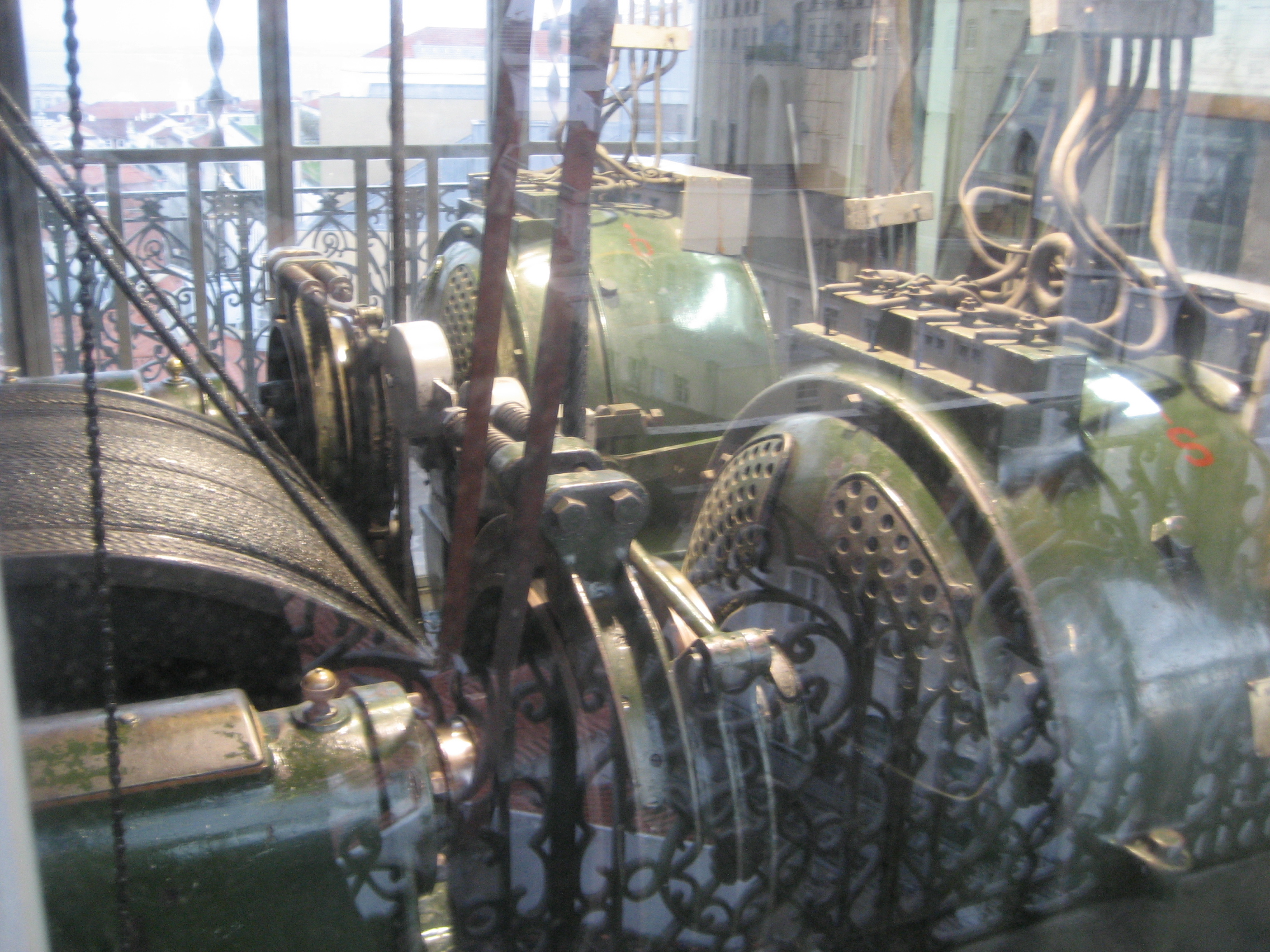
The problem of Lisbon's hills had vexed engineers for decades before the Santa Justa was built. In 1874, a civil and military engineer named Roberto Armenio presented the municipal council with a project to mechanically bridge the altitude gap between the Baixa and the Carmo Square above. Two years later, a competing proposal suggested rail lines pulled by animals up an inclined plane. Neither plan materialized, but the idea persisted. When the lift was finally completed, it ran on steam power. The conversion to electric operation came in 1907, and the mechanism has been updated periodically since, though the iron structure itself has barely changed. The two elevator cabins, decorated with polished wood, mirrors, and windows, originally carried 24 passengers each, a capacity later increased to 29.
Iron and Ornament
The tower's architecture belongs to the brief period when iron was celebrated not merely as a structural material but as an aesthetic one. The Neo-Gothic decorative ironwork reflects the same era that produced the Eiffel Tower in Paris and the great railway stations of the 19th century, a time when engineers believed industrial materials could achieve beauty rivaling carved stone. Four vertical columns, each built from paired pillars, support the main structure. A dozen transverse beams form a double lattice bracing the tower, while the walkway connecting to the Largo do Carmo is articulated on bearings to accommodate the building's slight movements. Two spiral staircases wind upward inside the structure, each storey showing a different decorative pattern, a detail that suggests the builders regarded even the emergency stairs as worthy of ornament.
A Terrace Between Worlds
The top floor is a lookout platform that offers one of Lisbon's most celebrated panoramas. To the north, the Rossio square and the tree-lined Avenida da Liberdade stretch toward the modern city. To the south, the Praca do Comercio opens onto the Tagus River. The Castle of Sao Jorge dominates the eastern skyline, and the ruined Gothic arches of the Carmo Convent are visible from the upper exit, close enough to touch. The corridor above the elevator mechanism was transformed into a terrace that exits through an iron gate onto the Largo do Carmo, depositing visitors from the commercial Baixa into the quieter Chiado neighborhood as if they had stepped through a portal. Below, the electrical equipment hums in a vaulted chamber beneath the Escadinhas de Santa Justa, hidden from view but audible as a low mechanical heartbeat.
From the Air
Located at 38.712N, 9.139W in central Lisbon's Baixa district. The iron tower is visible from the air as a distinctive vertical structure among the surrounding 18th-century buildings. It sits between the Rossio square to the north and the Praca do Comercio to the south, with the Carmo Convent ruins visible immediately to its west at the upper level. Nearest airport is Lisbon/Humberto Delgado (LPPT), 7 km north. Best viewed at 1,500-3,000 ft AGL.