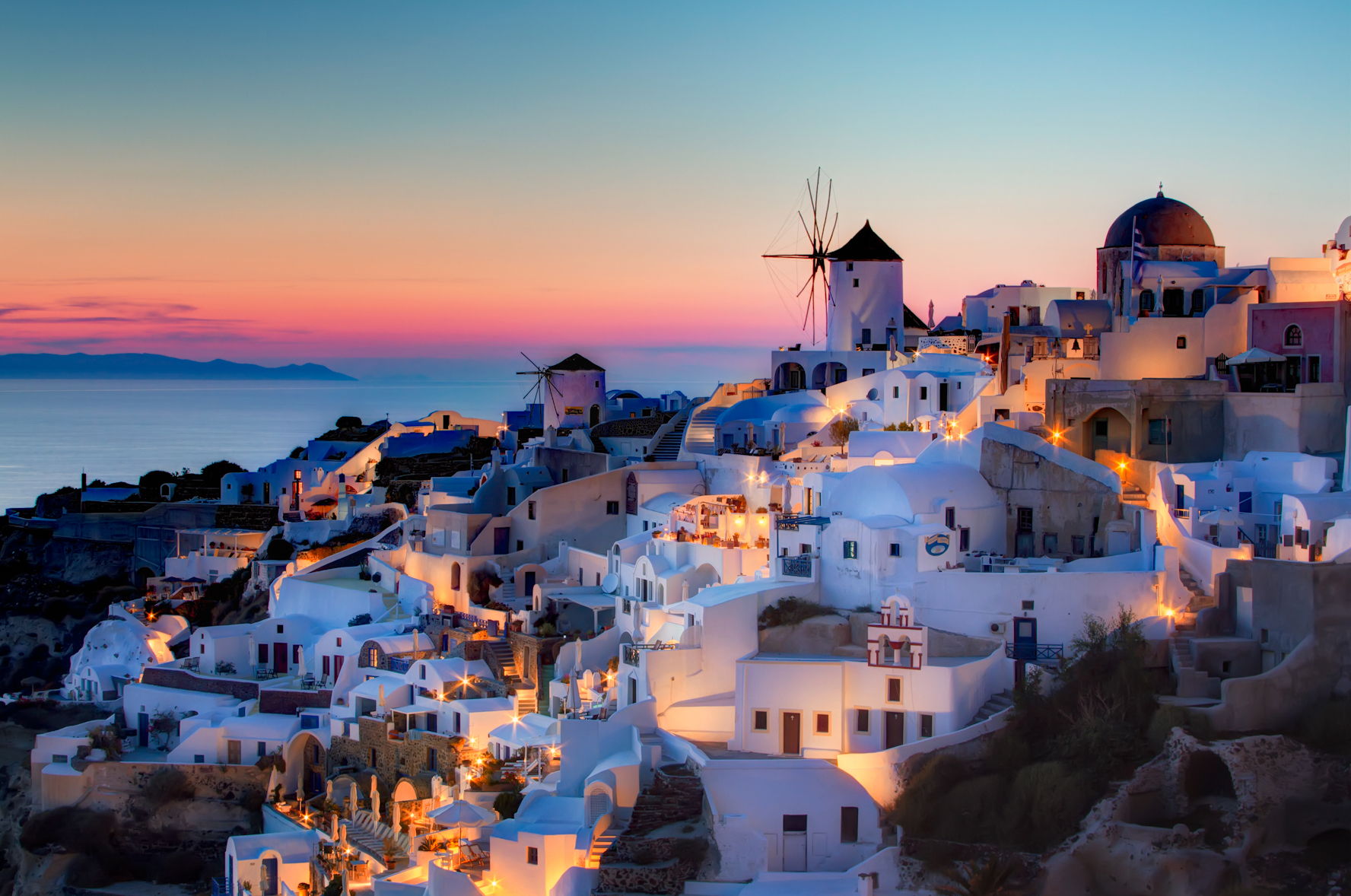
Santorini: The Volcano That May Have Destroyed Atlantis
Around 1600 BC, the volcanic island of Thera - modern Santorini - exploded. The Minoan eruption was one of the largest in human history, ejecting 60 cubic kilometers of material and collapsing the island into a caldera. The blast was heard in Egypt. Tsunamis devastated Crete, 110 kilometers away. Within a generation, the sophisticated Minoan civilization collapsed. Some scholars believe this catastrophe inspired Plato's story of Atlantis - a advanced civilization swallowed by the sea in a single day. Today, tourists sun themselves on cliffs surrounding the flooded crater, unaware they're vacationing inside a dormant supervolcano.
The Explosion
The Minoan eruption of Thera was one of the most powerful volcanic events in recorded human history - an estimated VEI 6 or 7. For comparison, it was four times more powerful than Krakatoa. The initial eruption column reached 36 kilometers into the stratosphere.
The explosion ejected 60 cubic kilometers of rock and ash. The center of the island collapsed into the emptied magma chamber, creating a caldera that flooded with seawater. Where a mountain once stood, there was now a bay 400 meters deep. The shape of modern Santorini - a crescent of cliffs around a central bay - is the scar left by that collapse.
The Minoans
Before the eruption, the Minoan civilization flourished across the Aegean. Based on Crete, the Minoans built elaborate palaces, created sophisticated art, and traded across the Mediterranean. Akrotiri, a Minoan settlement on Thera, was a prosperous town of multi-story buildings and indoor plumbing.
Archaeologists excavating Akrotiri found it buried under ash like Pompeii - but unlike Pompeii, no bodies were found. The Minoans apparently had warning and evacuated. However, the eruption and resulting tsunamis devastated Crete. Within a generation, the Minoan civilization collapsed. Whether the eruption caused this directly or triggered a chain of events remains debated.
The Atlantis Theory
Plato described Atlantis as an advanced civilization destroyed by earthquakes and floods, sinking beneath the sea in a single day and night. He placed it beyond the Pillars of Hercules (Gibraltar), but some scholars believe he was describing Thera and the Minoans.
The parallels are striking: an island civilization, technologically advanced, destroyed suddenly by natural disaster. Plato lived 1,100 years after the eruption, enough time for the story to become mythologized. Whether Atlantis was Thera, or Plato invented the story entirely, remains one of archaeology's enduring debates.
The Excavations
Greek archaeologist Spyridon Marinatos began excavating Akrotiri in 1967. What he found was remarkable: a Bronze Age city preserved under volcanic ash. Three-story buildings with frescoes still on the walls. Pottery, furniture, and tools in place. Streets and squares laid out in organized grids.
The frescoes are extraordinary - depicting naval expeditions, landscapes, and daily life in vivid color. The famous 'Boxing Boys' and 'Fisherman' frescoes show Minoan culture frozen in time. Unlike Pompeii, the site has few luxury items - suggesting the residents took valuables when they fled.
The Volcano
Santorini remains volcanically active. The small islands of Nea Kameni and Palea Kameni in the center of the caldera are volcanic cones that have grown since the Minoan eruption. Nea Kameni last erupted in 1950. Hot springs bubble around its shores.
Geologists monitor Santorini constantly. A swarm of earthquakes in 2011-2012 caused concern - the magma chamber was refilling. The volcano will erupt again; the question is when. Meanwhile, tourists crowd the cliffs of Oia to watch sunset over the caldera, wine flows, and the dormant giant beneath them sleeps on.
From the Air
Santorini (36.39N, 25.46E) is a Greek island in the southern Aegean. Santorini International Airport (LGSR) is on the eastern edge of the island. The caldera is unmistakable from the air - a flooded crater surrounded by crescent-shaped cliffs. The volcanic islands of Kameni are visible in the center. Ferry traffic is constant from Piraeus and other islands. Weather is Mediterranean - hot dry summers, mild winters.