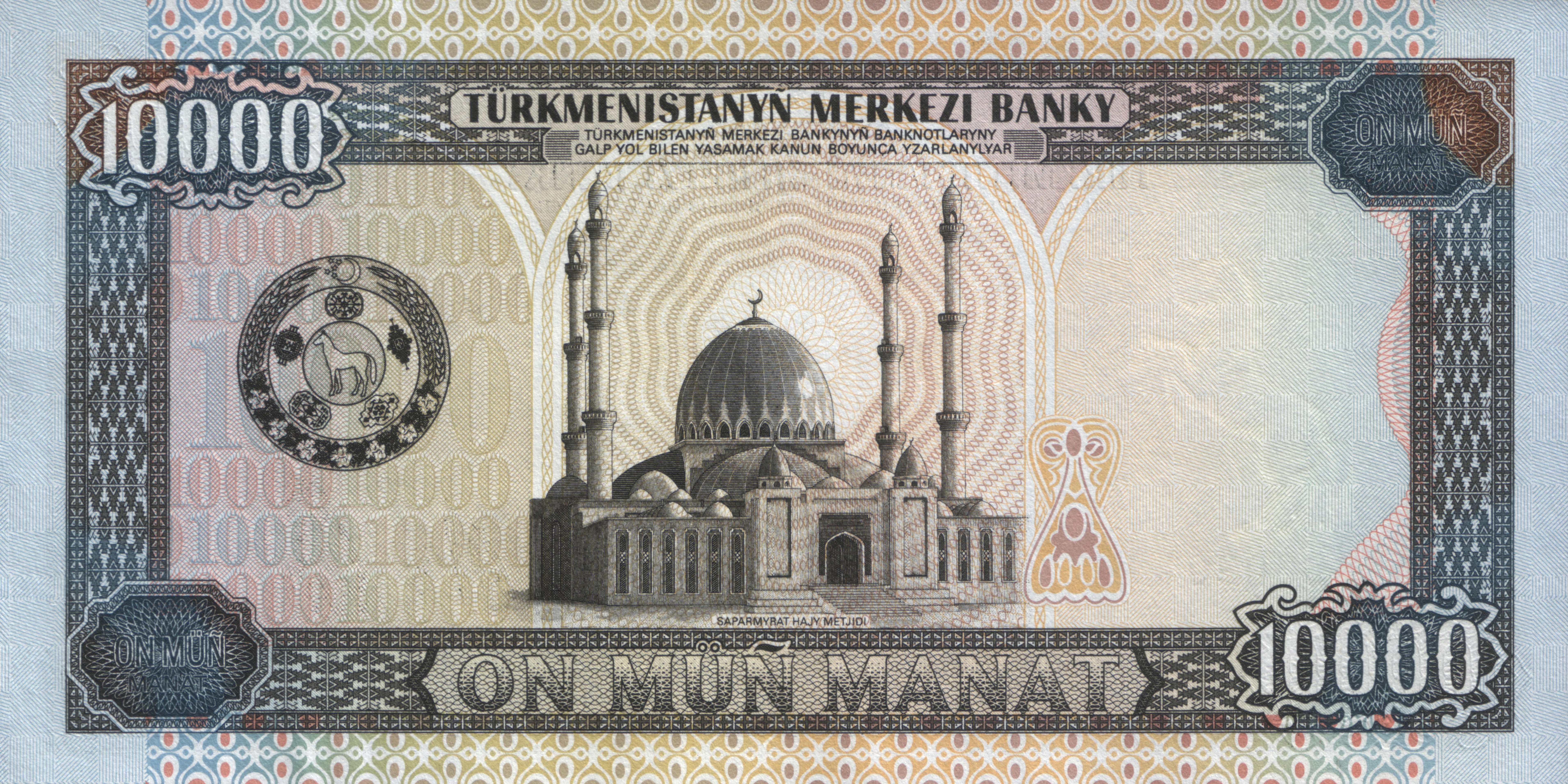
Saparmyrat Hajji Mosque: Memorial in the Desert
Four minarets rise sixty-three meters above the desert floor at Gokdepe, each one representing a year of the Prophet Muhammad's life. Between them sits a dark green dome that catches the Central Asian sun and throws it back across the Akhal Oasis. The Saparmyrat Hajji Mosque was built in a single year, between 1994 and 1995, but the story it commemorates is more than a century older. In January 1881, the Russian Empire stormed the fortress of Geok Tepe and killed thousands of Teke Turkmens who had gathered behind its mud walls. This mosque stands where they fell.
One Year, One Building, One Memory
Ashgabat architect Kakajan Durdyyev designed the structure. President Saparmyrat Niyazov, who took Turkmenistan through independence from the Soviet Union, commissioned it after completing his Hajj pilgrimage to Mecca in 1992. The mosque bears his pilgrim's title. The construction contract went to Bouygues, the French building conglomerate, in 1994. They completed the mosque in twelve months -- a remarkably fast timeline for a building of this scale and ambition. The speed was deliberate. Niyazov wanted a visible symbol of national identity, and he wanted it quickly. In a country where Soviet atheism had suppressed religious expression for decades, the mosque was both a declaration of independence and a reclamation of heritage.
Carpet Patterns in Stone
Step inside and the first thing you notice is the chandelier, 260 lamps hanging from the center of the dome. The light falls across walls embossed with motifs drawn from traditional Turkmen carpets -- the geometric patterns that have defined Turkmen artistry for centuries, transferred from wool to stone. The interior is a square prayer hall that opens onto a square courtyard. The domes above are painted in pastel blue, a color that echoes the name of the place itself: Geok Tepe means "Blue Hill." Adjacent to the mosque on the eastern side, a two-story complex surrounds a star-shaped pool. Smaller white domes ring the perimeter of both the complex and the courtyard. The mosque can hold 8,000 worshipers at once, making it one of the largest in Turkmenistan.
The Fortress Beneath
The ground on which the mosque stands is soaked in history. In 1881, roughly 40,000 Teke Turkmens -- fighters and their families -- sheltered inside a mud-walled fortress on this site while Russian forces under General Skobelev conducted a methodical siege. Russian sappers tunneled beneath the southeastern wall and packed the shaft with 2,600 pounds of gunpowder. When the mine detonated on January 24, the blast tore a gap 140 feet wide. The Russians stormed through. The general's own report recorded over 14,000 dead, including women and children killed during the cavalry pursuit that followed. The fortress was destroyed, but its memory survived through generations of oral tradition. Building a mosque on the battlefield transformed a site of devastation into a place of prayer.
Renovation and Remembrance
In 2008, a Turkish construction firm renovated the mosque and expanded the grounds considerably. The $34 million project added ritual banquet facilities capable of hosting 1,000 guests, landscaped the surrounding territory, and -- most significantly -- built the Gokdepe National Museum on the mosque's grounds. The museum tells the story of the 1881 siege and the broader history of Turkmen resistance. Together, the mosque and museum form a memorial complex that serves both religious and national purposes. Turkmenistan observes a national day of mourning on the anniversary of the battle. On that day, the four minarets and the green dome take on a particular weight. They are not simply architectural elements. They are gravestones for a community that fought, that was overwhelmed, and that chose to mark the place where it happened with something beautiful rather than something bitter.
From the Air
Located at 38.16°N, 57.97°E in Gokdepe, Turkmenistan, along the Akhal Oasis at the northern edge of the Kopet Dagh mountains. The mosque is a prominent visual landmark: its dark green dome and four 63-meter minarets are visible from considerable altitude against the flat desert terrain. The site is approximately 45 km northwest of Ashgabat. Nearest major airport is Ashgabat International (UTAA). Best viewed at 2,000-4,000 feet AGL; the mosque complex and adjacent Gokdepe National Museum form a distinct cluster against the irrigated oasis landscape.