Sapelo Island
You cannot drive to Sapelo Island. There is no bridge, no causeway, no tunnel. The only way in is a seven-mile ferry ride from the McIntosh County mainland, a twenty-minute crossing that functions as a kind of time lock, separating the island from the rhythms of the modern coast. Ninety-seven percent of Sapelo belongs to the state of Georgia. Access requires a permit, an organized tour, or an invitation from one of the island's dwindling number of residents. This enforced remoteness has shaped everything about Sapelo -- preserving its salt marshes for science, its Gullah-Geechee community for culture, and its layered history for anyone willing to make the crossing. The island has been claimed by Native Americans, Spanish missionaries, a plantation senator, a tobacco dynasty heir, and the University of Georgia. None of them owned it for long. The marsh always reclaims what people build here.
Before the English Word for It Existed
Sapelo Island may be the site of San Miguel de Gualdape, the short-lived colony founded in 1526 by Spanish explorer Lucas Vazquez de Ayllon. If the identification is correct, Sapelo hosted the first European settlement in the present-day United States -- a full eighty-one years before Jamestown -- and the first place on the continent where a Catholic mass was celebrated. The colony collapsed within a year, undone by disease, starvation, and a slave revolt among the Africans the Spanish had brought with them. The name Sapelo itself is of Native American origin; the Spanish recorded it as Zapala. During the seventeenth century, the island became part of the Guale missionary province of Spanish Florida, and after 1680 several missions were consolidated on Sapelo under the name Santa Catalina de Guale. When the British pushed south from the Carolina colonies, the mission era ended, but the island's layered past was already deep.
Spalding's Island Empire
In the early nineteenth century, Thomas Spalding -- a future Georgia state senator and U.S. Representative -- purchased Sapelo and transformed it into a plantation empire. He sold live oak timber for shipbuilding, introduced irrigation ditches for rice cultivation, and grew Sea Island cotton, corn, and sugar cane. The tabby ruins of his 1809 sugar mill still stand on the island, built from the coastal building material made of oyster shells, lime, sand, and water. Spalding brought four hundred enslaved people from West Africa and the West Indies to work the plantation and construct the Spalding Mansion. He opposed abolition to his last breath, dying in 1851 while returning from a convention to assert Georgia's position on slavery. When emancipation came, the formerly enslaved people established several settlements across the island. Over time, those communities consolidated into a single place: Hog Hammock, the last surviving Gullah-Geechee community in the United States.
The Reynolds Era and the Birth of Ecology
Sapelo's modern history belongs largely to two wealthy owners and one visionary scientist. Howard Coffin, co-founder of the Hudson Motor Car Company, bought the island in the early twentieth century and used it as a hunting retreat, introducing chachalacas -- chicken-like game birds from Mexico -- in 1923. A stable population of thirty to forty of these non-native birds survives on the island to this day. Coffin sold Sapelo to R.J. Reynolds Jr., heir to the tobacco fortune, who used the island as a part-time residence for three decades. Reynolds consolidated the island's African-American residents into Hog Hammock, where many worked as servants in South End House, later renamed the Reynolds Mansion by the state. But Reynolds also founded the Sapelo Island Research Foundation in 1949, funding the work of ecologist Eugene Odum. Odum's 1958 paper, "The Ecology of a Salt Marsh," revealed the intricate food webs sustaining coastal wetlands and helped launch the modern environmental movement's understanding of estuarine ecosystems.
A Living Laboratory
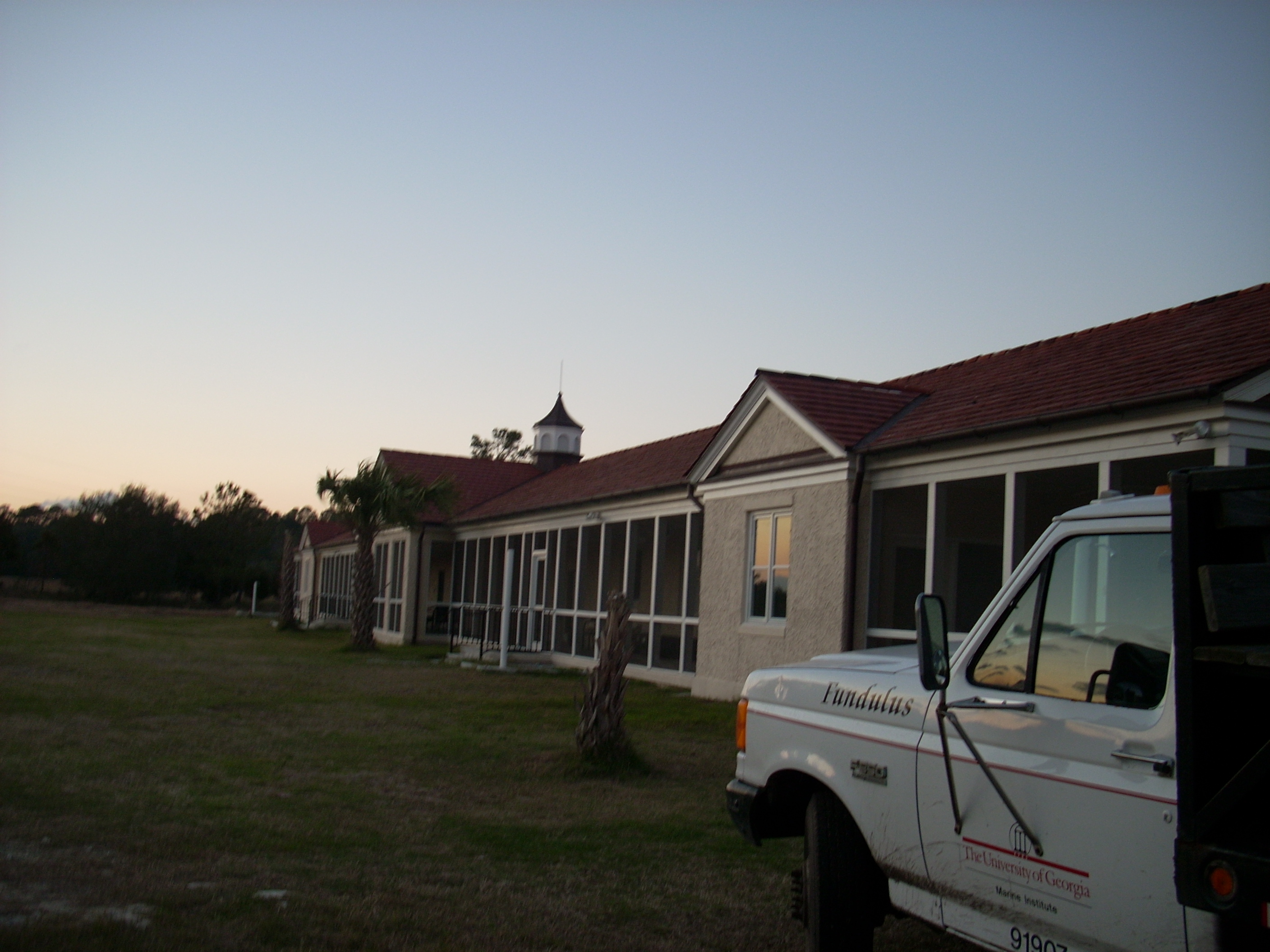
Today, Sapelo's western perimeter is the Sapelo Island National Estuarine Research Reserve, part of NOAA's nationwide research network. The University of Georgia Marine Institute occupies the south end of the island, continuing the tradition of ecological research that Odum pioneered. Scientists study salt marsh ecology, tidal dynamics, barrier island geology, and the effects of sea-level rise in an environment that has been largely free of development for decades. The Reynolds Mansion operates as a Georgia State Park, and the Georgia Department of Natural Resources manages the rest of the island, offering guided tours several days a week. A state campground on adjacent Cabretta Island accommodates small groups. The island's cultural legacy has inspired books, documentaries, and podcasts -- including Cornelia Walker Bailey's memoir of Gullah-Geechee life, the PBS documentary on America Reframed, and the research podcast "Sapelo NERRds." Sapelo remains what it has been for five centuries: a place apart, shaped more by water and isolation than by any human plan.
From the Air
Located at 31.478N, 81.242W, Sapelo Island is a barrier island approximately 10 miles long and 4 miles wide in McIntosh County, Georgia. The island is bounded by Doboy Sound to the south and Sapelo Sound to the north, with extensive salt marsh along its western shore. Look for the cleared area of Hog Hammock in the south-central island and the Reynolds Mansion complex at the southern tip. The University of Georgia Marine Institute buildings are also visible at the south end. Nearest airports: Harry Driggers Airport (9A1, Darien, approximately 7nm west), Brunswick Golden Isles Airport (KBQK, 25nm south). Best viewed at 2,000-4,000 feet AGL for full island perspective. The island's shape and surrounding marsh system are dramatic from altitude, with the narrow beach on the east side and intricate tidal creeks threading through the western marshes.