Sarajevo Olympic Bobsleigh and Luge Track
The graffiti came first. After the fighting stopped and the landmines were cleared, before any official renovation began, someone painted the concrete curves of the abandoned bobsled track on Mount Trebevic in bright, clashing colours. The murals turned a war ruin into an unlikely tourist attraction -- visitors hiking up from Sarajevo to walk the length of a track that had once carried Olympic athletes at 120 kilometres per hour and then, eight years later, sheltered artillery positions during the longest siege in modern warfare. The Sarajevo Olympic Bobsleigh and Luge Track is one of the most photographed ruins in the Balkans, and one of the strangest: a piece of sporting infrastructure designed for speed and celebration, repurposed for destruction, then left to the forest and the spray cans.
Two Weeks of Glory on Trebevic
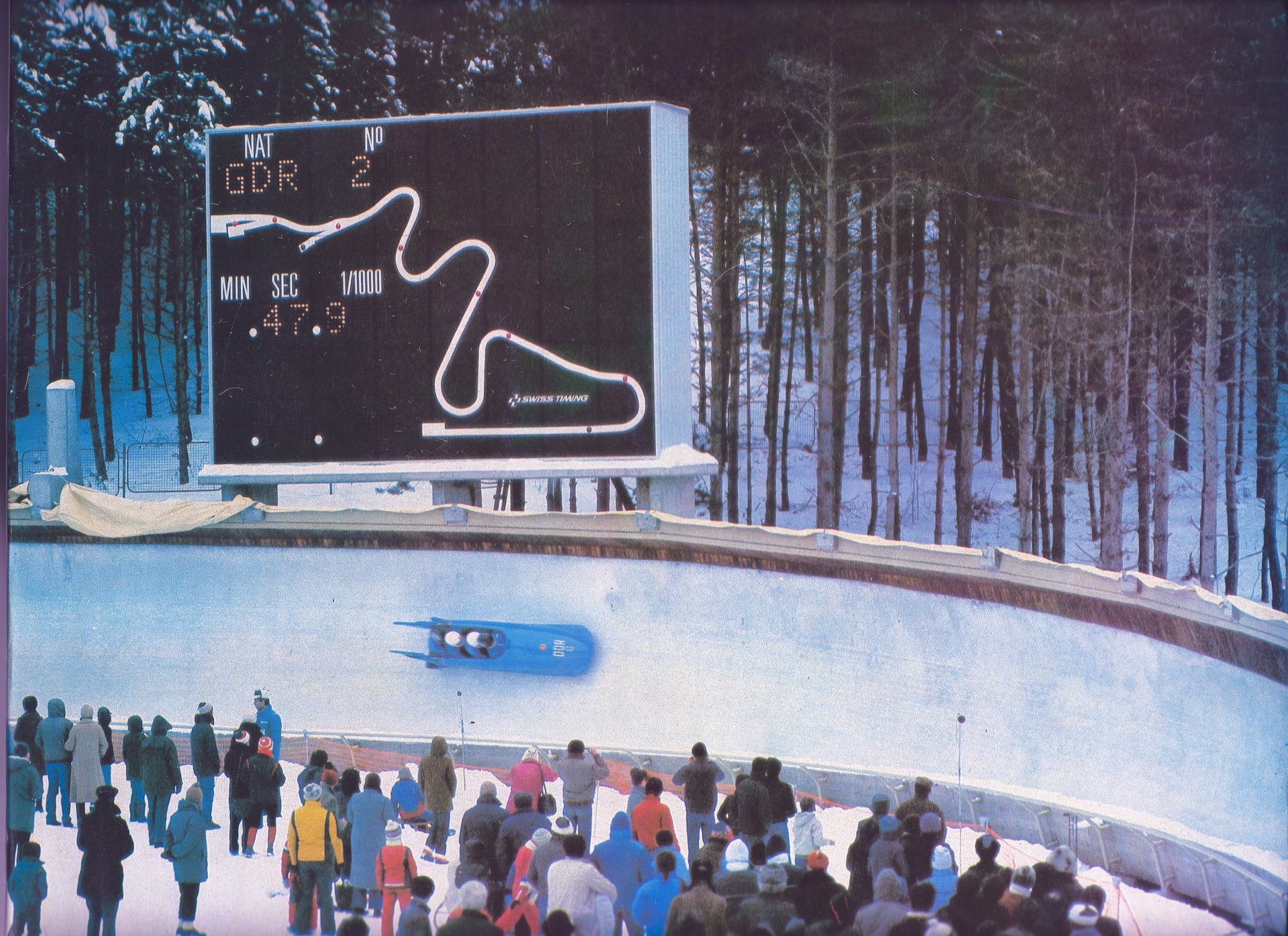
When Sarajevo was awarded the 1984 Winter Olympics in 1977, the city needed a bobsled and luge facility from scratch. Architect Gorazd Bucar designed a track on the slopes of Mount Trebevic, the 1,629-metre peak that rises directly above the city's eastern neighbourhoods. Construction began in June 1981 and was completed by September 1982. The track was engineered to split into three segments for training and recreational use -- a forward-thinking design for a venue that was expected to serve the region long after the Games. Its first major test came at the 1983 European Bobsleigh Championships, where 1,246 heats were completed with only four overturns and one serious injury. International experts praised it as technically demanding but safe. At the 1984 Games themselves, 20,000 spectators watched the luge events and 30,000 attended the bobsleigh. For those two February weeks, the track on Trebevic was part of a story Sarajevo told the world about itself: cosmopolitan, capable, joyful.
When the Mountain Became a Weapon
The same elevation that made Trebevic ideal for winter sports made it strategically valuable during the Bosnian War. When Bosnian Serb forces besieged Sarajevo beginning in April 1992, they occupied the surrounding heights, including Trebevic. The bobsled track, with its reinforced concrete walls and commanding views of the city below, became an artillery and sniper position. Shells fired from positions near the track fell on the neighbourhoods where spectators had once gathered to cheer. The fighting destroyed both start houses, the refrigeration plant, and every track-switching and refrigerant system. Defensive fighting holes were drilled into the concrete at the track's final curves. The landmines scattered across the mountainside during the conflict took years to clear. When the siege ended in 1996, the track remained -- structurally intact but stripped of everything that had made it functional.
Colour on the Ruins
For two decades, the track sat in the forest on Trebevic, gradually claimed by vegetation and graffiti artists. The concrete chute, with its banked curves disappearing into the trees, became one of the most recognizable images of post-war Sarajevo -- a metaphor almost too obvious to need stating. Visitors hiked up from the city to walk through the turns, ducking under overgrown branches, reading the murals and tagging. Photographers came from around the world. The track appeared in documentaries, travel blogs, and architecture journals. It became a monument precisely because nobody had intended it to be one.
The Slow Return of Athletes
Beginning in 2014, after an extensive demining operation cleared the mountainside, limited renovations started with a grant from the International Luge Federation. The goal was modest at first: prepare the track for summer training, which does not require refrigeration. It worked. Athletes from Bosnia and Herzegovina, Slovakia, Poland, Turkey, Slovenia, Croatia, and Serbia began using the facility regularly, and it gained a reputation as one of the best summer training tracks among the nine available worldwide. Full winter restoration remains distant -- rebuilding the start houses and refrigeration systems would cost far more than any current funding allows. A bid connected to the 2019 European Youth Olympic Winter Festival considered reconstruction, but the price proved prohibitive. In 2025, an Olympic Story educational trail was installed along the track: thirteen panels with QR codes telling the story of the 1984 Games. The track is not yet what it was, but it is no longer only what the war made it.
From the Air
Located at 43.84N, 18.44E on the western slopes of Mount Trebevic (1,629 m), directly above Sarajevo's eastern districts. From altitude, the track is visible as a sinuous concrete ribbon following the mountain contour, cutting through dense forest. The start area is at the upper elevation, with the track descending northwest toward the city. Sarajevo International Airport (LQSA) is approximately 10 km to the southwest. The other 1984 Olympic venues are visible on surrounding peaks: Bjelasnica and Igman to the southwest, Jahorina to the southeast. The city of Sarajevo spreads out in the valley directly below to the north and west.