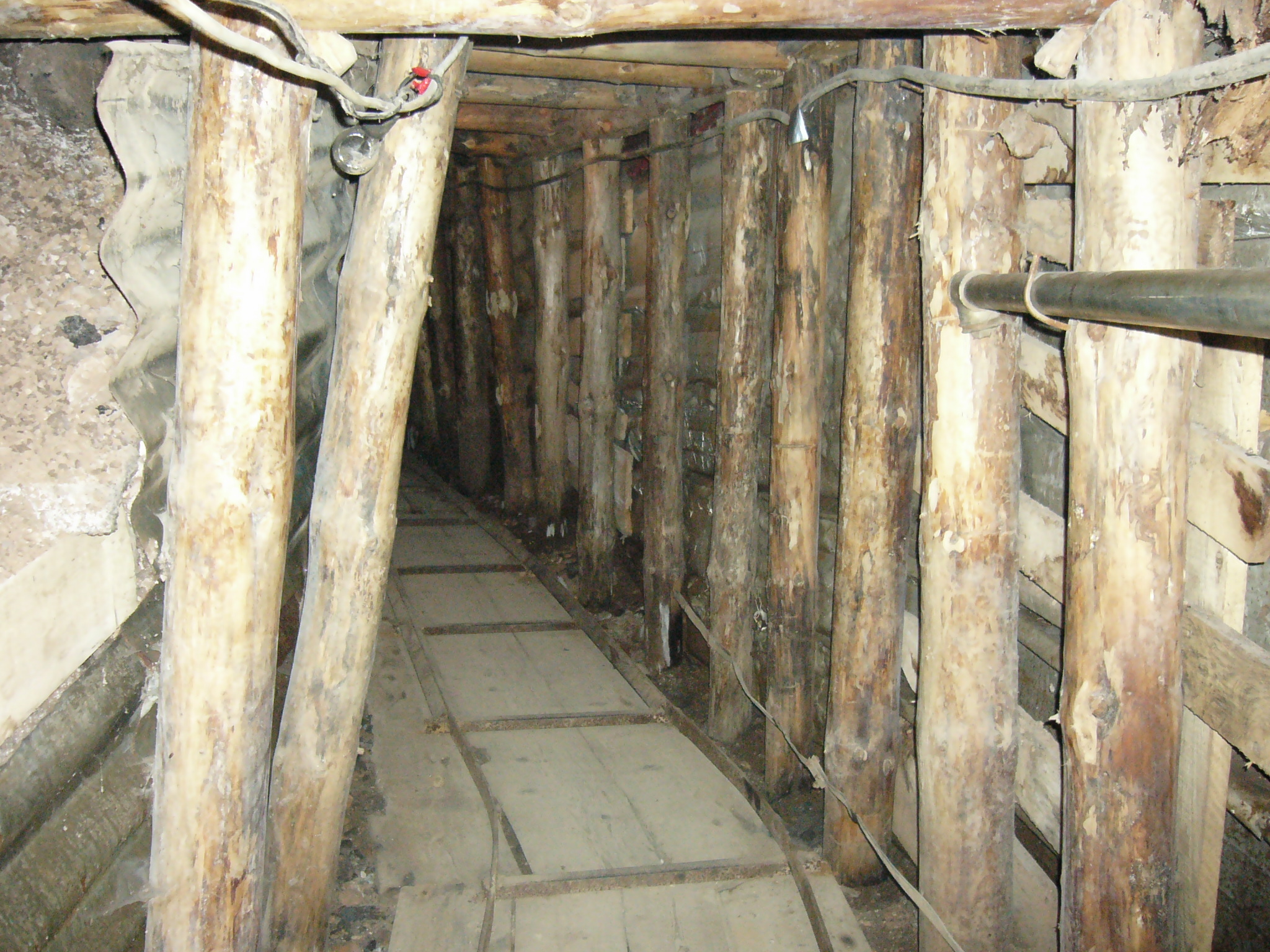
Sarajevo Tunnel
The entrance was a house. Not a bunker, not a fortified position -- a family home belonging to the Kolars, sitting on the south side of Sarajevo's airport runway, unremarkable enough to avoid drawing fire. Behind its walls, a passage dropped underground and ran 800 metres beneath the tarmac to emerge in the besieged neighbourhood of Dobrinja on the other side. For nearly three years, this tunnel was the only way in or out of Sarajevo. Food, medicine, weapons, fuel, electricity cables, telephone lines, and people -- everything the city needed to survive passed through a corridor barely wide enough for two people to squeeze past each other.
Digging Beneath the Runway
Construction began on March 1, 1993, under the codename "Objekt BD" -- BD for the two neighbourhoods it connected, Butmir and Dobrinja. Civil engineer Nedzad Brankovic designed the route to pass beneath the airport runway, which was controlled by United Nations forces and sat between the besieged city and Bosnian-held territory outside. Because the situation was desperate, full technical specifications were never drawn up. Workers dug around the clock in eight-hour shifts, removing 2,800 cubic metres of earth by hand. Underground water was the worst problem -- it had to be bailed out constantly, bucket by bucket. The two teams digging from opposite ends met in the middle on June 30, 1993. The tunnel opened for use the following day. Workers reinforced it with 170 cubic metres of timber and 45 tonnes of steel, and installed an oil pipeline, electrical cables donated by Germany, and telephone lines. For a city that had been cut off from the world, the tunnel restored not just supplies but connection.
The Lifeline Underground
The tunnel was roughly 1.6 metres high and about a metre wide -- low enough that most adults had to crouch or stoop the entire way. The journey took 20 to 30 minutes in each direction, longer when traffic was heavy or the passage was flooded. Armed Bosnian soldiers guarded both entrances, and a permit was required to pass through. Dignitaries and the injured were sometimes carried on a wheeled chair that ran along a crude rail. For the roughly 300,000 civilians trapped inside Sarajevo during the siege, the tunnel's existence was both a practical lifeline and a psychological one. It meant the city was not completely sealed. Humanitarian aid, smuggled goods, and war supplies all flowed through. Families separated by the siege could, in theory, reunite. The tunnel also became a critical way to bypass the international arms embargo, allowing the city's defenders to obtain weapons they could not legally receive.
What the Kolar Family Gave
Bajro Kolar, the owner of the house that concealed the tunnel entrance, later explained his decision simply: "Whatever we have, we gave for the defense and liberation of Sarajevo." After the war ended in 1995, the Kolar family turned the property into a private museum. For fifteen years it operated without any government financial support. The house remains much as it was during the siege -- pockmarked, modest, surrounded by the artifacts of wartime improvisation. A short section of the original tunnel is preserved and open to visitors, who can walk through the cramped passage and understand, physically, what it meant to move through this space under the weight of survival. Vladimir Zubic, a deputy of the Sarajevo City Council, described the museum's purpose: it should be "a reminder of everyone, so that a thing like this tunnel, that provided the people of this city with the minimum subsistence, will never have to be used again."
A Museum That Refuses to Forget
The Tunnel Museum has become one of the most visited sites in Sarajevo, drawing hundreds of visitors daily. Guided tours of the city's wartime history nearly always include it. The museum sits just south of the airport, accessible from the city centre by bus or taxi, and its location near the runway is itself part of the story -- the UN-controlled airport was the gap in the siege ring that made the tunnel possible. Inside, photographs, military equipment, and personal items trace the siege from its beginning in April 1992 to the Dayton Agreement that ended the Bosnian War in 1995. But the most affecting exhibit is the tunnel itself. Walking through it, even the short section that remains, compresses the visitor into the reality of what 300,000 people endured: nearly four years of snipers, shelling, shortages, and the knowledge that this narrow, muddy, hand-dug passage was the only thread connecting them to the outside world.
From the Air
Located at 43.82N, 18.34E on the south side of Sarajevo International Airport (LQSA). The tunnel ran beneath the airport runway from the Butmir neighbourhood (south side) to Dobrinja (north side, inside the siege ring). From altitude, the museum is identifiable as a small residential structure immediately adjacent to the airport perimeter on the southern side. The runway itself is the feature the tunnel passed beneath. The surrounding terrain is flat near the airport but rises sharply to the mountains that ring Sarajevo to the south, east, and north. Mount Igman, which Bosnian forces used to access the tunnel's outer entrance, is visible to the southwest.