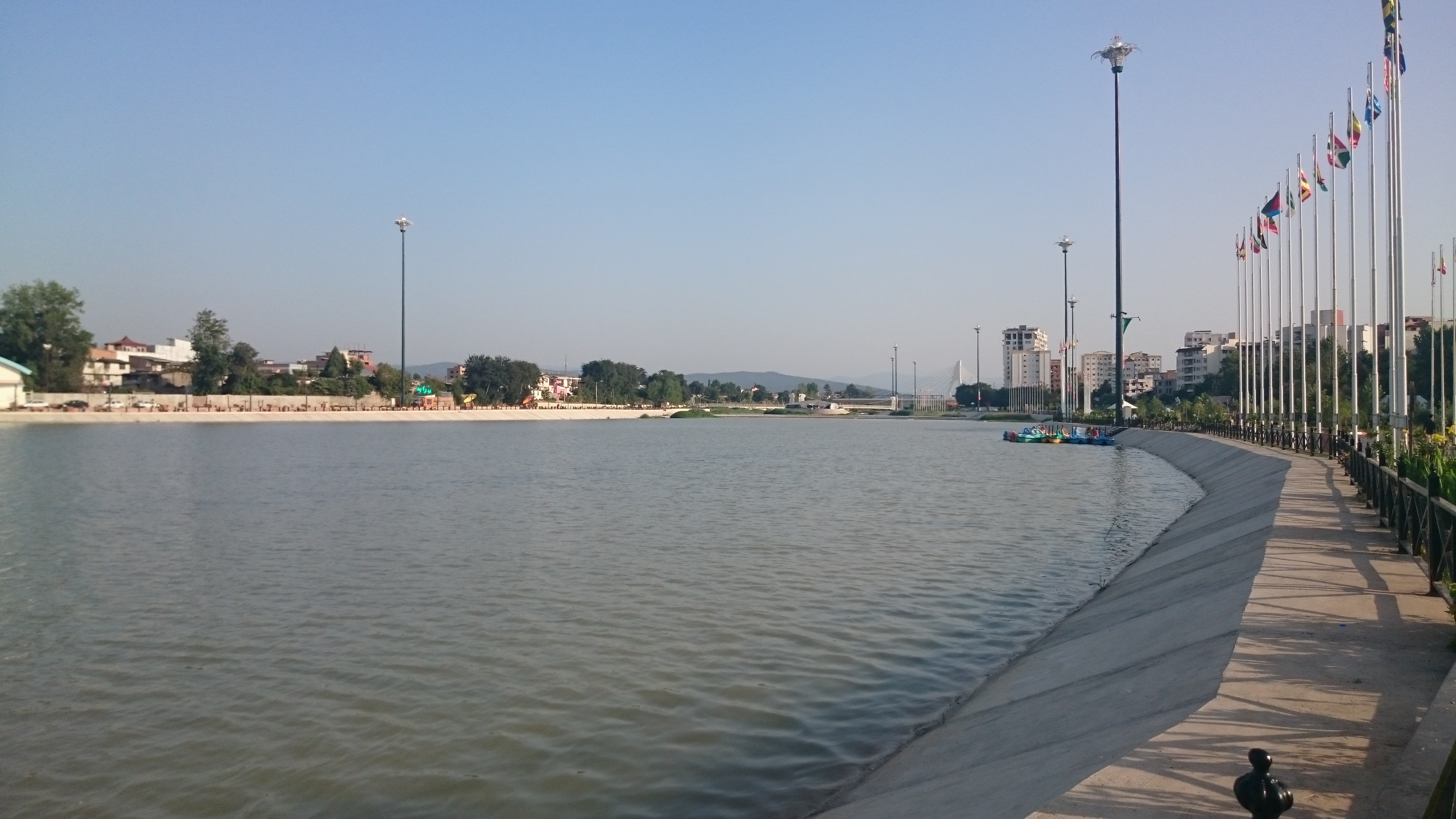
Sari
The caves came first. At Huto and Kamarband, about 40 kilometers east of modern Sari, humans left traces of habitation dating to the 7th millennium BC -- a span of time that makes the city's recorded history feel like a recent chapter. Sari itself is ancient enough. It served as the capital of the Hyrcania civilization six centuries before Christ, ruled as the seat of the Kingdom of Tabaria until the 17th century, and twice held the title of capital of all Iran. Today it is the capital of Mazandaran province, a city of roughly half a million people on the left bank of the Tajan River, 20 kilometers south of the Caspian Sea. The Clock Tower at its center has become the city's symbol, but Sari's true identity lies in the layers beneath it.
Thousands of Years of Habitation
The Huto and Kamarband caves near the village of Shahid Abad represent some of the longest continuous records of human presence in the Middle East. Excavations revealed tools, bones, and dwelling traces spanning tens of thousands of years, connecting the Caspian coastal strip to the earliest chapters of human migration across western Asia. These are not tourist-friendly show caves with lighting and handrails. They are archaeological sites, raw and significant, embedded in the forested hills east of the city. The Resket Tower, from the Qaran era, and the Ladjim Tower, from the Dabuyan dynasty, stand as vertical punctuation marks across the countryside -- stone sentinels from the centuries when Tabaristan's local dynasties held power along the Caspian shore.
Colored Glass and Thick Walls
The 125-year-old Khaneh Kolbadi is a masterwork of Mazandarani domestic architecture. Its thick ground-floor walls insulated against winter cold, while the airy upper floor could be opened to cross-breezes during the humid summers. Most striking are the orosi windows -- intricate wood-framed puzzles of multicolored glass that cast shifting patterns across the interior rooms and, according to local tradition, confused mosquitoes enough to keep them out. The building has been restored and is slated to become a museum incorporating the historic Vasir-e Hamam bathhouse behind it. Nearby, the Jameh Mosque surprises visitors with its traditional Mazandarani tiled roofs; from the outside, it looks more like a medieval Italian prison than a house of worship. Sari's architecture does not conform to expectations.
Iran's Hidden Pamukkale
About 100 kilometers south of Sari, the travertine terraces of Badab-e Surt cascade down a mountainside in stepped pools of rust-orange and cream. The formations are strikingly similar to the famous terraces at Pamukkale in Turkey, though far less visited. Reaching them requires either a private car via the town of Kiasar or a combination of sparse public buses and a two-kilometer hike from a rudimentary parking area. The mineral-rich water that feeds the terraces has built them up over thousands of years, and bathing in the pools themselves is now banned to protect the geological formations. The surrounding landscape is deeply rural -- no hotels, no tourist infrastructure, just the occasional village where a friendly Iranian family might offer hospitality. Upstream, visitors can still wade in the warm mineral water before it reaches the protected terraces.
Wrestlers and Night Owls
Sari is the birthplace of some of Iran's most accomplished wrestlers, and in 2006 the city hosted the World Wrestling Championships at the Seyyed Hosseyni Coliseum. Wrestling in Iran is not a niche sport but a national tradition, and in Sari it runs particularly deep. The city is also one of the rare places in Iran where summer nightlife thrives. On warm evenings, residents gather at spots like Barbod, Paradise, and Tooska to play games, listen to music, eat, and read poetry -- the Diwan of Hafez being a popular choice. Farhang Street in the city center fills with diners, and the Tajan River Park offers a green corridor through the urban landscape. This is a city that lives outdoors when the climate allows.
Between Mountain and Sea
Sari sits at just 50 meters above sea level, on the northern slopes of the Alborz Mountains. The Tajan River cuts through the city on its way to the Caspian, and the combination of low elevation and proximity to the sea gives Sari its warm, humid character. Multiple coasts within easy reach -- Farah Abad, Gohar Baran, Derya Kenar -- draw local visitors to the shore, while forest parks like Salardareh and Zare offer hiking under dense canopy. From Bam-e-Shahr Hill, a panoramic view reveals the full sweep of the city against its mountain-and-sea backdrop. Mazandarani and Persian are both spoken here, and the local cuisine revolves around Caspian fish, kebab, naan bread, and the winter staple of Caspian tea. In summer, the yogurt drink called doogh replaces tea as the beverage of choice. Sari is a city that shifts its habits with the seasons but never loses its connection to the ancient land it has occupied for millennia.
From the Air
Located at 36.57N, 53.058E in Mazandaran province, approximately 20 km south of the Caspian Sea coastline. The city sits on the northern slopes of the Alborz Mountains at roughly 50 meters elevation. The Tajan River is visible flowing through the city toward the Caspian. Dasht-e Naaz Airport (OINJ) serves the city, connected to Tehran and other Iranian cities. The A62 Autobahn connects Sari to neighboring cities Neka and Qaemshahr. From altitude, the city appears as a sprawling urban area in the green Caspian coastal lowlands, with the forested Alborz range rising dramatically to the south. The Badab-e Surt travertine terraces are located approximately 100 km to the south-southeast in the mountains. The Caspian coastline to the north provides a strong visual reference.