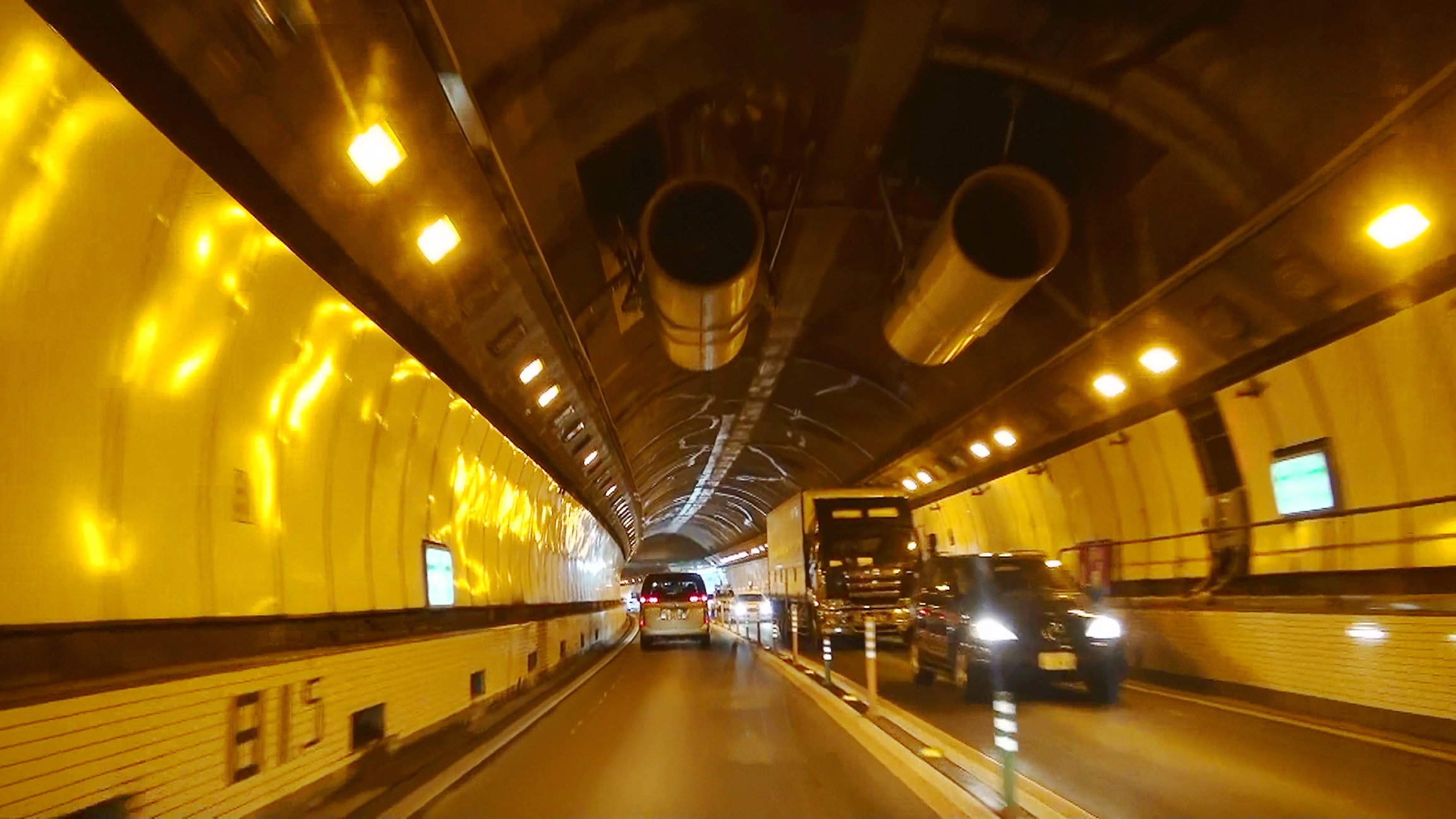
Sasago Tunnel
The bolts had not been replaced since 1977. For thirty-five years, they held concrete ceiling panels in place inside the Sasago Tunnel while tens of thousands of vehicles passed beneath them daily on the Chuo Expressway. Maintenance crews inspected visually but never struck the bolts or tested them physically. At approximately 8 a.m. on December 2, 2012, nearly 150 of those panels let go at once, crashing down onto the Tokyo-bound lane and crushing three vehicles. Nine people died. The disaster inside this mountain tunnel, bored through the ridges of Yamanashi Prefecture roughly 100 kilometers west of Tokyo, became Japan's reckoning with a national network of roads, bridges, and tunnels built during the postwar economic miracle and never fully updated for the demands of a new century.
Through the Mountains to Nagoya
The Sasago Tunnel is a twin-bore, two-lane motorway tunnel running 4.7 kilometers through mountainous terrain on the border between the cities of Koshu and Otsuki in Yamanashi Prefecture. It carries the Chuo Expressway, a 367-kilometer highway connecting Tokyo with Nagoya in central Japan, threading through some of the most rugged geography in Honshu. Built in 1977 during Japan's infrastructure boom, the tunnel used a suspended ceiling panel system to create ventilation ducts above the roadway. Concrete panels, each weighing roughly one metric ton, hung from steel anchor bolts drilled into the tunnel roof. This design was common in long tunnels of the era, channeling exhaust fumes into overhead ducts for extraction. It was an engineering solution that worked well when new. The question was what happened after decades of vibration, moisture, and neglect.
Eighty Seconds of Concrete
The morning of December 2, 2012, was ordinary. Traffic flowed through the Tokyo-bound tube at highway speed. Then approximately 150 ceiling panels, spanning a section of roughly 130 meters, fell. The panels were thick concrete slabs suspended from the tunnel roof, and when they came down they obliterated everything beneath them. Three vehicles were caught in the collapse zone, including a van carrying six people. The wreckage caught fire, and smoke billowed from the Koshu entrance to the tunnel. Nine people were killed and two were injured, making it one of the deadliest roadway accidents in Japanese history. Rescue workers found that the anchor bolts securing the panels had corroded and loosened over the tunnel's thirty-five-year life. Some bolts were simply missing. The failure pattern closely resembled a 2006 ceiling collapse in Boston's Fort Point Channel Tunnel, part of the Big Dig project, which had killed one person.
A Nation Looks Up
Japan's transport ministry responded immediately, ordering emergency inspections of forty-nine other tunnels nationwide with similar suspended ceiling designs. The Sasago Tunnel itself was closed for twenty-seven days. Workers removed every remaining ceiling panel from the south tube, which reopened on December 29, 2012, with temporary ventilation fans mounted directly on the tunnel walls. The north tube, where the collapse occurred, did not reopen until February 8, 2013. Investigations revealed that maintenance teams had relied on visual inspections rather than physically testing the anchor bolts, a practice that had allowed progressive deterioration to go undetected. The disaster forced an uncomfortable national conversation about Japan's aging postwar infrastructure. Roads, tunnels, and bridges built during the rapid economic growth of the 1960s and 1970s were reaching the end of their designed lifespans, and the maintenance budgets and inspection protocols had not kept pace.
The Weight of What We Build
The Sasago Tunnel collapse did not occur because of a natural disaster or a design flaw in the original construction. It happened because maintenance failed to evolve. The bolts held for thirty-five years under constant vibration and exposure to moisture and vehicle exhaust. No one tested whether they were still holding. The legal aftermath saw the expressway operator ordered to pay 440 million yen in damages to the victims' families. The broader legacy was a transformation of Japan's infrastructure inspection standards. Physical testing replaced visual-only checks. Inspection frequencies increased. Similar ceiling panel systems were removed from tunnels across the country. The Chuo Expressway continues to carry traffic through the Sasago Tunnel today, its ceiling now open to the bare rock above, fans mounted on the walls where concrete panels once hung. The nine people who died that December morning are remembered in annual memorials at the site, a reminder that the infrastructure we trust with our lives requires the same attention we give to building it.
From the Air
The Sasago Tunnel is at 35.621N, 138.793E in the mountains of Yamanashi Prefecture. The tunnel itself is not visible from the air, but the Chuo Expressway corridor is visible cutting through the mountainous terrain between Koshu and Otsuki. Best orientation from 4,000-6,000 feet AGL. The Kofu Basin lies to the west and the Kanto Plain to the east. Nearest airports: RJTT (Tokyo Haneda) approximately 100 km east, RJAH (Hyakuri/Ibaraki Airport) approximately 140 km east-northeast. The expressway corridor through the mountains is a useful visual reference.