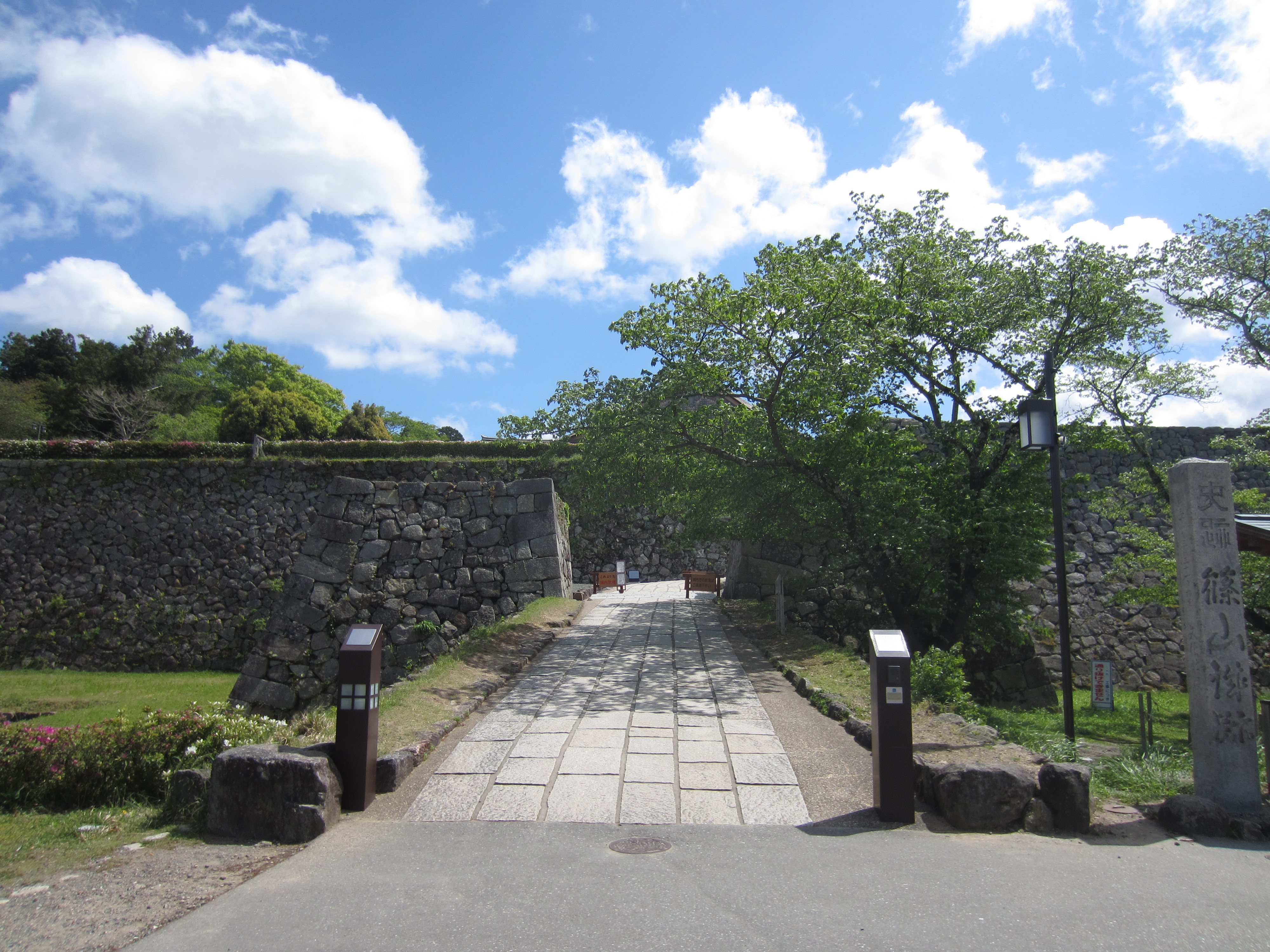
Sasayama Castle: The Fortress Built to Bleed an Empire
The genius of Sasayama Castle was never its walls or its moat. It was the invoice. After the Battle of Sekigahara in 1600 handed Tokugawa Ieyasu control of Japan, he faced a practical problem: dozens of powerful western lords still harbored loyalty to the defeated Toyotomi clan, and Toyotomi Hideyori himself remained alive at Osaka Castle. Ieyasu's solution was architectural. He ordered twenty of these suspect lords -- including the Fukushima, Kato, Hachisuka, and Asano clans -- to provide the materials and labor for a new castle at Sasayama, a strategic junction in Tanba Province where the highways from Kyoto branched toward the San'in and San'yo coasts. The castle would block any western alliance from reaching Osaka. But the real weapon was the cost: by forcing potential enemies to fund their own containment, the fledgling Tokugawa shogunate bled them of wealth and tested their obedience in a single stroke.
A Strategic Crossroads
Sasayama sits at the center of a basin in what is now Tamba-Sasayama, Hyogo Prefecture, commanding the convergence of ancient highways linking Kyoto to the western provinces. Whoever controlled this junction controlled the flow of armies and commerce between Japan's old imperial capital and the powerful domains along the San'in and San'yo coasts. Three kilometers from the castle site stood Yakami Castle, a mountain fortress ruled by Matsudaira Yasushige -- who may have been Tokugawa Ieyasu's own illegitimate son. Yakami was abolished, and Matsudaira relocated to the new castle at Sasayama, where he became the first lord of Sasayama Domain. The message was clear: even family ties mattered less than strategic control.
Built for Administration, Not Battle
The castle's designer was Todo Takatora, one of the era's foremost castle architects, and construction was overseen by Ikeda Terumasa. But speed mattered more than grandeur. To hasten completion, no tenshu -- the towering central keep that crowned most Japanese castles -- was ever built. Corner watchtowers were also omitted. What remained was a functional core: stone walls, a moat, and a central bailey designed for governance rather than warfare. The second bailey housed the lord's residence, and samurai quarters and a castle town were laid out to the southwest and southeast. Sasayama was a castle in name, but its true purpose was administrative -- a shogunate outpost monitoring the loyalty of western Japan. The empty tenshu foundation still visible today is a monument to that calculated haste.
The Aoyama Century
Sasayama Domain passed through several ruling families before the Aoyama clan took control in 1748. The Aoyama held the castle for 123 years, presiding over the domain through the final stretch of the Edo period until the feudal system was dismantled in 1871. During those years, Sasayama evolved from a military checkpoint into a proper castle town, with the rhythms of commerce and daily life gradually softening its martial origins. After the Meiji Restoration, the castle's buildings were torn down -- all except the Oshoin, the Grand Hall, which survived as a testament to the domain's administrative heritage. That survival proved temporary. In 1944, American firebombing destroyed the Oshoin, erasing the last original structure. It would take more than half a century before the Grand Hall was reconstructed in 2000, built on the same foundations where Aoyama lords once received their retainers.
A National Treasure Reclaimed
Today Sasayama Castle is a National Historic Site, protected since 1956, and was named one of Japan's Top 100 Castles by the Japan Castle Foundation in 2006. The stone walls remain impressive, rising sharply above the moat that still encircles the central bailey. Visitors enter through the Uchi Gate and Kurogane Gate, pass the reconstructed Oshoin with its tatami-floored interiors, and can stand on the empty tenshu foundation -- that deliberate absence now four centuries old. The Aoyama Jinja shrine sits within the grounds, honoring the clan that governed longest. The castle is a fifteen-minute bus ride from Sasayamaguchi Station on JR West, and the surrounding town of Tamba-Sasayama has become famous for its black soybeans and boar hot pot, drawing visitors who come for the food and stay for the history of a fortress that was never really built to fight.
From the Air
Located at 35.07°N, 135.22°E in the Sasayama basin of Hyogo Prefecture, Japan. The castle ruins sit at the center of the Tamba-Sasayama urban area, surrounded by rice paddies and forested mountains. The moat and stone walls form a distinctive rectangular outline visible from moderate altitude. The nearest major airport is Osaka Itami Airport (RJOO), approximately 45 km to the southeast. Kobe Airport (RJBE) is roughly 65 km to the south. Best viewed at 2,000-4,000 feet AGL to see the castle's geometric moat layout against the surrounding basin. The Sasayama River and surrounding mountain ridges provide good visual navigation landmarks.