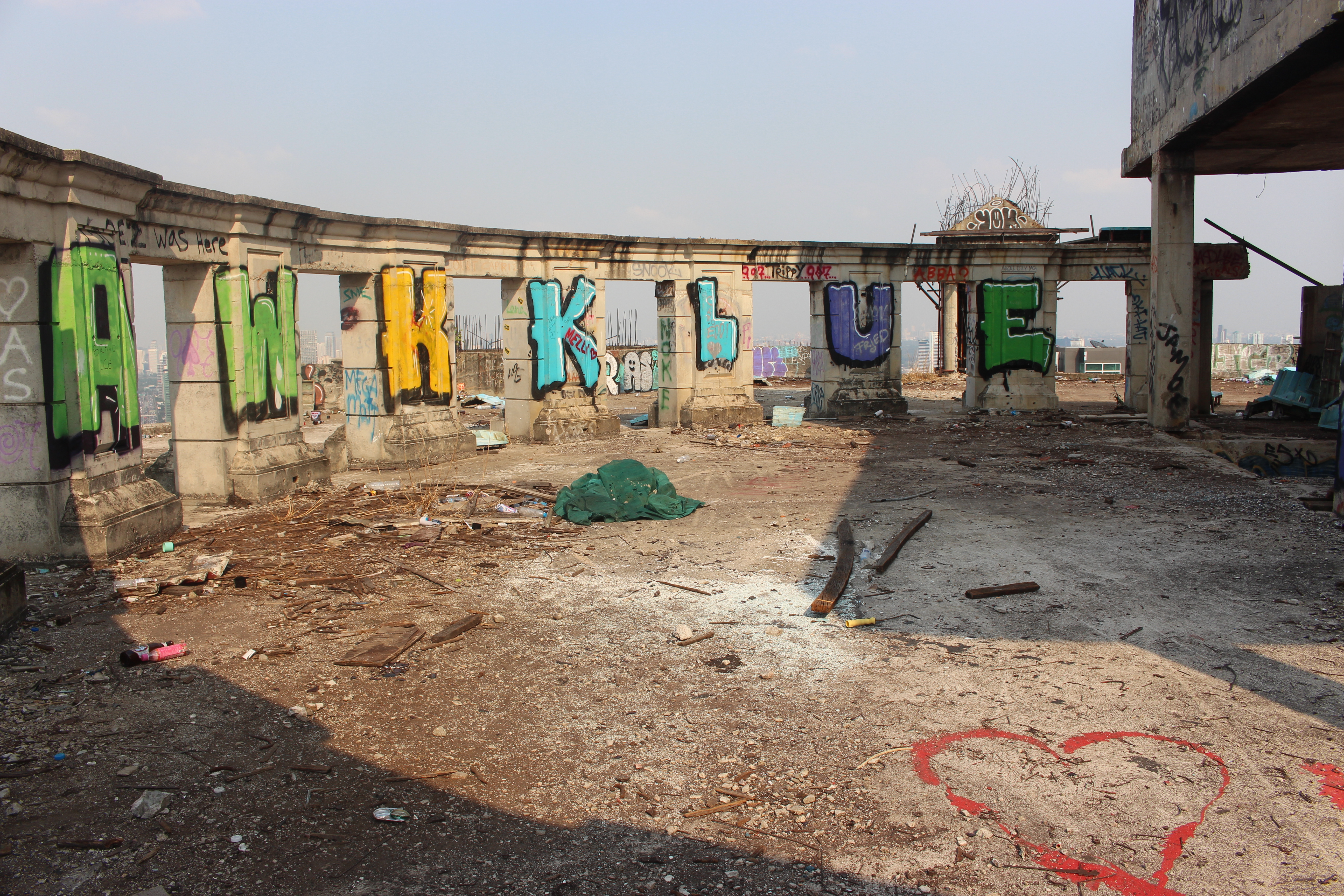
Sathorn Unique Tower
The building was eighty percent finished when the money stopped. In 1997, the Asian financial crisis gutted Thailand's economy overnight, and Sathorn Unique Tower -- planned as a 47-story luxury condominium with 600 units in Bangkok's upscale Sathon district -- joined a grim fraternity of skeletal high-rises that would haunt the city's skyline for decades. What makes Sathorn Unique different from the other ghost buildings is that it refuses to disappear. Twenty-nine years later, it still stands off Charoen Krung Road, opposite the ancient Wat Yan Nawa, casting its shadow on the temple below. Locals consider that shadow inauspicious. Some believe the tower is haunted, built on a former graveyard. The building's architect believes it can still be saved.
The Architect and the Accusation
Rangsan Torsuwan designed Sathorn Unique with the same exuberant ambition that characterized his other projects, including the completed State Tower nearby. His style has been described as exultant post-modernism -- architectural pastiche in which styles and eras collide without restraint. The project launched in 1990, financed primarily by Thai Mex Finance and Securities Company, with construction by Siphya Construction. Then, in 1993, Rangsan was arrested and charged with plotting to murder the President of the Supreme Court, Praman Chansue. The attack never took place. The case dragged on for fifteen years -- Rangsan was convicted in 2008, then acquitted on appeal in 2010. But the damage to his financial credibility was done. Investors and lenders pulled back, construction funding dried up, and Sathorn Unique stalled. Rangsan insisted throughout that the project be sold only at a price that would repay the original buyers in full, refusing to declare bankruptcy. It was a principled stance that left the building frozen in concrete limbo.
Forty-Nine Stories of Nothing
The tower's design calls for 49 stories including two underground levels, occupying about two rai of land and connected to a ten-story parking garage. From the outside, the structure looks nearly complete -- the silhouette is there, the floors are there, the shape of what was meant to be luxury living is legible. Inside, it is ruin. Exposed rebar, raw concrete, graffiti covering the walls, and empty shafts where elevators should have been. From the upper floors, the view of Bangkok sprawls unobstructed -- the Chao Phraya River, Taksin Bridge, the BTS Skytrain station at Saphan Taksin. It is a panorama that was supposed to justify premium condominium prices. Instead, it became the draw for a different kind of visitor entirely.
The Trespassers
Despite being officially off-limits, Sathorn Unique became one of Bangkok's most notorious urban exploration destinations. For years, security guards reportedly allowed access in exchange for bribes. The building appeared in travel blogs, YouTube videos, and photography portfolios. In December 2014, the body of a Swedish man was found hanged on the 43rd floor -- a suicide that prompted public discussion about the building's safety. By 2015, Pansit Torsuwan, Rangsan's son and a board member of Sathorn Unique Co., filed trespassing charges against five people, including two foreigners who had filmed themselves freerunning across exposed beams and ledges. He estimated that over a hundred people were entering illegally on some weekends. The building had become famous for the wrong reasons. In 2017, Pansit took a different approach, allowing Museum Siam to host a seminar inside as part of an exhibition marking the twentieth anniversary of the financial crisis. He also permitted the building to serve as a filming location for the GDH 559 horror film The Promise.
A Shadow on the Temple
The superstitions that surround Sathorn Unique are as layered as the building's concrete. Residents of the nearby communities point to the tower's shadow falling across Wat Yan Nawa, arguing that this is the source of its ill fortune -- a structure that literally darkens a place of worship was never going to succeed. Others believe the land beneath the tower was once a graveyard, making the site inherently haunted. Whether you accept these explanations or prefer the more prosaic narrative of an economic collapse and a criminal case that destroyed investor confidence, the result is the same: the building endures as Bangkok's most visible monument to the 1997 crisis. It stands where ambition met catastrophe and neither side blinked. The concrete holds. The view from the top is spectacular. Nobody lives there.
From the Air
Located at 13.717N, 100.515E in Bangkok's Sathon district, off Charoen Krung Road near the Chao Phraya River. The tower is visible as a tall, unfinished concrete structure -- distinctly skeletal compared to surrounding completed buildings. It sits opposite Wat Yan Nawa and near Taksin Bridge and the Saphan Taksin BTS station. Best viewed at 2,000-4,000 feet. Nearest airports: Don Mueang (VTBD) approximately 16 nm north; Suvarnabhumi (VTBS) approximately 15 nm east.