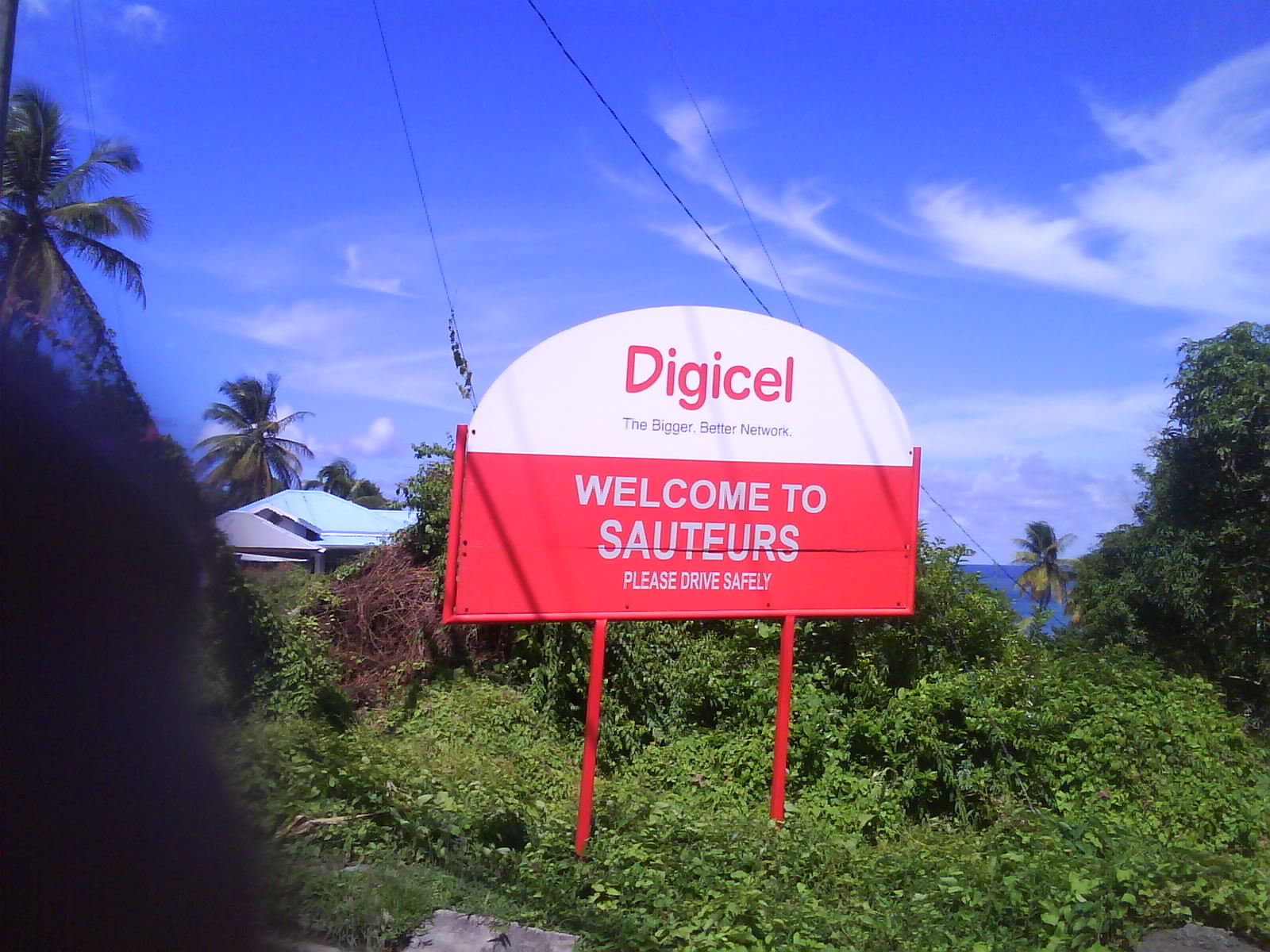
Sauteurs
The cemetery sits at the edge of a cliff, and the cliff has a name that will not let you forget what happened there. In 1651, the last Kalinago people on Grenada -- roughly three dozen men, women, and children -- stood on this precipice above the Atlantic and jumped rather than surrender to the French soldiers who had driven them to the island's northern tip. The French called the place "Le Morne des Sauteurs" -- Leapers' Hill. The town that grew up around it simply became Sauteurs. Pronounced "Saut-ez," it is today a fishing village of about 1,300 people, the principal settlement in Grenada's St. Patrick parish. But the cliff remains, and so does the weight of what it witnessed.
The Cliff and the Choice
What the Kalinago faced in 1651 was not a battle they could win. French colonizers had been pushing through Grenada's interior, and the indigenous defenders -- called Caribs by the Europeans -- had been forced steadily northward. When the last group reached the headland above the sea, they made a decision that has echoed through nearly four centuries of Caribbean history. They chose the cliff over captivity. The spot where they leapt is now enclosed within the town cemetery, headstones of later generations standing on the ground where the Kalinago made their final stand. There is no grand monument, no visitor center -- just the graveyard, the cliff edge, and the long view north across open water. The simplicity makes it more affecting, not less. These were people with families, with a homeland they had known for generations, and in the end they refused to live in it on anyone else's terms.
A Village Between Two Seas
Modern Sauteurs faces the Caribbean on its western side and the Atlantic on its east, a position that shapes everything about the place. The town's beach, protected by a breakwater, is the best in the parish -- the others along this northern coast take the full force of Atlantic swells. Fishing boats line the waterfront, and the rhythms of the village follow the sea. A handful of shops -- Kalico, Philbert Bros, SmartBuy -- serve the daily needs of residents. Minibuses connect Sauteurs to St. George's, the capital, via the west coast road through Gouyave and Victoria, though the ride is long and winding. From the town, all roads eventually loop back south. Sauteurs sits at the end of the line, which is part of its character: unhurried, unpolished, and largely unbothered by the tourism that animates Grenada's southern coast.
Crater Lakes and Offshore Islands
The parish surrounding Sauteurs is rich with volcanic geology and coastal wilderness. Lake Antoine, a crater lake fringed with mangrove, sits within walking distance -- a 90-minute hiking circuit traces its rim. Five hundred meters east, Antoine Bay offers a beach of black volcanic sand. Offshore, a chain of small islands stretches north from Levera Beach: Sugar Loaf, privately owned and off-limits; Green Island, uninhabited, with a northeast beach exposed to hazardous surf; and Sandy Island, the one boat trips visit, with a sheltered southwest beach, a coral lagoon, and the ruin of an old mansion amid its wooded interior. The island measures roughly 600 by 300 yards, with a boat wreck rusting at its northern tip. Further out, Bird Island sits alone in the open Atlantic, battered by waves and best left to the seabirds that give it its name.
The Volcano You Hope Not to See
Look north from Sauteurs across the water and you will see Ronde Island, privately owned, with tiny Caille Island beside it. What you will not see -- and should be grateful for -- lies three miles further west beneath the surface. Kick 'em Jenny is an active submarine volcano, the most active in the Lesser Antilles. Under normal circumstances, it fumes and froths quietly, its disturbances invisible at this distance. But the possibility is always there: thick sulfurous clouds breaking the surface, or in the most dramatic scenario, a black ash cone rising from the sea. Should that happen, the Grenadines would be gaining a new island while experiencing considerable disruption on all the existing ones. For now, Kick 'em Jenny remains a reminder that Grenada's dramatic landscape is still very much in the process of being made.
From the Air
Sauteurs sits at 12.22N, 61.64W on Grenada's northern tip. The clifftop cemetery at Leapers' Hill is visible on the headland above the Atlantic. Offshore, the chain of small islands (Sugar Loaf, Green Island, Sandy Island) extends north from Levera Beach. Ronde Island is visible further north. Maurice Bishop International Airport (TGPY) is approximately 19 miles to the southwest. Recommended viewing altitude: 2,000-3,000 ft AGL. The submarine volcano Kick 'em Jenny lies about 5 miles north of Grenada -- marine exclusion zones may apply.