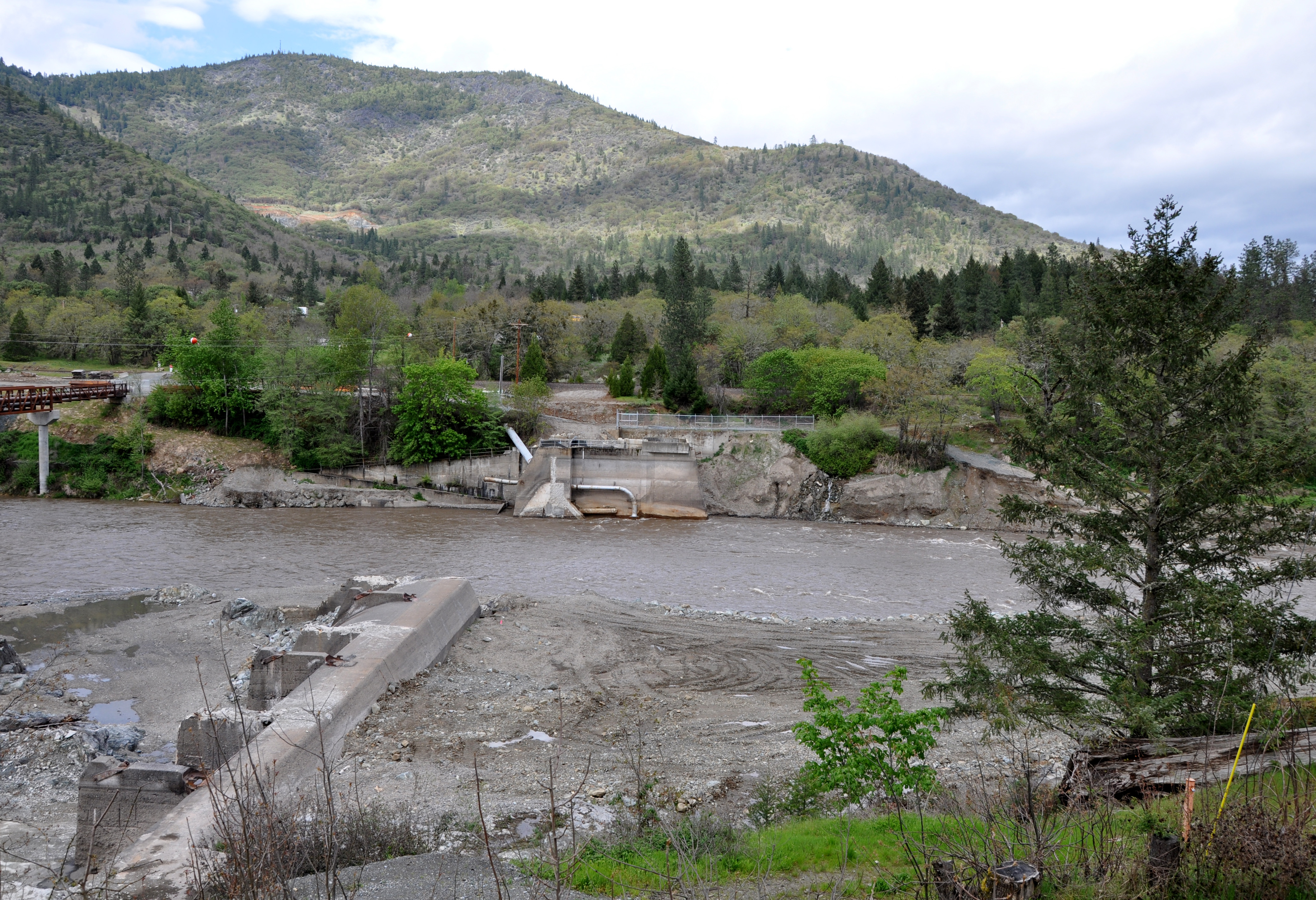
Savage Rapids Dam
The dam is gone now. Where Savage Rapids Dam once blocked the Rogue River at mile 107, salmon and steelhead now swim freely to over 500 miles of upstream spawning habitat. But the absence speaks louder than the structure ever did. From 1921 to 2009, this irrigation dam earned a grim reputation as the biggest fish killer on the Rogue, one of America's original Wild and Scenic Rivers. Its fish ladders did not work properly. Its screens killed juveniles. Spring and fall, when operations started up and shut down, upstream passage could be completely blocked. The story of Savage Rapids Dam is not really about a dam at all. It is about a twenty-year legal and political battle that became one of the largest dam removals in American history, and about what happens when a river finally gets to run free.
A Dam That Only Did One Thing
The Grants Pass Irrigation District built Savage Rapids Dam in 1921, five miles east of Grants Pass, Oregon. Unlike most dams, it served only one purpose: diverting water to irrigation canals. No flood control. No hydroelectric power. No navigation improvements. Just irrigation, for a district that had organized in January 1917 and originally contained about 9,000 acres. The dam consisted of a 16-bay spillway section with wooden-faced radial gates and a hydraulic-driven pumping plant. A 1927 flood badly damaged the facilities. By 1949, maintenance costs had grown so prohibitive that the U.S. Bureau of Reclamation stepped in with federal funds for rehabilitation. Fish ladders were upgraded in the late 1950s. Passage facilities were improved again in 1978. None of it was ever enough.
The River's Second-Best Salmon Producer
The Rogue River in southwestern Oregon is the second-largest producer of salmon in the state outside the Columbia basin. Its scenery, whitewater, and fish populations earned it designation as one of the original Wild and Scenic Rivers when Congress passed that landmark act in 1968. The Bureau of Land Management estimates 25,000 visitors use the river annually. All of the Rogue's prized spring chinook spawn upstream of where Savage Rapids Dam stood. Coho salmon, listed as threatened under the Endangered Species Act, had to navigate the dam's inadequate passage. Four other runs of salmon and steelhead faced the same obstacle. The north fish ladder only operated during irrigation season. The south ladder had poor flows and was difficult to regulate. The seasonal reservoir pool increased predation on juveniles. Over 3.5 miles of fall chinook spawning habitat sat submerged behind the dam.
Two Decades of Legal Warfare
In 1988, WaterWatch, the American Fisheries Society, and the Rogue Flyfishers protested when the irrigation district applied for rights to divert even more water. They began negotiating fish passage alternatives. A 1990 agreement led to a study that, by 1994, recommended removing the dam entirely. The Oregon Water Resources Commission ordered the district to replace the dam with pumps, remove the structure, and reduce diversions. Then the irrigation district board changed its mind. From 1995 to 2000, GPID waged political and legal warfare to keep its dam. In 1997, the National Marine Fisheries Service listed Rogue coho as threatened and determined Savage Rapids Dam caused significant harm. NMFS sued the district in 1998. WaterWatch won a state case that canceled the district's water rights. Finally, in August 2001, a federal consent decree required dam removal and set a timeline. The district transferred part of its water right to an instream right for fish, the largest such transfer in Oregon history.
Forty Million Dollars to Free a River
Removal did not come cheap. In 2002, the Oregon Watershed Enhancement Board pledged $3 million, the largest single grant it had ever made. That catalyzed federal legislation, which passed Congress in December 2003, authorizing the Bureau of Reclamation to remove the dam. Total project cost reached approximately $40 million, mostly federal funds. Construction of replacement pumps began in 2006. The timeline accelerated in 2009: coffer dam construction started April 7, new pumps passed their first wet test in mid-April, the Rogue River was rerouted to the south side in late April, and irrigation switched to the new pumps on May 11. Demolition of the dam's north half proceeded through June and July. By November and December, the last of the structure was gone. October 2009 marked the completion of one of the largest dam removals ever undertaken in the United States.
What the Numbers Promised
A 1995 Bureau of Reclamation study predicted dam removal would increase fish escapement at the site by 22 percent. That translates to approximately 114,000 more salmon and steelhead each year: 87,900 available for sport and commercial harvest, 26,700 escaping to spawn, valued at roughly $5 million annually. The National Marine Fisheries Service, U.S. Fish and Wildlife Service, and Oregon Department of Fish and Wildlife all supported removal as the only permanent solution. The pumping replacement system has had problems. Sediment from the river has covered pumps multiple times, requiring expensive dredging. But the river flows unimpeded now. The fish ladders are memory. What remains is what the Rogue River was before 1921: a continuous highway for salmon and steelhead, running 107 miles from the ocean to spawning grounds that sustained runs for thousands of years before anyone thought to block them.
From the Air
Located at 42.42N, 123.23W on the Rogue River in Josephine County, Oregon, approximately 5 miles east of Grants Pass. The dam removal site is now a natural river section; no structure remains visible. The Rogue River corridor is clearly visible from altitude, winding through the Siskiyou Mountains. Nearest airports: Rogue Valley International-Medford (KMFR) 25nm southeast, Grants Pass Airport (3S8) 5nm west. Best viewed at 3,000-5,000 feet AGL following the river corridor. The Wild and Scenic section continues downstream.