Save the Redwoods League
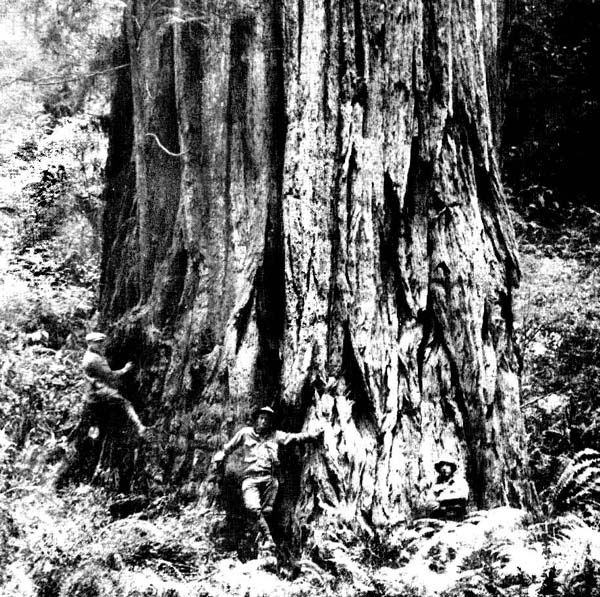
In 1917, National Park Service Director Stephen Mather asked three conservationists to travel to Northern California and investigate reports that old-growth coast redwoods were being logged in vast numbers. John C. Merriam, Madison Grant, and Henry Fairfield Osborn made the trip and returned devastated. The ancient groves they found were being felled for building materials at industrial scale. In 1918, the three men established Save the Redwoods League with a mission that sounded impossibly ambitious: purchase the threatened groves outright and preserve them as public parks. Over a century later, the League has protected more than 200,000 acres of forestland and helped create 66 redwood parks and reserves, including Humboldt Redwoods State Park and Redwood National and State Parks.
Buying the Forest One Grove at a Time
The League's strategy was deceptively simple: raise money, buy land, and donate it to the state or federal government for permanent protection. Newton B. Drury, who became the League's first executive secretary in 1919, provided leadership for 58 years while simultaneously serving in National Park Service and California State Parks roles. In 1927, Drury and the League helped create the California State Park system itself, pushing two bills through the legislature that Governor C.C. Young signed into law. Major acquisitions followed: the 9,400-acre Rockefeller Forest addition to Humboldt Redwoods State Park in the 1930s, 4,280 acres for Jedediah Smith Redwoods State Park in 1944, and the 25,000-acre Mill Creek Forest in 2002 -- the League's largest single purchase, which became part of Del Norte Coast Redwoods State Park.
The Founders Tree and the Women Who Petitioned
The League's founding narrative includes a parallel story that predates it. In 1908, the Humboldt County Federation of Women's Clubs sent a children's petition with over 2,000 signatures to the U.S. Forest Service requesting that President Theodore Roosevelt establish a national redwood park. In 1919, the California Federation of Women's Clubs established the Women's Save the Redwoods League in Humboldt County. These women's efforts laid groundwork that the League's all-male founding board built upon. In 1931, Major Frederick Russell Burnham commissioned a survey near Bull Flat Creek, where League founder Madison Grant believed the world's tallest tree might stand. They found a 364-foot redwood. The California State Park Commission dedicated it to the League's founders on September 13, 1931. The height has since been revised to 346.1 feet, but the Founders Tree remains the most visited spot in the redwoods region.
Science in the Canopy
The League's conservation decisions are guided by its Vibrant Forests Plan, a science-based strategy for the remaining coast redwood and giant sequoia ecosystems. The organization funds leading scientists studying climate change impacts, threatened species, and forest ecology through its Research Grants Program. LiDAR technology, made possible by a grant from Kenneth Fisher, allows researchers to measure tree height, biomass, and leaf area with precision -- useful both for reforestation planning and for locating the tallest surviving trees. In 2018, the League published its first State of the Redwoods Conservation Report, evaluating threats including unprotected forests, declining old-growth characteristics, human encroachment, and wildfire preparedness. The Redwood Genome Project aims to map the genetic diversity of both species.
Complicated Legacies
The League's history is not without controversy. Madison Grant, a founding figure, was also the author of The Passing of the Great Race, one of the most influential works of scientific racism in American history. Journalist Greg King's 2023 book The Ghost Forest: Racists, Radicals, and Real Estate in the California Redwoods detailed charges that the League engaged in greenwashing and, in some cases, actively promoted the loss of redwoods in areas where preservation conflicted with industry interests. King argued that the League was created partly to maintain standing timber inventories for industrial use. These criticisms complicate but do not erase the organization's tangible accomplishments: 200,000 acres protected, 66 parks created, and a centennial goal announced in 2018 to double the size of coast redwood forests in parks and reserves to 800,000 acres.
From the Air
Save the Redwoods League is headquartered in San Francisco at 37.79N, -122.40W, but its work spans the coast redwood range from Big Sur to the Oregon border and giant sequoia groves in the Sierra Nevada. The most accessible protected forests include Humboldt Redwoods State Park (Avenue of the Giants) along US-101 in Humboldt County and Muir Woods National Monument north of San Francisco. Nearest airports to headquarters: KSFO 11nm south, KOAK 9nm east.