Sawahlunto
Three times a day, a siren wails from an old coal silo standing in the center of Sawahlunto. At seven in the morning, one in the afternoon, and four in the evening, the sound carries across the rooftops of this small West Sumatran city just as it did during the Dutch colonial era -- when it signaled the working hours of the Orang Rantai, the "Chained People," convicts shipped from across the Indonesian archipelago to dig coal in the tropical heat. The mines have been closed for years. The siren still sounds. Sawahlunto has always been a place that refuses to let its history go quiet.
A Town Born from Coal
Unlike its neighbors in the Bukit Barisan highlands -- Bukittinggi, Batusangkar, Payakumbuh, towns shaped by the Minangkabau community over centuries -- Sawahlunto was created whole by the Dutch in 1888 for a single purpose: extracting coal. Dutch engineer Willem Hendrik de Greve had discovered the deposits decades earlier, and the colonial government invested 5.5 million gulden to build the infrastructure of a mining operation from scratch. They spent another 17 million gulden on a railway to carry the coal 90 kilometers west to Emmahaven Port (now Teluk Bayur) on the coast near Padang. The first coal mining tunnel opened at Air Dingin in 1898. By 1920, the railway alone was generating 4.6 million gulden in annual profit. Sawahlunto existed because coal existed beneath it, and for as long as coal flowed, the town thrived.
The Orang Rantai
The wealth came at a specific human cost. Around 20,000 convicts were shipped to Sawahlunto from prisons across Indonesia to serve as forced laborers -- the Orang Rantai. Until 1898, the mines ran entirely on forced labor. Even after reforms, the hierarchy remained stark: forced laborers earned 18 cents per day and could be legally whipped for disobedience, contract workers received 32 cents with housing, and free laborers earned 62 cents with no benefits at all. By 1930, the town's population had reached 43,576, including 564 Europeans who administered a system designed to extract maximum value from both the earth and the people working it. A public kitchen that once fed thousands of laborers has been preserved and converted into the Goedang Ransum Museum. The building where coal was transformed into energy for a colonial empire now tells the story of the people who made that transformation possible.
Ghost Town and Resurrection
When global coal demand shifted after 1940, Ombilin's production collapsed from hundreds of thousands of tonnes per year to mere tens of thousands. Sawahlunto collapsed with it. By 1980, the population had withered to 13,561 -- a ghost town in the humid highlands, its grand colonial buildings emptying alongside its mines. Production recovered briefly in the 1980s and 1990s with new technology, peaking above one million tonnes per year, but the reprieve was temporary. In 2004, the city's government made a radical decision: Sawahlunto would reinvent itself as a tourist destination. The pivot worked. By 2014, 29 percent of the city's income came from tourism, surpassing the 23 percent from farming. In 2019, the Ombilin coal mining heritage site earned UNESCO World Heritage status, validating the city's bet that its colonial past -- honestly presented -- could sustain its future.
A City of Museums
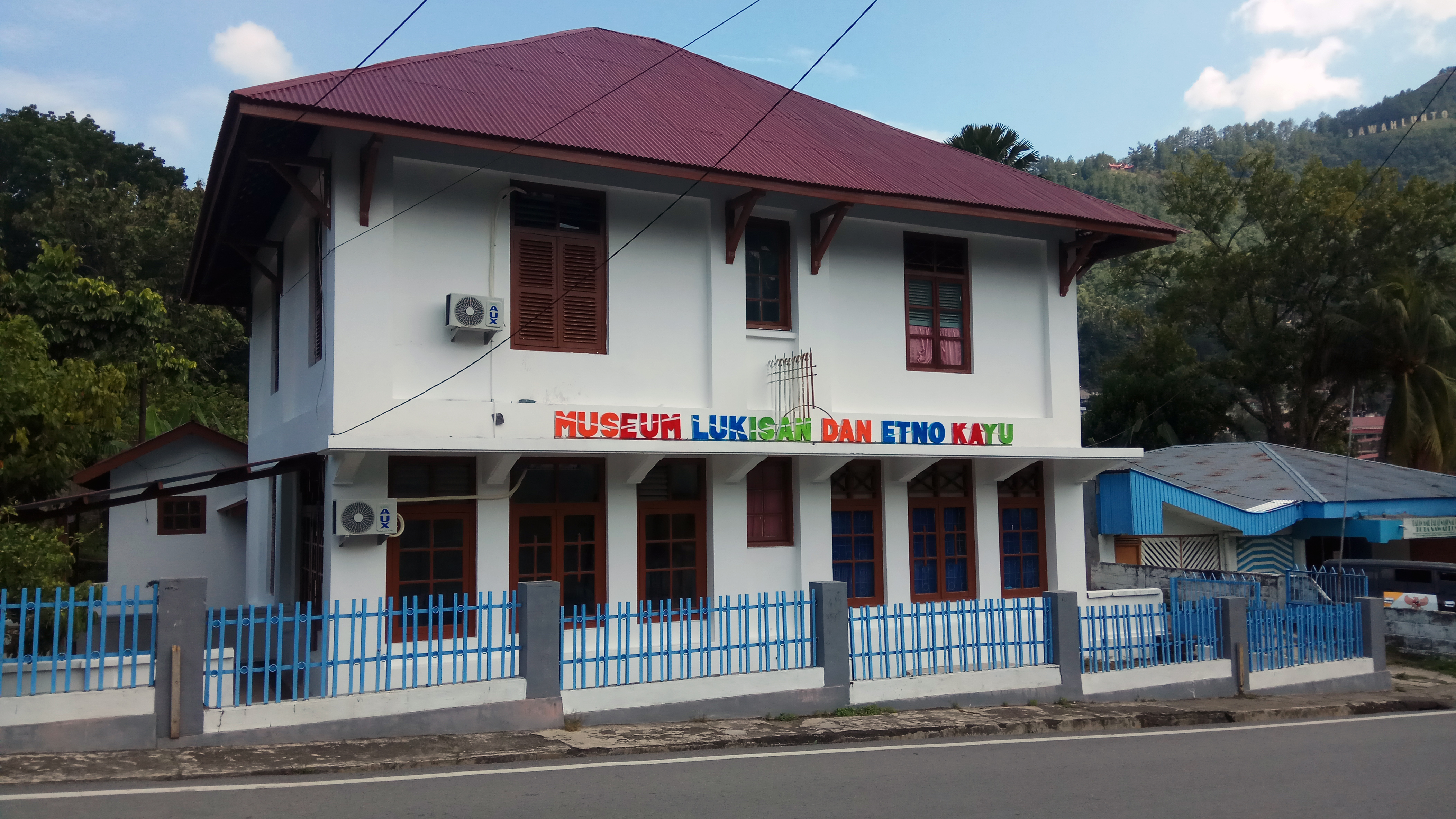
Sawahlunto has turned its colonial infrastructure into a constellation of heritage sites. A power plant built in 1894 became the Great Mosque of Sawahlunto in 1952, its minaret rising 80 meters above the valley. The old train station is now the Sawahlunto Railway Museum. The Bukit Asam mining office, built in 1916 with a distinctive central tower, overlooks Triangle Park. Nearby stands Lubang Suro, a tunnel entrance named for Mbah Suro, a forced-labor foreman. Since 2017, three new museums have joined the collection: the Culture Museum, the Dance Museum, and the Museum of Wood Painting and Ethno. Dutch heritage buildings from every decade of the colonial period line the streets -- the Cultural Center from 1910, the Pek Sing Kek House in New Indies style from 1916, St. Barbara Church from 1920. Walking Sawahlunto's compact old center feels like moving through a textbook of colonial architecture, each building a chapter in a story the city has chosen to preserve rather than erase.
Lakes Where Mines Once Gaped
Beyond the museums and heritage buildings, the landscape itself has been transformed. At the Kandi Tourism Resort, three lakes -- Kandi, Tanah Hitam, and Tandikek -- fill former coal excavation pits, their dark water a reminder of what once occupied these spaces. A 40-hectare zoo operates on reclaimed mining land. Horse-riding tracks wind through reforested hillsides. The city sits in a narrow valley at roughly 650 meters elevation, hemmed in by steep terrain that historically constrained its growth to just 5.8 square kilometers. That geographic confinement, once a limitation, now gives Sawahlunto a concentrated intensity. Everything is close. The museums, the colonial streets, the tunnel entrances, the lakes -- all packed into a small footprint where more than a century of extraction, suffering, decline, and reinvention left its mark on every surface.
From the Air
Located at 0.68S, 100.78E in a narrow valley of the Bukit Barisan mountains, West Sumatra, at approximately 650 meters elevation. The city is 90 km east of Padang. The historic railway line from Sawahlunto to Teluk Bayur port is a distinctive linear feature through the mountain terrain. Nearest major airport is Minangkabau International Airport (WIPT/PDG) to the southwest. The former mining lakes at Kandi Tourism Resort are visible from altitude. Tropical rainforest climate with heavy year-round rainfall; expect convective weather, especially afternoons.