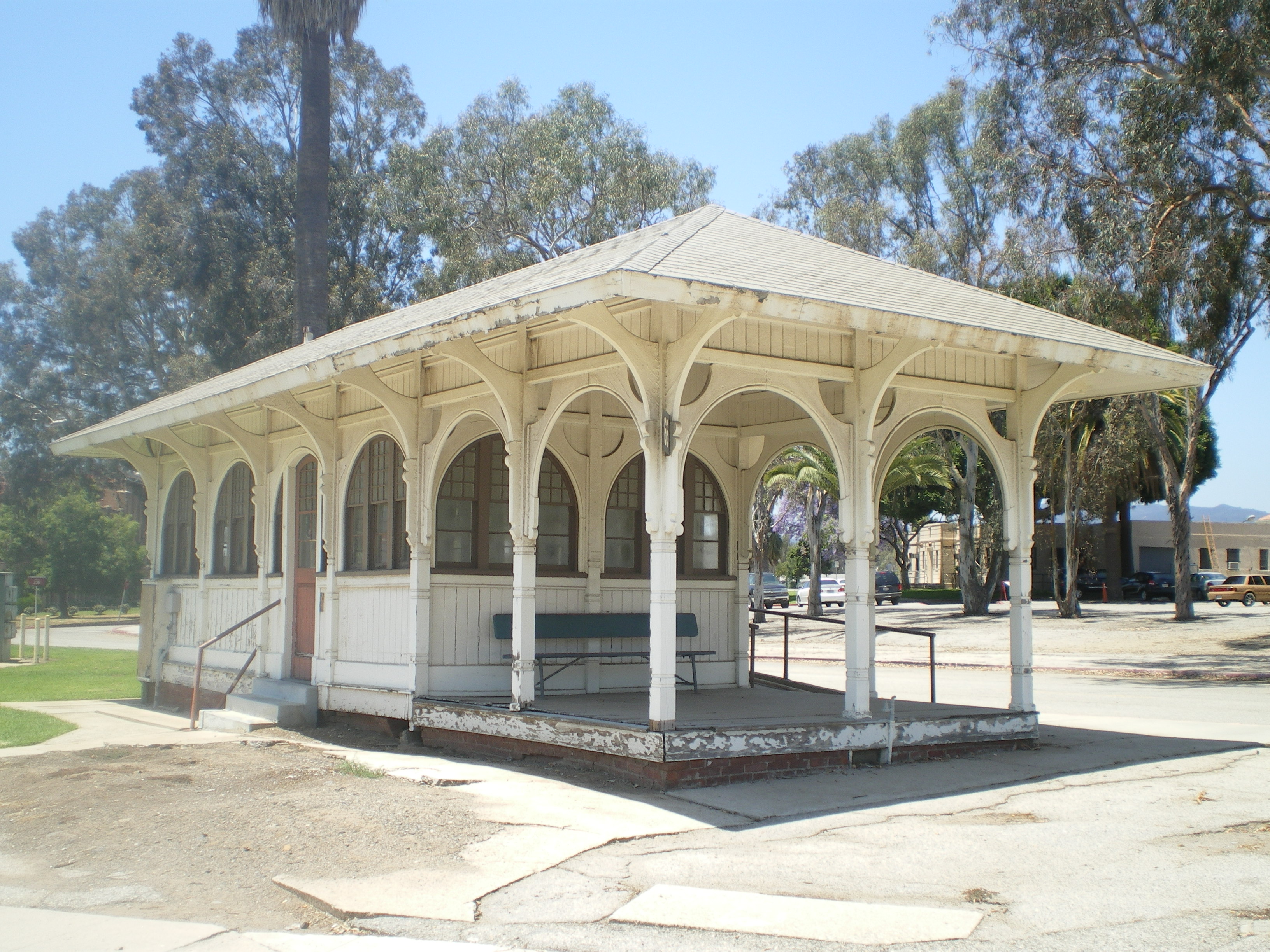
Sawtelle Veterans Home
The men who founded this place were not idealists, exactly — they were practical Californians who understood that land is the most valuable thing in the West, and who chose, in 1887, to give away three hundred acres of it. Senator John P. Jones and real estate developer Robert S. Baker — along with Baker's wife Arcadia — donated the land to the federal government for one purpose: to house and care for disabled soldiers who had survived the Civil War and had nowhere else to go.
A Home at the Edge of the Country
The Pacific Branch of the National Home for Disabled Volunteer Soldiers was established in 1887, just twenty-two years after the end of the Civil War. California was still a young state, and Los Angeles was a city of barely 50,000 people. The land donation from Jones and the Bakers — 300 acres, later expanded to 713 — was an extraordinary act, and it shaped the western edge of what would become one of the world's great metropolises.
The facility opened in 1888, designed to serve men who had given their bodies to the Union cause and required the kind of long-term care that families and communities could not always provide. The original barracks were designed by Stanford White, the celebrated architect whose career would later end in one of the era's most sensational murders. White's shingle-style buildings gave the campus a residential character — less an institution than a village, set among the oaks and palms of the Santa Monica foothills.
The home offered veterans housing, medical care, community, and purpose. Former soldiers worked on the grounds, tended gardens, formed social clubs, and organized performances. It was an early experiment in what we would now call assisted living — a recognition that men who had served could not simply be discharged from the nation's attention.
The Century of Growth
The campus grew as the nation's wars multiplied. Veterans of the Spanish-American War arrived at the turn of the century. World War I brought a new generation of wounded men, and with them the James W. Wadsworth Hospital, opened in 1927. The hospital added medical capacity that the original home had never required, reflecting the changing nature of combat and survival.
In 1930, President Hoover consolidated the various federal veterans' services — the National Home, the Veterans Bureau, and the Board of Pension Appeals — into a single Veterans Administration. The Sawtelle campus became a VA installation, its mission formally federalized.
The neighborhood that had grown up around it — a community of Japanese American gardeners and nursery workers, of small businesses and tight-knit streets — was meanwhile developing its own identity. When Japanese Americans were forcibly removed to internment camps in 1942, the Sawtelle area lost a significant portion of its community. Some returned after the war; many did not.
What Remains
The West LA VA Medical Center, as the campus is now known, is the largest VA healthcare campus in the United States. It occupies a remarkable piece of land in one of the most expensive real estate markets in the world — a fact that has generated controversy and legal battles in recent decades, as advocates have argued that portions of the campus have been leased for non-veteran purposes, violating the spirit and in some cases the letter of the original donation.
Legal settlements in the 2010s and 2020s reaffirmed that the land was given for the benefit of veterans and must be used accordingly. The campus today houses thousands of veterans, operates extensive outpatient and inpatient medical services, and serves as a research facility for veterans' healthcare.
The shingle-style buildings designed by Stanford White are long gone, replaced by the medical complexes of successive eras. What persists is the original impulse: a recognition that the country owes something real to the men and women who have served it, and that land — three hundred acres of California hillside — is one way to begin to pay that debt.
From the Air
Located at 34.058°N, 118.458°W in West Los Angeles, near the 405 freeway. The West LA VA Medical Center campus is a large institutional complex visible from 2,000 feet AGL, with the Santa Monica Mountains foothills to the north and Santa Monica Airport runway (KSMO) to the south. Nearest airports: Santa Monica Airport (KSMO, ~1 mile south), Los Angeles International (KLAX, ~5 miles south), Van Nuys Airport (KVNY, ~12 miles north).