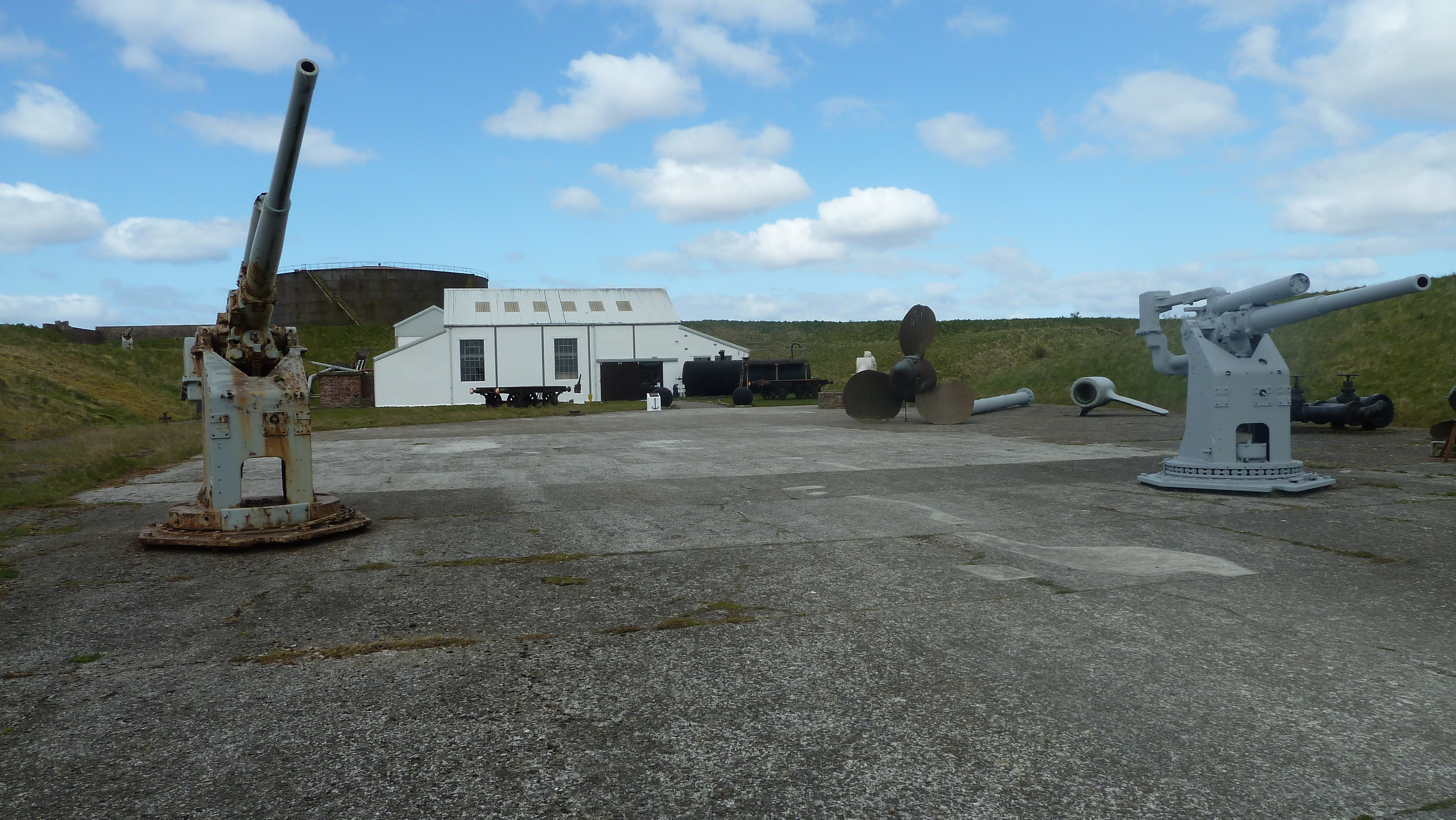
Scapa Flow Museum
The building itself tells part of the story. The Scapa Flow Museum occupies a refurbished Romney hut and oil fuel pump house at the former Royal Navy base HMS Proserpine at Lyness, on the island of Hoy in Orkney. During both World Wars, Scapa Flow -- the vast, sheltered body of water to the east of Hoy -- served as the Royal Navy's chief naval base, and the infrastructure at Lyness supported one of the largest concentrations of warships ever assembled. When the museum reopened in July 2022 after a 4.4-million-pound refurbishment, it was shortlisted for the Art Fund Museum of the Year Award, a recognition that a small museum on a remote island was telling a story of global significance.
Two Wars, One Anchorage
Scapa Flow's geography made it ideal for a naval base: a large, deep-water anchorage almost entirely enclosed by islands, with narrow entrances that could be defended against submarine attack. During the First World War, the Grand Fleet assembled here before the Battle of Jutland in 1916. In the Second World War, the base hosted warships that hunted the Bismarck, protected Arctic convoys, and prepared for D-Day. The museum's 250 artefacts and objects chart this military history, from the strategic decisions made in Admiralty offices to the daily lives of the thousands of sailors who served in these cold northern waters.
Losses and Legends
The stories the museum tells are not all triumphant. HMS Hampshire, carrying Lord Kitchener to Russia in 1916, struck a mine off Orkney and sank with the loss of 737 lives. HMS Royal Oak was torpedoed by a German U-boat inside Scapa Flow itself in October 1939, killing 835 crew members -- a disaster that led to the construction of the Churchill Barriers blocking the eastern approaches. And in June 1919, the interned German High Seas Fleet was scuttled by its own sailors in one of the most dramatic acts of defiance in naval history, sending 52 warships to the bottom. Each of these events left physical traces that the museum preserves and interprets.
From Pump House to Prize Nominee
The museum first opened in 1990 and became part of Orkney Islands Council's Museums Service in 2000. After closing in 2017 for renovation, the 2022 reopening transformed the experience. The refurbished galleries use the industrial character of the pump house and Romney hut to frame the exhibits, letting the wartime architecture speak alongside the artefacts. The Art Fund shortlisting in 2023 brought national attention to what had been a specialist destination for military history enthusiasts and divers exploring the German wrecks on the seabed below.
The Seabed Below
The museum sits above one of the world's most remarkable underwater landscapes. Seven German warships from the 1919 scuttling -- three battleships and four cruisers -- remain on the seabed of Scapa Flow, protected as scheduled ancient monuments. Divers visit them regularly, descending through cold, dark water to explore hulls that have rested on the bottom for over a century. In 2025, the Scottish government extended protection to the entire site as a marine protected area. The museum at Lyness provides the context that makes those dives meaningful: without understanding why the German fleet was here, and why it sank, the wrecks are merely metal. With that understanding, they become history.
From the Air
Located at 58.834N, 3.197W at Lyness on the island of Hoy, Orkney. The museum is visible along the eastern shore of Hoy, overlooking Scapa Flow. Best viewed at 2,000-4,000 ft AGL. The vast anchorage of Scapa Flow is the dominant feature. Churchill Barriers are visible to the east. Nearest airport: Kirkwall (EGPA) 12 nm northeast. Flotta oil terminal is visible on the neighbouring island.