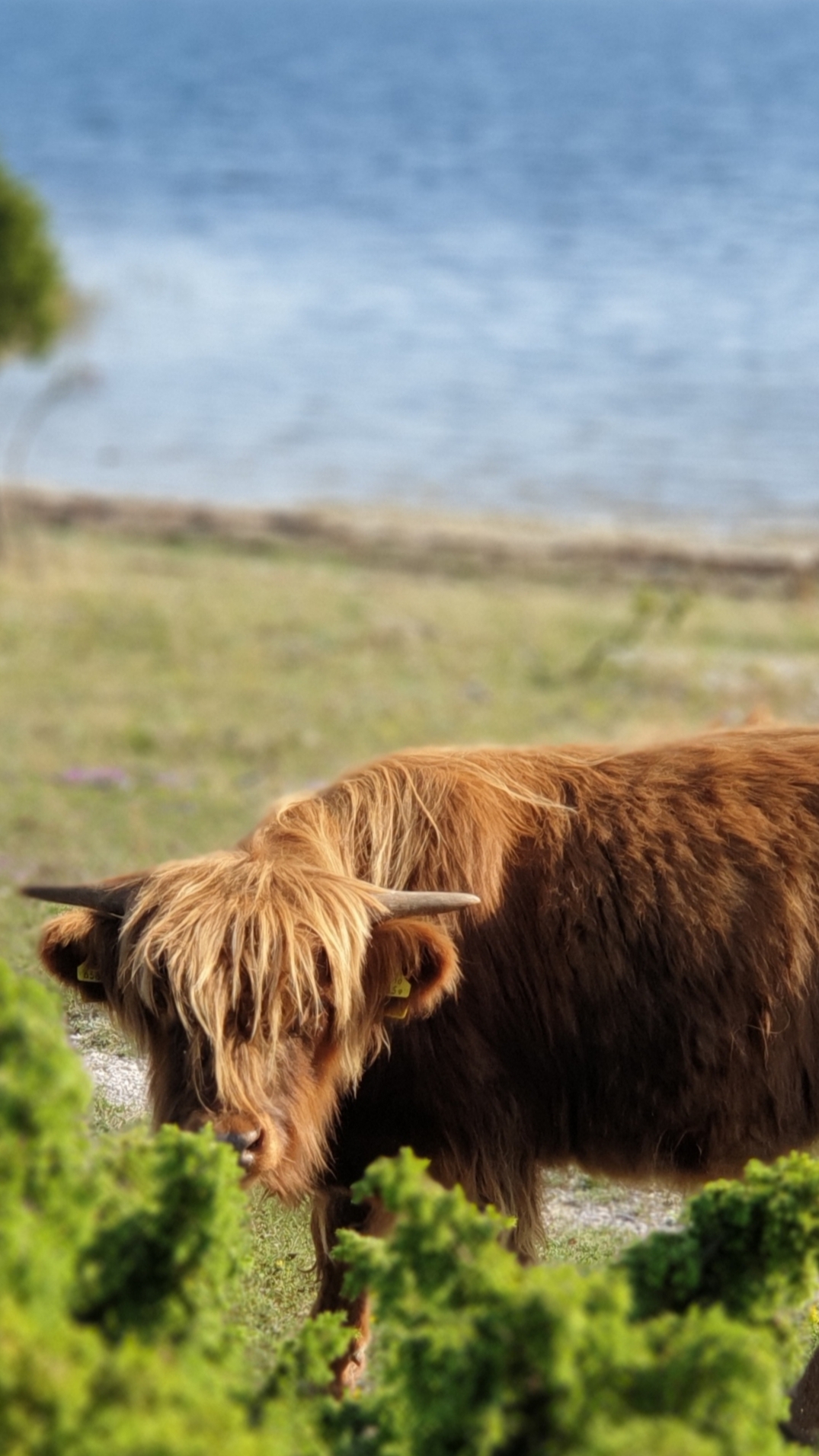
Scottish Highlands
The boundary between the Highlands and the Lowlands is not where most visitors expect it. Geographically, the Highland Boundary Fault runs from Helensburgh on the Firth of Clyde to Stonehaven on the northeast coast, but the cultural frontier sits further north. The Highlands that occupy the Scottish imagination -- Gaelic-speaking, clan-organized, stubbornly resistant to central authority -- historically meant the territory beyond the Great Glen, that geological slash running from Inverness to Fort William along a fault line 430 million years old. South of that line, the culture was already diluted by Lowland influence. North and west, it held.
Forged in Deep Time
The Highlands are built on some of the oldest rock in Europe. Lewisian gneiss, found along the northwest coast and in the Outer Hebrides, formed nearly three billion years ago -- more than half the age of the Earth itself. Above it, Torridonian sandstone was deposited roughly a billion years ago, creating the dramatic terraced mountains of Wester Ross. The Great Glen fault, which cleaves the Highlands in two, formed approximately 430 million years ago and remains a zone of occasional seismic activity. Ice ages sculpted the landscape into its current form: U-shaped valleys, ribbon lochs, and the 282 peaks over 3,000 feet that Sir Hugh Munro catalogued in 1891 and that now bear his name. Completing all 282 Munros -- 'Munro bagging' -- has become a defining challenge for Scottish hillwalkers, a pilgrimage measured in summits.
Clans, Clearances, and Empty Glens
The kingdom of Alba, the precursor to Scotland, arose in the ninth century from the union of Pictish and Gaelic peoples. For the next eight hundred years, the Highlands operated under a clan system in which kinship, land, and loyalty were inseparable. The Jacobite risings of 1715, 1719, and 1745 were the final expression of this Highland world's collision with the British state. Culloden, fought on 16 April 1746, shattered the Jacobite cause and triggered a systematic dismantling of clan culture -- the banning of tartan, the suppression of Gaelic, the forfeiture of clan lands. What followed was arguably worse. The Highland Clearances of the late eighteenth and nineteenth centuries saw landlords evict thousands of tenants to make way for sheep. Entire communities were displaced to the coast, the cities, or the emigrant ships. The empty glens that visitors find so beautiful today were not always empty. They were emptied.
Whisky, Peaks, and the North Coast
The modern Highlands live on tourism, whisky, fishing, and forestry. The Spey Valley, running northeast from the Cairngorms to the Moray Firth, is the heartland of Scotch whisky production -- Speyside alone contains more than half of Scotland's malt whisky distilleries. The North Coast 500, a 516-mile driving route around the northern coastline, has brought new visitors to communities that had seen little tourism before its launch in 2015. Hillwalking remains the dominant outdoor pursuit, with the Munros drawing tens of thousands of climbers each year to peaks ranging from the accessible -- Ben Nevis, Britain's highest, sees an estimated 125,000 ascents annually -- to the remote, where summits in Knoydart or Fisherfield may see only a handful of visitors in a week. The landscape rewards all approaches: by car through the passes, on foot across the ridges, or from the air, where the pattern of loch, glen, and mountain reveals itself with a clarity that no map can match.
From the Air
The Scottish Highlands extend across the northern portion of Scotland, centered approximately at 57.12°N, 4.71°W. The Great Glen is a dominant visual feature from the air -- a straight line of lochs running from Inverness (EGPE) southwest to Fort William. Major mountain groups include the Cairngorms (east), Torridon (northwest), and the Cuillin of Skye (west). Key airports: Inverness (EGPE), Stornoway (EGPO), Wick (EGPC). The terrain rises abruptly from sea level; mountain flying conditions demand caution in all seasons.