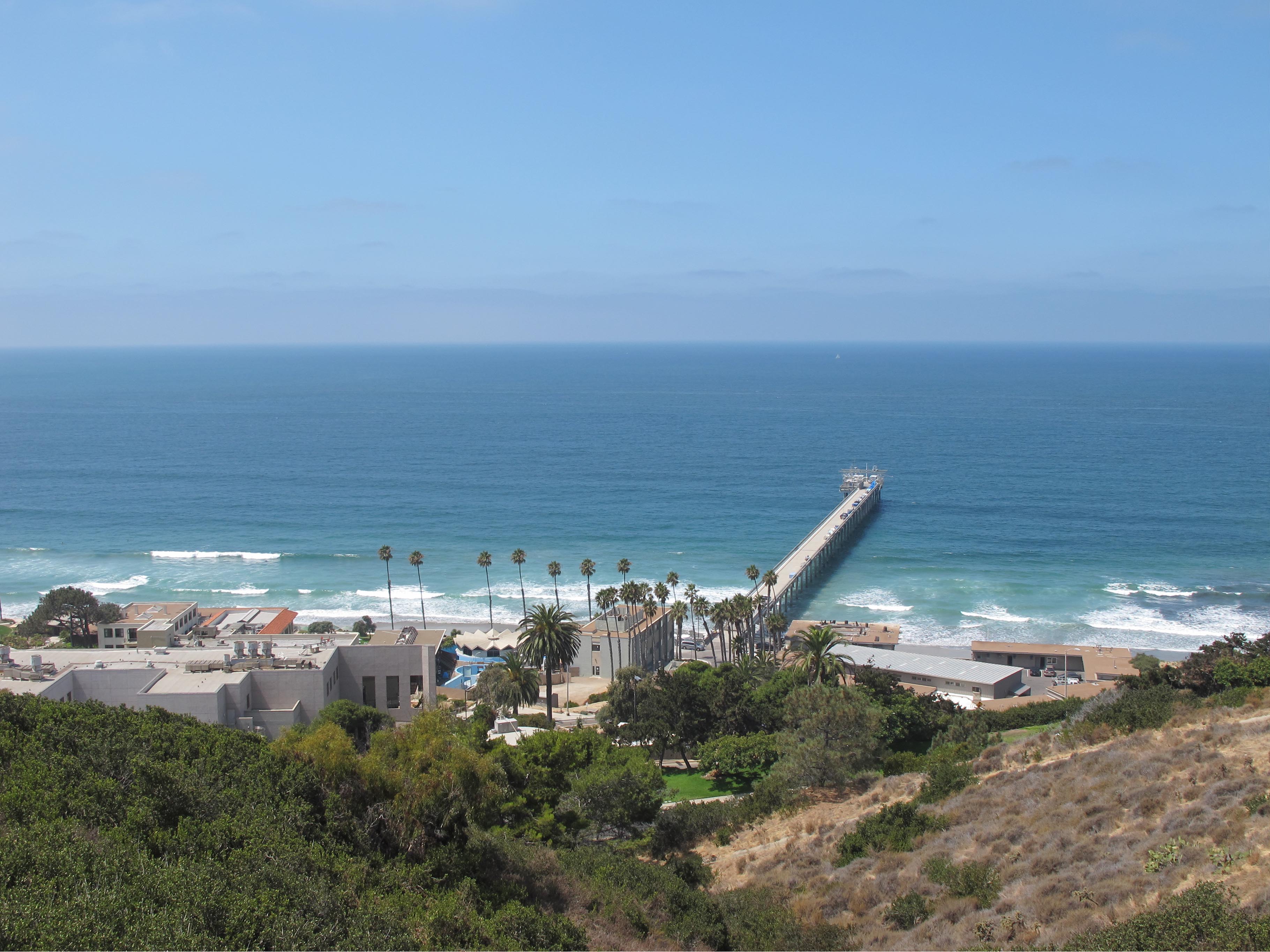
Scripps Institution of Oceanography
William Ritter came to San Diego on his honeymoon. The University of California biologist from Berkeley was studying marine life along the California coast, and San Diego — its tidepool-rich shores, its clear waters, its dry sunlit air — captivated him. A local physician named Fred Baker encouraged him to build a laboratory here. Ritter spent the next decade looking for the right place. He found it on a bluff above La Jolla, where the Pacific stretched west without obstruction. In 1903, the Marine Biological Association of San Diego was born. By 1912, it had been absorbed into the University of California. By the end of the twentieth century, it had become one of the most influential scientific institutions on Earth.
A Benefactor Arrives
Ritter's early funding came from small donations and scientific enthusiasm. The institution's transformation began when newspaper publisher E.W. Scripps and his sister Ellen Browning Scripps took an interest in the work. Ellen Scripps in particular would become a major benefactor of La Jolla more broadly — funding buildings, parks, and institutions across the community. Her generosity helped establish the permanent La Jolla campus that Ritter had been searching for. The institution was renamed in the Scripps family's honor, and the cliffs and cove below the campus — Ellen Browning Scripps Memorial Park — bear her name still. The relationship between wealthy patrons and scientific ambition shaped the institution from its earliest days.
From Biology to Earth Science
Scripps began with a simple focus: marine biology along the California coast. Over the twentieth century, that scope expanded dramatically. The institution incorporated oceanographic chemistry and physics, geology of the ocean floor, climate science, and atmospheric research. The Scripps pier — extending from the base of the bluff into the Pacific — became one of the world's longest-running continuous environmental monitoring sites. Today, the institution's research covers the physics of ocean circulation, the chemistry of seawater, the biology of deep-sea ecosystems, the geology of tectonic plates, and the patterns of global climate. Scripps researchers were among the first to document rising atmospheric carbon dioxide levels — a measurement that began at Mauna Loa Observatory in 1958 under Scripps scientist Charles David Keeling. The 'Keeling Curve' remains one of the most recognizable records in climate science.
The Campus Above the Sea
The Scripps campus sits at the edge of the Torrey Pines mesa in La Jolla, between the Pacific and the University of California San Diego campus to the east. The institution's buildings range from early-twentieth-century Spanish Colonial structures to modern research facilities. The Birch Aquarium at Scripps, open to the public, offers exhibits on oceanography and marine life drawn directly from the institution's research. Below the campus, at the foot of the cliffs, the Scripps Beach tidepools are among the most visited on the San Diego coast. The pier extends 1,000 feet into the Pacific, collecting continuous water temperature and wave data. The campus awards the Nierenberg Prize annually to recognize researchers making exceptional contributions to science in the public interest.
Why This Place
There is something about the geography that explains Scripps. The La Jolla submarine canyon — one of the deepest nearshore underwater canyons on the Pacific coast — begins almost at the shoreline just south of the campus. It funnels cold, nutrient-rich water toward the surface, creating exceptional conditions for marine life. The canyon also focuses wave energy, producing the powerful surf at Black's Beach to the north and La Jolla Cove's clear, protected waters to the south. Ritter chose well. The ocean here behaves in ways that reward observation, and Scripps has been observing it for more than a century.
From the Air
Located at 32.865°N, 117.254°W on the La Jolla shoreline, approximately 12 miles north of San Diego International Airport (KSAN). The Scripps Pier is clearly visible from the air extending into the Pacific from the base of the Torrey Pines mesa. McClellan-Palomar Airport (KCRQ) lies 15 miles to the north. Best viewed at 2,000-4,000 feet along the coast.