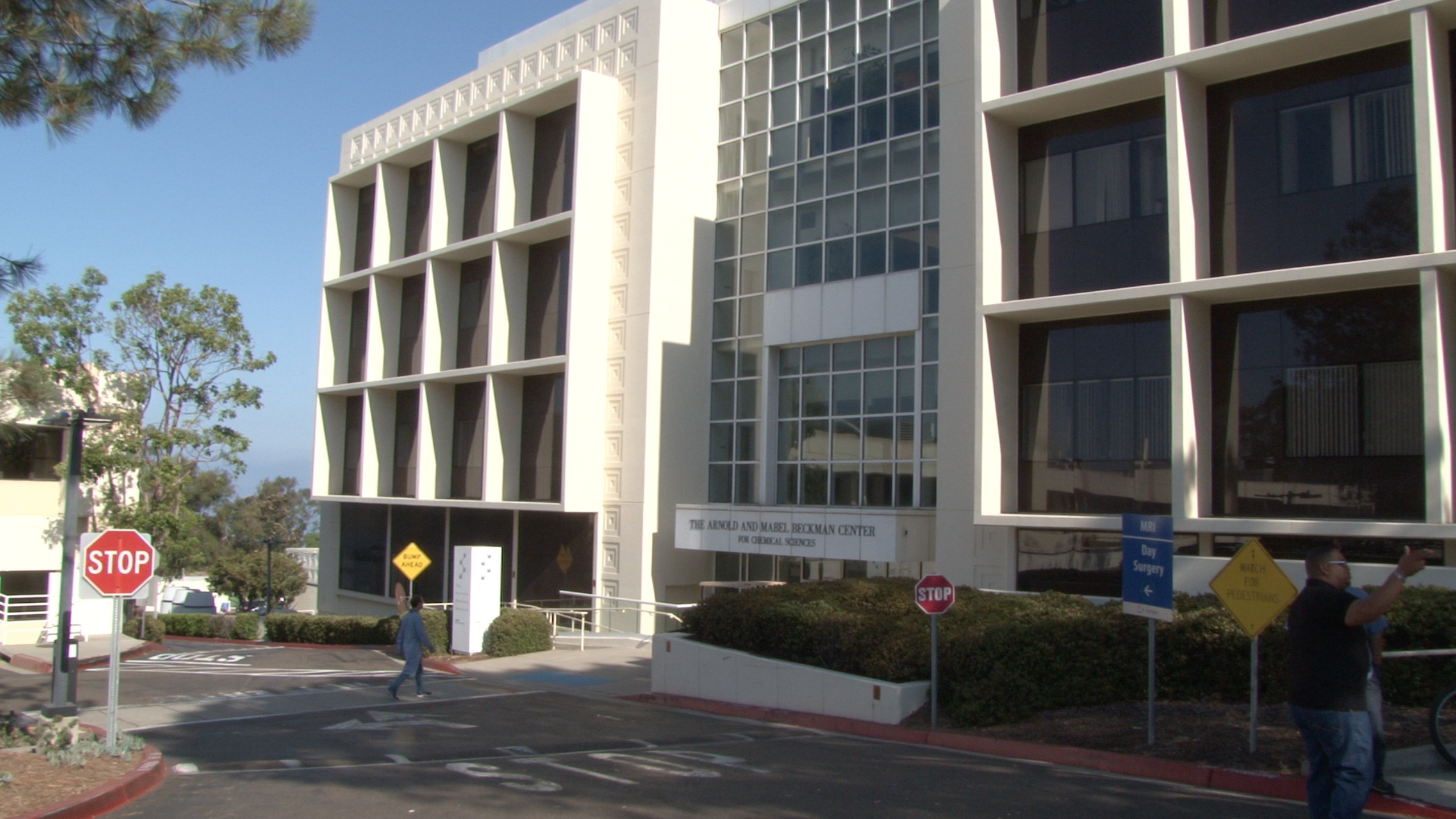
Scripps Research
In 1922, Frederick Banting and Charles Best announced the discovery of insulin, and within months diabetics who had been slowly dying were recovering. Ellen Browning Scripps, the newspaper heiress and philanthropist who had already spent decades funding institutions in San Diego, was inspired by what medical science had just accomplished. In 1924, she founded what would become Scripps Research — not as a hospital or a medical school, but as a pure research institution focused on the chemistry of life. A century later, Scripps Research has been ranked the most influential research institution in the world, holds more than 1,100 patents, and has contributed to eleven FDA-approved therapeutic drugs, including Humira and the mRNA COVID-19 vaccines.
The Woman Who Founded It
Ellen Browning Scripps was eighty-seven years old when she founded the Scripps Metabolic Clinic in 1924, building on the Scripps family's long tradition of philanthropic investment in San Diego's public and scientific institutions. The Scripps Institution of Oceanography, which occupies a neighboring campus at La Jolla Cove, was also shaped by Scripps family support, and Ellen Browning Scripps herself had funded schools, hospitals, parks, and libraries across the San Diego region.
The clinic she founded grew through the twentieth century into the Scripps Research Institute and eventually into Scripps Research, expanding its scientific scope far beyond the metabolic diseases that were its original focus. The organization moved to Torrey Pines Mesa in 1989, joining the cluster of research institutions that had been accumulating there since the Salk Institute opened in 1963. Today Scripps Research operates from approximately 170 laboratories employing about 2,100 people — a scale of scientific activity that its founder, inspired by news of insulin, could not have imagined.
The 2017 Nature Innovation Index, which measures the influence of research institutions by analyzing patent citations and other indicators of real-world impact, ranked Scripps Research as the most influential research institution in the world. This is a remarkable standing for a nonprofit independent research institute that, unlike universities, does not have a medical school, hospitals, or undergraduate teaching mission. The ranking reflects something about Scripps Research's particular model: deep focus on chemistry and biology, a commitment to fundamental research, and an explicit goal of translating basic science into therapeutic applications.
Three Nobels and the Drugs That Followed
Scripps Research currently has three faculty members who are Nobel laureates. Ardem Patapoutian shared the 2021 Nobel Prize in Physiology or Medicine for discovering mechanosensitive ion channels — the molecules that allow cells to sense pressure, touch, and sound. K. Barry Sharpless, who works at Scripps Research, has won the Nobel Prize in Chemistry twice: in 2001 for his work on chirally catalyzed oxidation reactions, and again in 2022 for the development of click chemistry — a set of highly efficient chemical reactions that have transformed how chemists build complex molecules. Kurt Wüthrich, a structural biologist, received the 2002 Nobel Prize in Chemistry for developing nuclear magnetic resonance spectroscopy methods to determine the three-dimensional structure of biological molecules in solution.
The presence of multiple Nobel laureates at a single institution is not merely a prestige indicator. It reflects the quality of scientific culture that attracts researchers of exceptional ability, and that culture in turn shapes the science that gets done. Sharpless's click chemistry, for example, has been applied across drug discovery, materials science, and diagnostic technology in ways that extend far beyond any single research program. The techniques developed at Scripps Research propagate through the scientific community via publications, patents, and the graduate students and postdoctoral researchers who train there and carry the methods elsewhere.
The eleven FDA-approved therapeutics that Scripps Research has contributed to include Humira, the anti-inflammatory biologic that became for many years the best-selling drug in the world, and components of the mRNA COVID-19 vaccines that were deployed globally in 2021. The research-to-drug pathway is long and uncertain — most promising compounds fail before reaching patients — but Scripps Research's record of translation is exceptional for an institution of its type.
Chemistry at the Center
Chemistry is the discipline at the heart of Scripps Research's scientific identity. The institution's graduate program in chemistry and biochemistry has been ranked sixth nationally, and the emphasis on chemical approaches to biological problems — understanding life at the molecular level, designing molecules that interact with biological systems in therapeutically useful ways — runs through most of what Scripps Research does.
The 1,100 patents that Scripps Research holds represent intellectual property derived from this chemical and biological research — inventions significant enough to warrant formal protection, spanning drug candidates, research tools, and the fundamental technologies of molecular biology. The more than fifty spin-off companies that have emerged from Scripps Research technologies represent the commercial translation of that intellectual property, companies that have raised capital, employed scientists, and in some cases produced drugs and diagnostics that have reached patients.
From a campus on Torrey Pines Mesa, within walking distance of the Salk Institute, UCSD, and the La Jolla Institute for Immunology, Scripps Research operates at the center of one of the most concentrated scientific environments in the world. Ellen Browning Scripps, who was inspired by the announcement of insulin to invest in understanding how chemistry shapes biology, would likely recognize the ambition, if not the scale, of what her founding gift eventually became.
From the Air
Scripps Research is located at approximately 32.90°N, 117.24°W on Torrey Pines Mesa, within the La Jolla research cluster that also includes the Salk Institute, UCSD, and General Atomics. The mesa is visible from altitude as a densely developed plateau between the Pacific coast and the I-5 corridor. Flying north along the coast at 3,000–5,000 feet MSL on a clear day, the research campus cluster is the prominent developed area on the mesa above Torrey Pines State Reserve. Nearest airports: KMYF (Montgomery-Gibbs Executive, 8 miles east) and KSAN (San Diego International, 12 miles south).