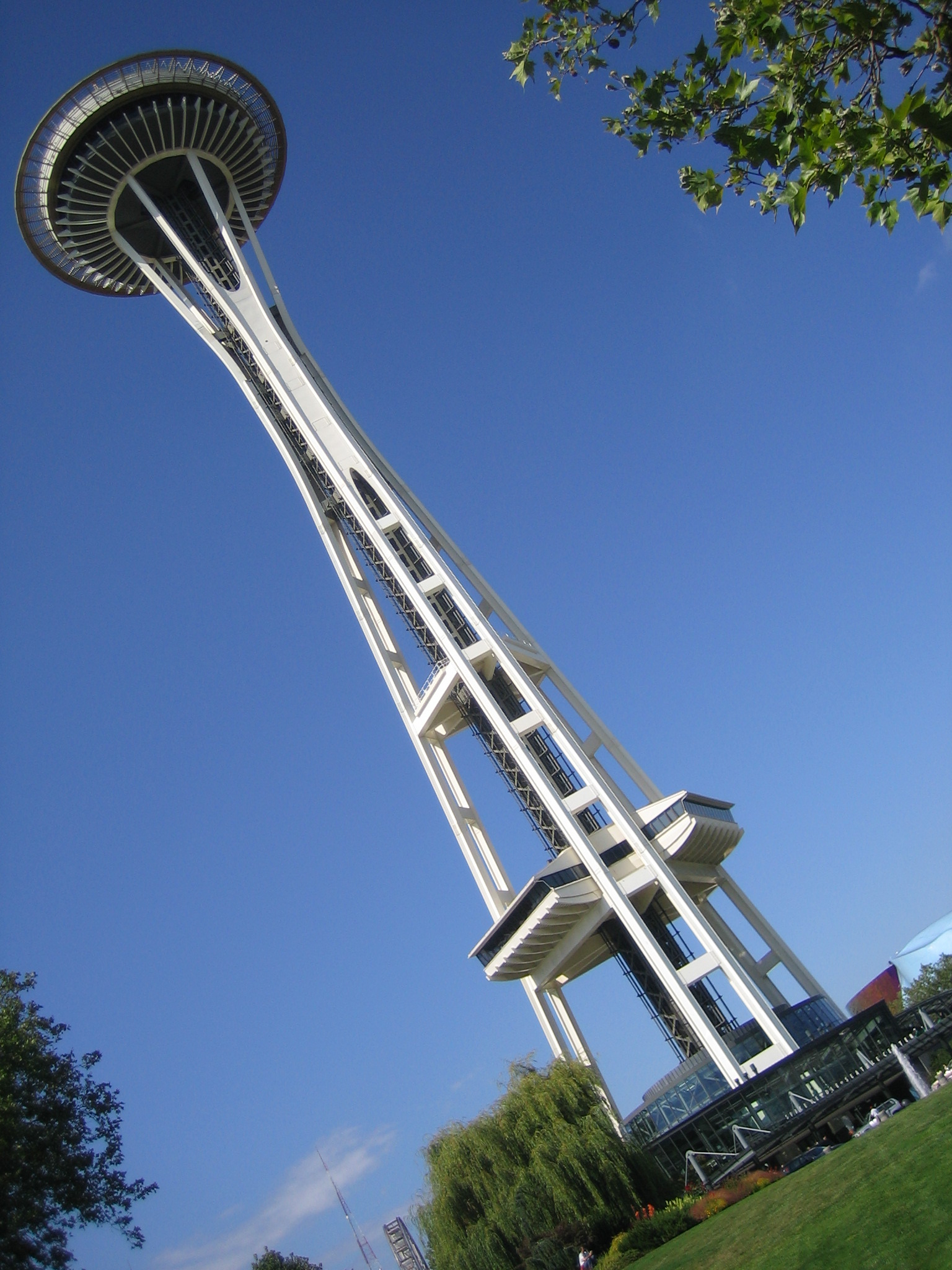
Seattle Space Needle: The Future That Turned 60
The Space Needle was never supposed to last. Built for the 1962 World's Fair - the Century 21 Exposition, celebrating the space age and the future it promised - the tower was designed for temporary awe. But the fair ended and the needle remained, becoming so definitional that Seattle couldn't imagine removing it. The design suggests a flying saucer balanced on a tripod, the observation deck rotating slowly to provide 360-degree views. The futurism that seemed daring in 1962 became retro charm, then nostalgic icon, then renovated landmark. The Space Needle still rises above Seattle Center, the fair's legacy, surrounded now by a skyline that barely existed when it was built. The future it celebrated is past; the structure remains.
The Fair
The Century 21 Exposition was Seattle's announcement that it had arrived. The city of Boeing and timber wanted to signal its embrace of space-age modernity; a World's Fair provided the platform. The monorail - also built for the fair, still running - connected downtown to the fairgrounds. The Pacific Science Center, the Experience Music Project building (now MoPOP), and the Space Needle all rose on the Seattle Center campus. Ten million visitors came during the fair's six-month run. The vision of the future displayed - personal jetpacks, videophones, atomic energy - seems quaint now, but the ambition was genuine. Seattle was building its own World of Tomorrow.
The Construction
The Space Needle was built in 400 days, an extraordinary pace that left no margin for error. The foundation required 467 concrete trucks pouring continuously; the resulting base is heavier than the tower itself, ensuring stability. The tower rose 605 feet, topped by a rotating observation deck and restaurant. The design, by John Graham Jr., achieved what seemed impossible: a structure that suggested both stability and levitation, grounded tripod legs supporting what appeared to be a spacecraft about to lift off. The construction was documented obsessively; time-lapse footage of the tower's rise became part of the fair's marketing. By opening day, the icon was complete.
The Renovation
By 2017, the Space Needle needed updating. The observation deck's original design - walls interrupted by narrow windows - limited the views that justified visiting. A $100 million renovation, completed in 2018, replaced the walls with floor-to-ceiling glass, installed the world's first and only revolving glass floor, and added tilting glass walls that allow visitors to lean outward at 500 feet. The project preserved the tower's exterior profile while transforming the experience. The rotating floor moves at twice the speed of the restaurant above - one revolution every 45 minutes - providing the cityscape views that technology finally enabled. The future that 1962 imagined was finally delivered.
The Skyline
When the Space Needle opened, it dominated a low skyline. Downtown Seattle had few tall buildings; the needle stood nearly alone against the Cascades and Olympics. The decades changed everything. The Columbia Center rose to 943 feet in 1985, dwarfing the 605-foot needle. Amazon's headquarters brought towers and transformation. The skyline filled in around the Space Needle, which now appears modest by height but distinctive by design. The saucer-on-a-tripod silhouette remains instantly recognizable, appearing on postcards, movie establishing shots, and every Seattle tourism campaign. Taller buildings exist; none define the city.
Visiting Space Needle
The Space Needle is located at Seattle Center, accessible via monorail from downtown or by walking from the Lower Queen Anne neighborhood. Tickets are available online or at the entrance; timed entry reduces wait times. The observation deck provides views of the Olympic Mountains, Mount Rainier, downtown Seattle, and Puget Sound. The Loupe, the rotating glass floor, offers vertigo-inducing perspectives. Sunset visits offer dramatic lighting; clear days reveal the volcanic peaks. Seattle Center's other attractions - Chihuly Garden and Glass, MoPOP, Pacific Science Center - combine well with a needle visit. The experience is tourist spectacle that delivers: the views are genuinely spectacular, and the 1962 futurism remains charming even as the actual future surrounds it.
From the Air
Located at 47.62°N, 122.35°W at Seattle Center, north of downtown. From altitude, the Space Needle appears as a distinctive tripod-topped disc, its profile unique among the surrounding structures. Seattle Center spreads around it - the complex's arenas, museums, and grounds visible as the World's Fair's legacy. Downtown Seattle's towers rise to the south, the Columbia Center notably taller but less distinctive. Puget Sound stretches west to the Olympic Mountains. Lake Union lies north, seaplanes visible on its surface. Mount Rainier dominates the southern horizon on clear days. What appears from altitude as a modest tower amid larger buildings is Seattle's defining symbol - the space-age optimism of 1962 made permanent, the future that became iconic past.