SeaWorld San Diego
Four UCLA graduates set out in 1964 with an idea: build an underwater restaurant in San Diego's Mission Bay. The concept proved unfeasible. So they built a park instead. SeaWorld San Diego opened on March 21, 1964, with a handful of dolphins, some sea lions, six attractions, and 22 acres. More than 400,000 guests came in that first year. The underwater restaurant was forgotten. The park kept growing.
The Mission Bay Location
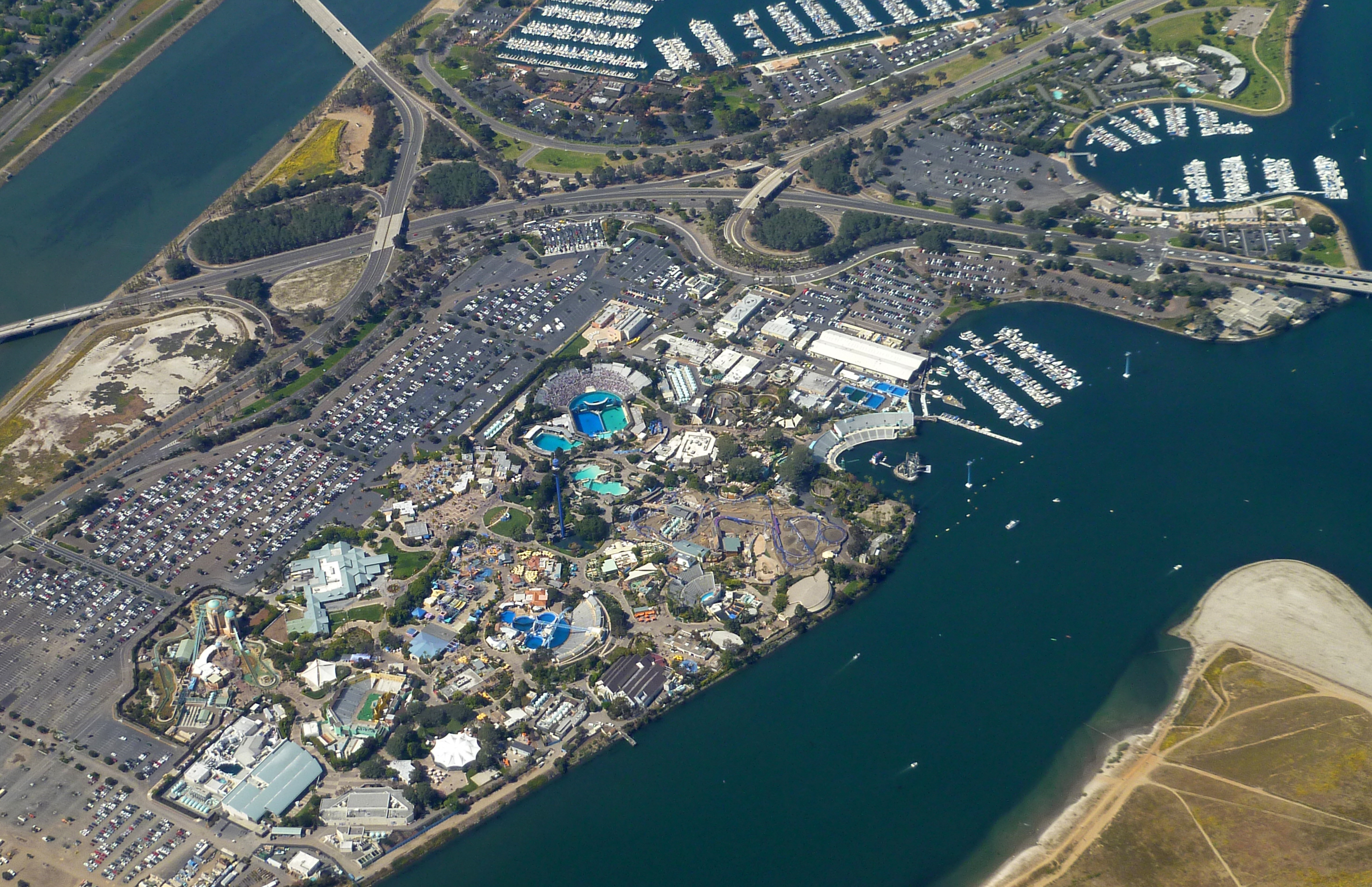
Mission Bay Park itself is a story of ambitious engineering. San Diego converted what was once a marshy tidal estuary into a massive recreational lagoon in the 1940s and 1950s, dredging 25 miles of channels and depositing the spoil to create Mission Bay's sandy shores. SeaWorld occupies a peninsula on the southern edge of the park. The water of Mission Bay — calm, protected, warm by Pacific standards — made it a natural setting for marine life exhibits. From the Skytower, a rotating gondola that rises 320 feet above the park, visitors can see the bay, downtown San Diego, the Pacific, and on clear days, Mexico. The park remains one of the most distinctively placed theme parks in America: surrounded on three sides by water, with the city skyline visible across the bay.
Killer Whales and Controversy
For decades, SeaWorld's signature attraction was its orca shows. The park held killer whales in captivity for public performance, and the shows drew massive crowds. The documentary film Blackfish, released in 2013, examined the psychological effects of captivity on orcas and the safety record of the park's orca program. Public reaction was severe. Attendance fell sharply. In 2016, SeaWorld announced it would end theatrical orca shows and phase out its orca breeding program. The park also announced it would no longer acquire wild-caught animals. These were significant shifts for an institution built around marine mammal performance. SeaWorld reoriented its programming toward conservation messaging, animal rescue, and rehabilitation — framing itself as a partner of the natural world rather than a exhibitor of it.
Animal Rescue and Rehabilitation
Alongside its entertainment operations, SeaWorld San Diego has operated one of the most active marine animal rescue programs on the West Coast. The park's rescue team has responded to thousands of strandings involving sea lions, harbor seals, dolphins, sea otters, and other marine mammals. Many injured or ill animals brought to SeaWorld have been rehabilitated and returned to the wild. This work — sometimes overshadowed by the controversy over orca captivity — represents a genuine contribution to marine animal welfare along the California coast. The park is a member of the Association of Zoos and Aquariums and participates in species survival programs for threatened animals.
What Remains
SeaWorld San Diego still occupies its Mission Bay peninsula, still operates marine life exhibits, still draws large crowds. The orca shows are gone. The park is now owned and operated by United Parks and Resorts, the successor to a series of corporate owners dating back to the park's founding by Milton Shedd, Ken Norris, David Demott, and George Millay. The original four founders would find much changed. The dolphins are still there. So is the bay. So is the Skytower. San Diego's marine theme park has outlasted its most controversial era — whether it has fully reinvented itself is a question still being answered.
From the Air
Located at 32.766°N, 117.227°W on a peninsula in Mission Bay, approximately 5 miles north of San Diego International Airport (KSAN). The Skytower is a visible landmark from the air. Mission Bay's channels and the SeaWorld peninsula are clearly defined from altitude. Approach from the west for the best view of the park's relationship to the bay.