Second Battle of Newtonia
Union troops pursuing Sterling Price's retreating army found Confederate stragglers dying of starvation along the road. By October 28, 1864, Price's Missouri Raid had collapsed into catastrophe. He had entered the state six weeks earlier with dreams of sparking a popular uprising and influencing the presidential election. Instead, defeats at Pilot Knob, Westport, and Mine Creek had shattered his Army of Missouri. More than two-thirds of his men would be lost before the campaign ended. On this late October afternoon, Price halted his disintegrating force near Newtonia, the same small Missouri town where Confederates had won a battle two years before. He needed grain for his starving men before the retreat carried them into the barren stretches of Arkansas. What he got was one last fight.
A Dying Campaign
Price's Missouri expedition had been born of desperation. By September 1864, the Confederacy was losing on every front. The Atlanta campaign had turned in Lincoln's favor, and the Trans-Mississippi Department could not transfer troops east because the Union Navy controlled the Mississippi River. Price and Confederate Missouri Governor Thomas Caute Reynolds proposed an invasion of Missouri as a diversion. Price entered the state on September 19 with the Army of Missouri, hoping to capture St. Louis. A costly fight at Pilot Knob in late September dissuaded that plan. Jefferson City proved too strong. Price turned west toward Kansas City, where Major General Samuel R. Curtis crushed him at the Battle of Westport on October 23. Three more defeats followed on October 25, including the disastrous rout at Mine Creek. By the time Price reached Newtonia, historian Albert E. Castel described his army as essentially an armed mob.
Corn and Cavalry at Two O'Clock
Price's men encamped south of Newtonia near the McClain Farm. Some soldiers went into town to operate a flour mill. Confederate soldiers who were Newtonia locals knew about a small Union outpost in town and drove its defenders out. One captured Union lieutenant, Robert H. Christian, was killed -- possibly after surrendering -- and mutilated. Around 2:00 p.m., Union Colonel James H. Ford arrived from the northwest with McLain's Colorado Battery and cavalry from the 2nd Colorado and 16th Kansas Regiments. The Confederates had been harvesting corn when the Union troopers appeared. Major General James G. Blunt arrived to take personal command, fighting alongside the 16th Kansas Cavalry. Price, believing the entire Union army was upon him, ordered Brigadier General Joseph O. Shelby to hold a rear guard while the main army withdrew.
Sunset Rescue
Shelby fielded between 1,500 and 2,000 men against Blunt's roughly 1,000. The Confederates outflanked the shorter Union line, and Shelby ordered an attack that drove the Federals back to the Ritchey Farm. McLain's Battery retreated, demoralizing parts of the 15th and 16th Kansas Cavalry, some of which routed. Blunt was preparing to withdraw entirely when, at around 5:00 p.m., Brigadier General John B. Sanborn arrived with a fresh brigade after a forced march from Fort Scott, Kansas. Sanborn formed on Blunt's left, Curtis arrived and helped rally the battered Colorado battery, and the Union counterattacked with rejuvenated force. Two Rodman guns gave the Union an eight-to-two artillery advantage. Shelby ordered a withdrawal. The counterattack drove forward before halting at dusk. Both sides were exhausted, and Curtis and Blunt postponed pursuit until morning.
The Long Road to Texas
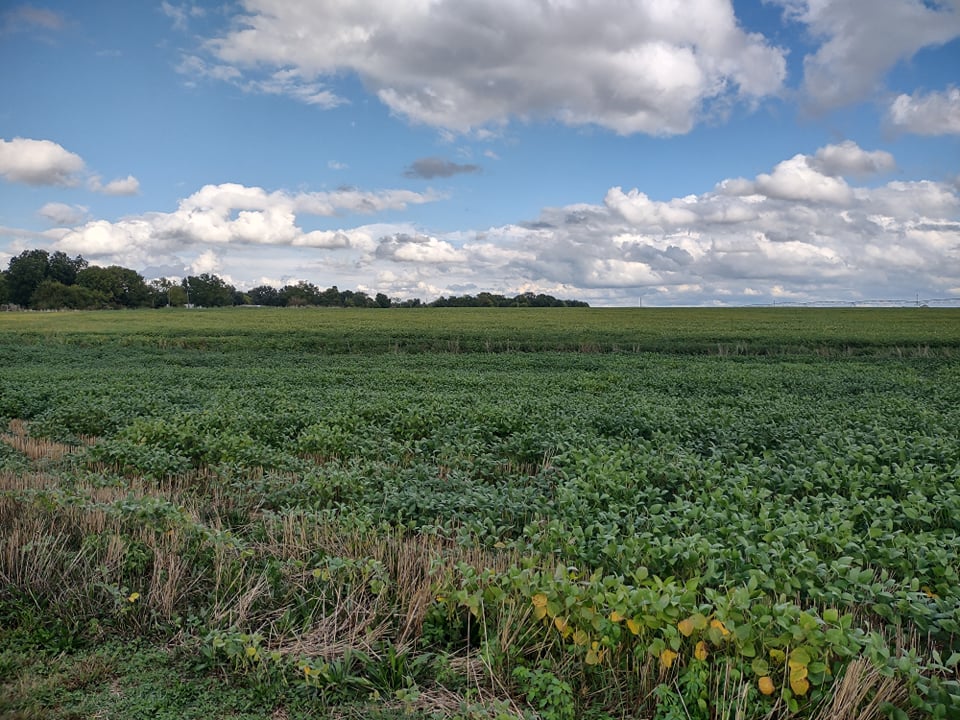
Both armies initially claimed victory. Curtis reported the Confederates "conquered." Price claimed to have driven Blunt back and inflicted heavy casualties. Shelby's chief of staff, John Newman Edwards, declared "another beautiful victory had crowned the Confederate arms." Modern historians and the American Battlefield Trust credit the Union. Casualty estimates vary wildly, from as few as 50 total to several hundred per side. What is certain is that 46 wounded Confederates were abandoned because Price's army could not transport them. The Ritchey and McClain houses served as field hospitals. After the battle, Price's army continued its disintegration, retreating through Cane Hill, Arkansas, into Indian Territory, and finally reaching Texas. The battlefield was listed on the National Register of Historic Places in 2004, and the Ritchey House and 25 acres were added to Wilson's Creek National Battlefield in 2022. The landscape today looks much as it did in 1864 -- open farmland where the last act of Price's doomed Missouri Raid played out in the fading autumn light.
From the Air
Located at 36.874N, 94.190W near Newtonia, Missouri, at approximately 1,100 feet MSL. The battlefield sits in the open prairie terrain of Newton County, southwest Missouri. Joplin Regional Airport (KJLN) is approximately 20 nm northwest. The McClain Farm and Ritchey Farm sites are visible as open farmland. The Second Battle of Newtonia Site historic district shares boundaries with the First Battle district at two points. Railroad construction and open-pit mining have altered portions of the original terrain. Fort Scott, Kansas (K78K), from which Sanborn's reinforcements marched, lies approximately 50 nm to the north. Best viewed at 2,000-3,000 feet AGL.