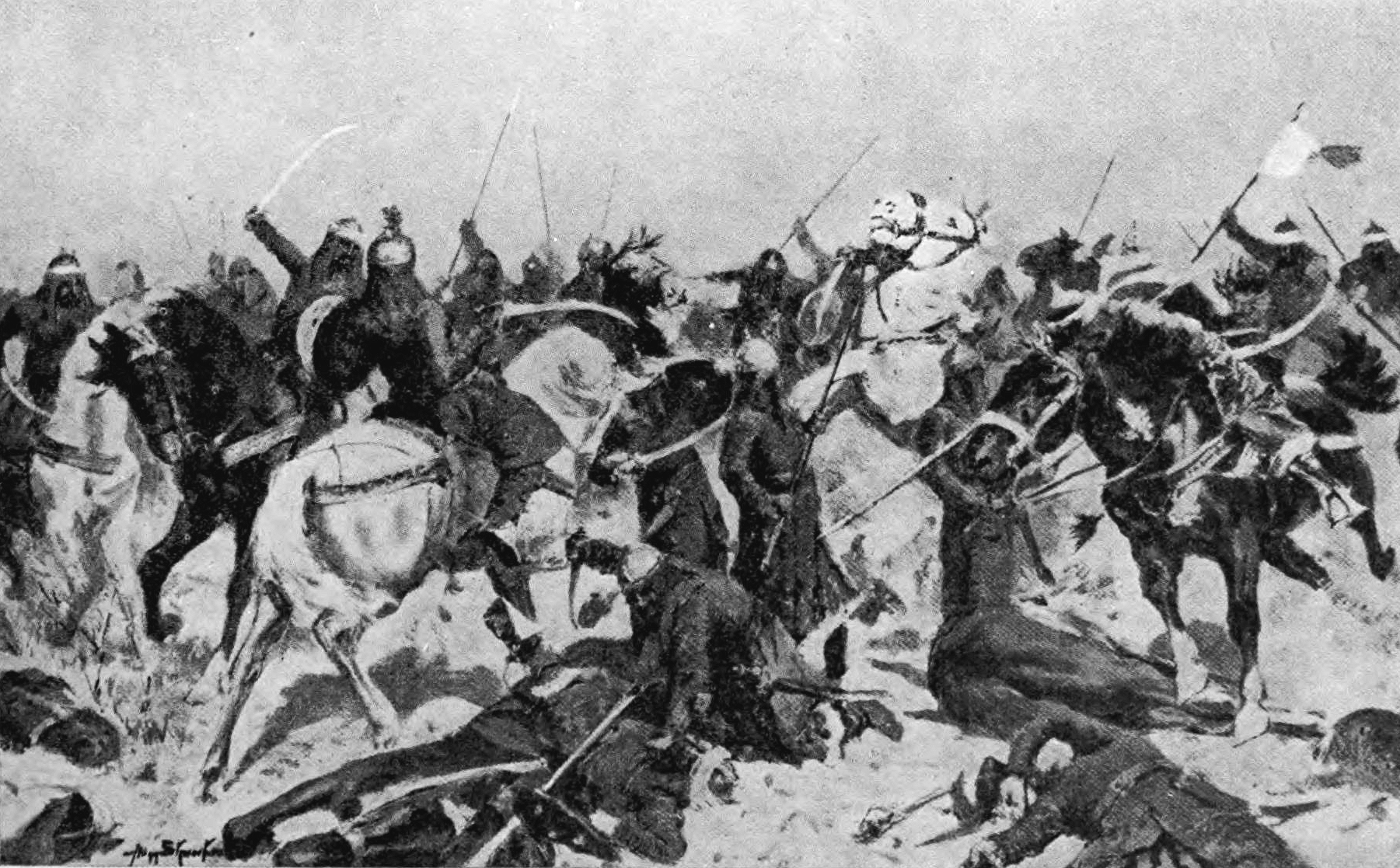
Second Battle of Tarain
Prithviraj Chauhan sent a note across the battlefield that amounted to a polite dismissal: return to your homeland, and we will not pursue you. It was the kind of message a confident king sends to a defeated enemy. Muhammad of Ghor had, after all, been routed on this same plain just a year earlier, carried from the field with a javelin wound in his arm. His reply was carefully measured -- he claimed he needed permission from his brother to negotiate peace, and requested time to send an envoy to Ghazni. It was a lie. While Prithviraj's army relaxed into the comfort of what they believed was a truce, Muhammad was positioning 120,000 soldiers for a dawn attack that would reshape the Indian subcontinent.
A Year of Preparation
After his humiliating defeat at the First Battle of Tarain in 1191, Muhammad of Ghor retreated to Ghazni with a wounded arm and a bruised reputation. He spent the intervening months raising what the chronicler Minhaj-i-Siraj described as 120,000 fully armored men, with an elite cavalry force of 40,000 under his personal command. The numbers may carry exaggeration -- medieval chroniclers on both sides inflated figures to suit their narratives -- but the scale of preparation was unmistakable. Muhammad had studied his defeat. The Rajput heavy cavalry and war elephants had overwhelmed his forces in direct combat, so he devised a strategy built on mobility, deception, and exhaustion rather than frontal assault. He divided his army into five units and trained his mounted archers in a tactic as old as the Central Asian steppe: the feigned retreat.
The Trap at Dawn
Muhammad deployed four of his five divisions to encircle the Chahamana forces, directing ten thousand light cavalry archers to surround the Rajput army on all sides. These riders had a single instruction: when the enemy advances, do not fight -- retreat. Draw them forward, exhaust their elephants and horses, then fall back and let the next wave do the same. The fifth division received a different order. It would charge the Rajput line and then deliberately break, fleeing as though routed. According to multiple contemporary sources -- Hasan Nizami, Muhammad Aufi, and later Firishta -- the deception worked on two levels. The diplomatic ruse had lulled Prithviraj into complacency, and the Ghurid forces attacked before sunrise, catching the Chahamana army after a night the chronicles describe as spent in slumber and celebration. When Prithviraj's warriors saw the fifth unit turn and run, they did exactly what Muhammad expected: they charged.
Exhaustion and Collapse
The Chahamana pursuit scattered their formations exactly as the Ghurids had planned. Every charge met not resistance but empty ground, as mounted archers peeled away and regrouped behind the next line. The Rajput elephants, devastating in close combat, lumbered forward into nothing -- spending their energy on charges that connected with no enemy. Prithviraj's cavalry, heavier and slower than the Ghurid horsemen, found themselves chasing shadows across a field they had dominated just twelve months earlier. When the Rajput forces were sufficiently strung out and exhausted, Muhammad committed a fresh cavalry force of twelve thousand men. They struck not the Rajput front -- which was scattered across the plain in pursuit -- but the gaps and flanks that the disorganized charge had opened. The remaining Ghurid forces joined the attack simultaneously. What had been a confident Rajput advance became a rout. The Chahamana soldiers, outmaneuvered and spent, broke and fled in panic.
The Fall of Prithviraj
Prithviraj dismounted from his elephant and escaped on horseback, but Ghurid pursuers captured him near Sursuti. Most medieval sources agree on what followed: Muhammad initially took Prithviraj to Ajmer, the Chahamana capital, intending to reinstall him as a vassal ruler. It was a pragmatic calculation -- a compliant local king could administer territory more effectively than a distant conqueror. But Prithviraj rebelled, and Muhammad had him executed for treason. The Ghurids placed Prithviraj's son Govindaraja IV on the Ajmer throne as their puppet. When Prithviraj's younger brother Hariraja overthrew Govindaraja and attempted to reclaim the family kingdom, the Ghurid general Qutb al-Din Aibak -- who would later found the Delhi Sultanate -- crushed the uprising. The Rajput political order that had dominated northern India for centuries was dismantled in stages, each attempt at restoration meeting a swifter and more decisive Ghurid response.
The Road That Opened
The Second Battle of Tarain is often called a watershed moment in Indian history, and the description is earned. The Ghurid victory did not merely end Chahamana power -- it opened a corridor from Afghanistan through the Punjab to the Gangetic plain that successive Muslim dynasties would use for the next five centuries. Muhammad's forces went on to defeat Jayachandra of the Gahadavala dynasty at the Battle of Chandawar, extending Ghurid control as far as Bengal. The Delhi Sultanate that emerged from these conquests would rule northern India until the Mughals replaced it in the sixteenth century. Today, the battlefield at Taraori in Haryana's Karnal district is indistinguishable from the farmland surrounding it. The flat terrain that once gave cavalry room to wheel and feint now produces rice and wheat. But the consequences of what happened here in 1192 -- a campaign built on patience, deception, and a willingness to learn from defeat -- reverberate through the subcontinent to this day.
From the Air
Located at 29.78N, 76.94E near modern Taraori in Karnal district, Haryana, on the flat Indo-Gangetic plain approximately 110 km north of Delhi. The same site as the First Battle of Tarain -- flat agricultural terrain extending in all directions, part of the historic invasion corridor between the northwestern mountain passes and the Delhi plain. Nearest major airport is Delhi's Indira Gandhi International (VIDP/DEL), about 110 km south-southeast. Karnal city lies just to the east. Best viewed at 3,000-5,000 ft AGL to appreciate the vast open ground that enabled cavalry maneuvers.