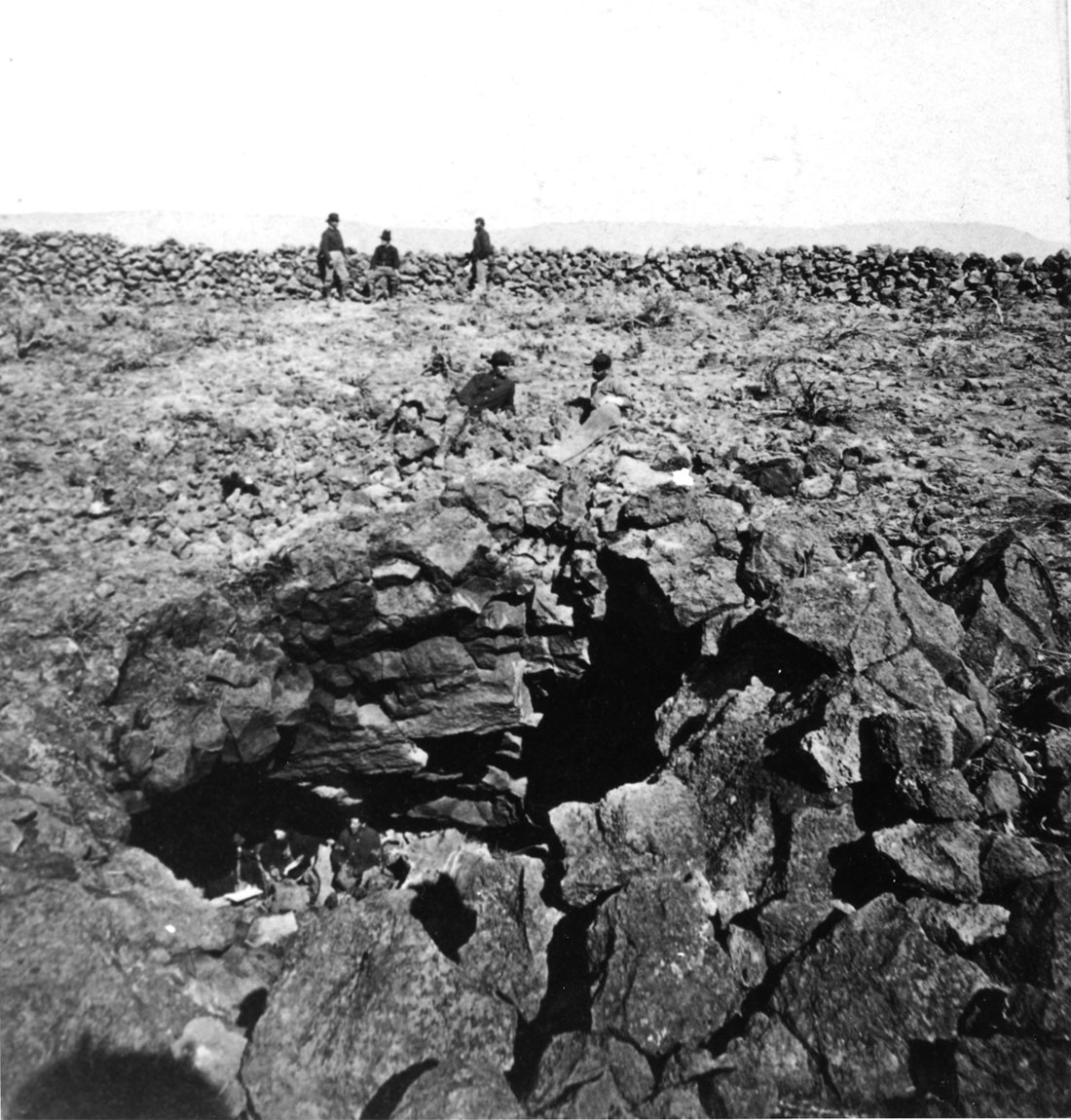
Second Battle of the Stronghold
The telegram that reached Washington in April 1873 was unprecedented: Major General Edward Canby, the highest-ranking U.S. military officer in the region, had been shot dead during a peace conference. The assassin was Kintpuash, known to the Army as Captain Jack, leader of the Modoc resistance. Now, in the jumbled volcanic wilderness of northeastern California, the Army prepared to exact vengeance. What followed was the Second Battle of the Stronghold, a three-day assault that would prove the Modoc masters of the lava beds even as it drove them from their fortress.
A Peace Shattered
On April 11, 1873, General Canby rode to a tent pitched on the barren lava flats between Army lines and the Modoc stronghold. He came to negotiate peace. Captain Jack, under pressure from warriors who saw no way out but war, came with a pistol hidden beneath his coat. When the talks broke down, Jack pulled his weapon and shot Canby through the face. Reverend Eleazar Thomas, another peace commissioner, died moments later. The Army's response was swift: Colonel Alvan Gillem received orders to take the Stronghold at any cost. No more negotiations. The Modoc who had held off a thousand soldiers through the winter would now face a concentrated assault.
The Converging Attack
On April 15, the Army moved. Troops advanced from two directions: Gillem's camp pressed from the west while Major Edwin Mason's command pushed southwest from Hospital Rock, northeast of the Modoc position. The soldiers confronted a nightmare landscape: twisted black basalt, hidden crevices, and defenders who knew every fold of rock. Fighting continued throughout the day. By nightfall, neither force had breached the Stronghold's outer defenses. The troops held their positions through the darkness, listening to the volcanic desert, waiting for dawn. On April 16, every attempted advance drew withering fire from Modoc riflemen concealed in positions the soldiers could not see until they were already in the killing zone.
The Water Gambit
By the night of April 16, the Army had finally gained crucial ground. Troops reached and held the shoreline of Tule Lake, cutting off the Modoc's only water supply. Inside the Stronghold, the defenders understood the mathematics of siege: without water, even the most impregnable fortress becomes a tomb. Captain Jack faced a decision that would end the battle but continue the war. The morning of April 17, Army commanders believed final victory was hours away. Everything stood ready for the last charge into the heart of the Modoc position.
The Empty Fortress
When soldiers finally stormed the Stronghold, they found it abandoned. During the night, while troops repositioned from one sector to another, the entire Modoc band, perhaps sixty warriors and their families, had slipped through an unguarded crevice and vanished into the lava beds. The soldiers had taken the position, but the enemy had simply evaporated into the volcanic maze. Three days of fighting had cost the Army one officer and six enlisted men killed, thirteen more wounded. The only confirmed Modoc death was a boy killed when a cannonball he was attempting to open with an axe exploded. The war would continue for three more months across fifty miles of wilderness.
Legacy in Lava
The Second Battle of the Stronghold revealed both the Army's power and its limits. Four hundred soldiers with artillery could take ground, but they could not trap an enemy who knew the terrain as intimately as their own bodies. The Modoc would eventually be hunted down, Captain Jack captured and hanged. But for those three days in April 1873, a handful of defenders demonstrated that courage and knowledge of landscape could frustrate the might of a nation. Today, Captain Jack's Stronghold remains within Lava Beds National Monument, its crevices and lava tubes still tracing the routes through which the Modoc made their impossible escape.
From the Air
Located at 41.82 degrees N, 121.50 degrees W, within Lava Beds National Monument in northeastern California. Captain Jack's Stronghold sits along the southern shore of Tule Lake, visible from altitude as a particularly rough section of dark lava flow. The terrain appears chaotic from above, with countless depressions and ridges that explain how the Modoc could defend against superior numbers. Nearest airport is Klamath Falls (KLMT), approximately 50 miles north. The former Army camps at Gillem's Bluff and Hospital Rock are also within the monument boundaries.