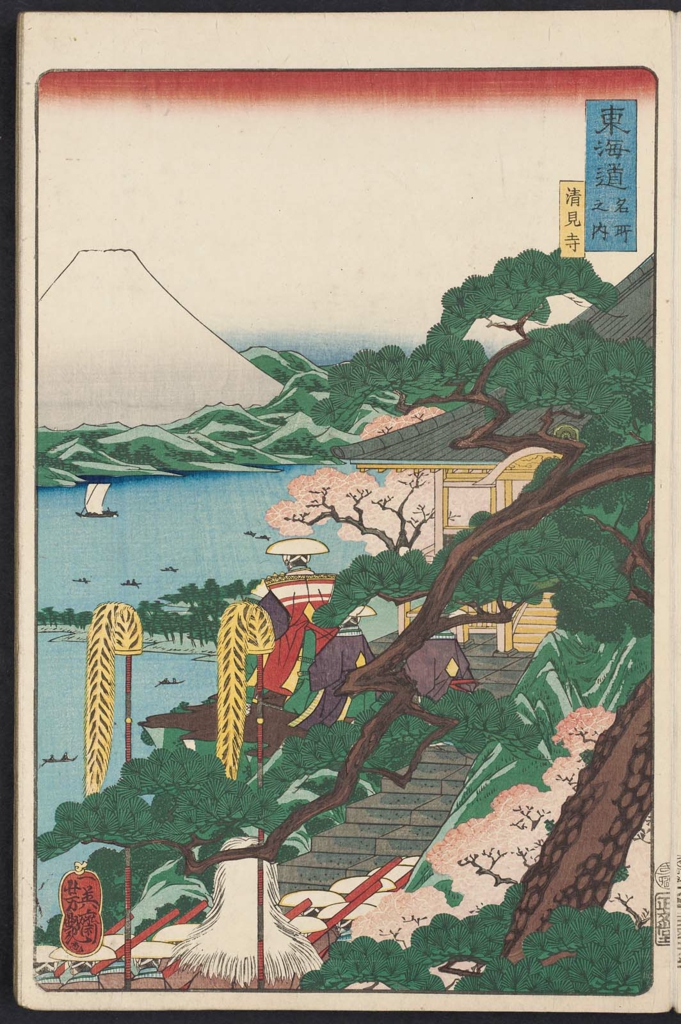
Seiken-ji
Before he unified Japan, before he established a dynasty that would rule for 265 years, Tokugawa Ieyasu was a child prisoner. Taken hostage by the Imagawa clan and brought to Sunpu, the boy was sent to a cliffside temple in Okitsu to be educated by a Zen abbot who also happened to be one of the era's shrewdest military strategists. That temple was Seiken-ji, and the lessons taught within its walls helped shape the future of an entire nation. Today it sits where it has for centuries, overlooking the waters of Suruga Bay from a narrow ledge between sea cliffs and the ancient Tokaido highway, its gardens and gate still carrying the weight of the history that unfolded here.
The Abbot and the Hostage
In the turbulent Sengoku period, political hostages were currency. The young Tokugawa Ieyasu, then known as Matsudaira Takechiyo, was held by the powerful Imagawa clan in Sunpu. Rather than languish in captivity, the boy was sent to Seiken-ji to study under the abbot Sessai Choro, a remarkable figure who combined Zen spiritual discipline with battlefield cunning. Sessai was not merely a monk but a military advisor to the Imagawa lord Yoshimoto and a veteran commander. Under his tutelage, Ieyasu absorbed strategy, governance, and the patient temperament that would later define his rule. The irony is unmistakable: the clan that held Ieyasu hostage inadvertently educated the very man who would eclipse their legacy entirely.
A Threshold Between Worlds
Seiken-ji occupies one of the most dramatic positions on the old Tokaido road, the great highway that connected the imperial capital of Kyoto with the eastern provinces. At Okitsu, the road narrowed to a precarious ledge squeezed between sheer cliffs and the Pacific Ocean, a natural chokepoint called the Kiyomi Barrier. The temple was originally founded in the Nara period as a Tendai institution to guard this passage. When the monk Enni revived it in 1262 and converted it to the Rinzai school of Zen, Seiken-ji began its transformation into a center of power and culture. By 1343, it had earned the rank of Jissetsu, one of the officially recognized important Zen temples. Warriors of consequence came here: Ashikaga Takauji, founder of the Muromachi shogunate, and Imagawa Yoshimoto both took the tonsure at Seiken-ji, underscoring the temple's role as a place where political and spiritual authority intertwined.
Diplomats at the Gate
After Ieyasu became shogun and established the Tokugawa regime, Seiken-ji entered its most prosperous era. Its position on the Tokaido, now the busiest road in Japan, made it a natural rest stop for dignitaries. The shogunate designated the temple as an official lodging for the Joseon missions from Korea and delegations from the Ryukyu Kingdom, transforming the monastic compound into a venue for international diplomacy. Foreign envoys slept in rooms overlooking Suruga Bay, their ships perhaps still visible in the harbor below. Among the temple's treasures is a diary by Ye Mengde, a Song dynasty Chinese scholar and government minister who lived from 1077 to 1148, a manuscript that speaks to centuries of cultural exchange across East Asia. Surviving Edo-period structures include the Sanmon gate, built in 1651, and the entrance to the Main Hall, dating to 1616. In 1994, these layers of diplomatic and cultural significance earned Seiken-ji designation as a National Historic Site of Japan.
Poetry Where the Tracks Run
The Meiji era brought a jarring transformation. When engineers laid the tracks of the Tokaido Main Line railway, they cut directly across the front of the temple grounds, severing Seiken-ji from much of its property. The old barrier pass that had given the temple its strategic importance was now a rail corridor. Yet this diminishment had an unexpected consequence. The temple's dramatic perch above Suruga Bay, framed by the rhythmic clatter of passing trains, drew a new kind of pilgrim: literary figures enchanted by the juxtaposition of ancient serenity and modern speed. The novelist Natsume Soseki, one of Japan's greatest writers, visited and found inspiration here. So did the poet Shimazaki Toson and the critic Takayama Chogyu. The Japanese garden, with its Edo-period ponds and carefully arranged trees, was designated a National Place of Scenic Beauty in 1936, ensuring that even as the modern world pressed in, the contemplative heart of Seiken-ji would endure.
From the Air
Seiken-ji sits at 35.048N, 138.513E on the coast of Suruga Bay in the Okitsu district of Shizuoka. From the air, look for the Tokaido Shinkansen and JR Tokaido Main Line tracks running along the coastline where steep hills meet the water. The temple compound is nestled between the rail corridor and the hillside. Shizuoka Airport (RJNS) is approximately 30 km to the southwest. Mount Fuji dominates the northern horizon on clear days. Best viewed at 3,000-5,000 feet to appreciate the dramatic coastal setting where cliffs meet bay.