Seimei Shrine: Kyoto's Portal to the Spirit World
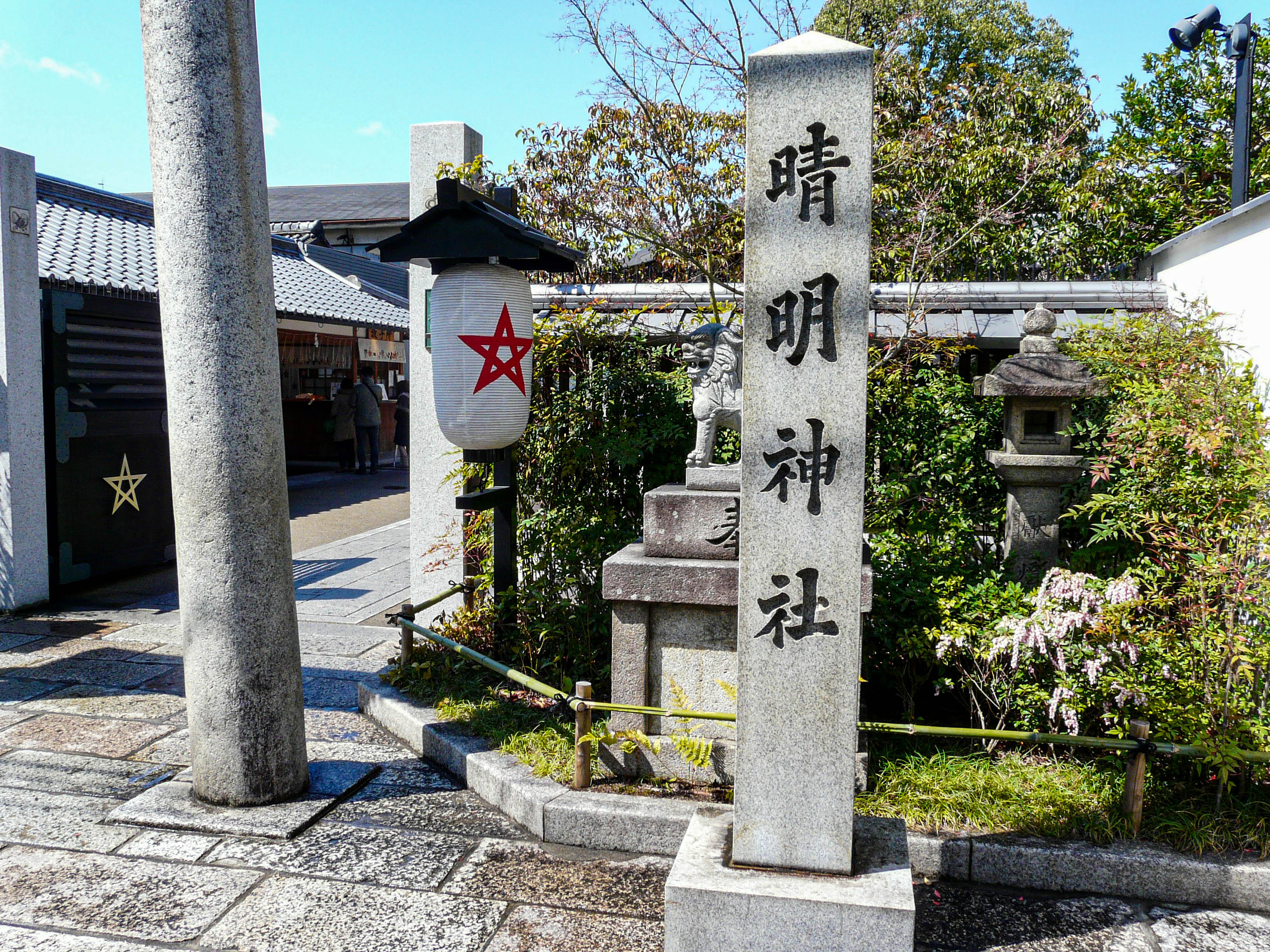
Pentagrams stare down from the torii gate. They are carved into stone lanterns, pressed into decorative tiles, woven into the fabric of amulets sold at the entrance. At most Shinto shrines, such symbols would seem out of place -- but Seimei Shrine is not most shrines. This is the spiritual home of Abe no Seimei, the 10th-century onmyoji whose mastery of divination, astrology, and the occult made him the most celebrated sorcerer in Japanese history. In the millennium since his death, Seimei has become something between a saint and a folk hero, starring in novels, films, manga, and kabuki plays. His shrine, tucked into a quiet residential neighborhood in upper Kyoto, sits on the exact plot of land where he once lived and practiced his arcane arts -- and where, according to tradition, the boundary between the human world and the spirit realm grows thin.
The Emperor's Command
Abe no Seimei died in 1005 at what was, for the Heian period, a remarkably advanced age. He had served six emperors as the court's chief onmyoji -- a practitioner of onmyodo, the Way of Yin and Yang, a discipline blending Chinese cosmology, divination, and spiritual protection. His reputation for predicting disasters, exorcising demons, and reading the movements of the stars was unmatched. Two years after Seimei's death, Emperor Ichijo ordered a shrine built in his memory, placed on the very site where Seimei had lived and worked. The year was 1007. For a thousand years since, the shrine has occupied this ground, quietly accumulating legend. The main building was restored in 1925, but the spiritual charge of the place -- its association with a man who could supposedly command the spirits called shikigami -- has never faded.
Stars, Flowers, and the Five Elements
The pentagram that adorns Seimei Shrine is not the Western occult symbol it might resemble at first glance. Known locally as the Seimei-star, it represents the Five Chinese Elements -- wood, fire, earth, metal, and water -- the foundational forces of onmyodo cosmology. Abe no Seimei is credited with devising this particular insignia in the 10th century as a distillation of the elemental cycle into a single geometric form. The symbol appears everywhere on the shrine grounds, but it finds a natural echo in the Japanese bellflower, or kikyo, whose five-petaled blossoms are carved into tiles and lanterns throughout the complex. The flower's five petal tips mirror the five points of the star, linking botanical form to cosmic principle. Two torii gates frame the approach to the shrine, each bearing the star prominently -- an announcement, before you even step inside, that this is a place where the visible and invisible worlds are understood to overlap.
The Well and the Tea Master
Among the shrine's most revered features is the Seimei-i, a well whose water has been considered potent -- even magical -- for centuries. The well's fame extends beyond the world of the occult. Sen no Rikyu, the 16th-century tea master who codified the Japanese tea ceremony and whose aesthetic philosophy still defines the art, is recorded to have drawn water from this well to brew tea. That a figure of Rikyu's stature and refined sensibility chose Seimei's well speaks to the deep cultural resonance of the site. The water was not merely functional; it carried the accumulated spiritual weight of a place associated with Seimei's power. Nearby, just south of the shrine, stands the Ichijo Modori-bashi, a bridge long held to mark a threshold between the human realm and the world of spirits. Legend says Seimei himself kept shikigami -- supernatural servants -- hidden beneath this bridge, and the crossing remains a charged site in Kyoto's spiritual geography.
A Living Occult Tradition
Every year on the autumnal equinox, the Seimei Festival draws visitors to the shrine for rituals honoring its namesake. The timing is deliberate: the equinox marks a moment of perfect balance between light and darkness, day and night -- precisely the kind of cosmic symmetry that defined Seimei's practice. But the shrine's appeal extends far beyond a single annual celebration. Abe no Seimei's legend has experienced a dramatic revival in modern Japanese popular culture. Novels by Yumemakura Baku, films, anime series, and video games have introduced his story to new generations, and the shrine has become a pilgrimage site for fans as much as for the spiritually curious. Visitors come to purchase amulets bearing the Seimei-star, to drink from the well, and to stand on ground where one of Japan's most enigmatic historical figures once gazed at the stars and read the future in their patterns.
From the Air
Located at 35.028N, 135.751E in the upper part of central Kyoto, north of the Imperial Palace grounds. The shrine is small and nestled within residential blocks, not individually visible from altitude, but its location can be approximated by finding the rectangular green expanse of the Kyoto Imperial Palace and looking slightly north and west. The Kamo River runs north-south through the city to the east. Nearest major airport is Osaka Itami (RJOO), approximately 25 nautical miles southwest. Kansai International (RJBB) is about 50 nautical miles south. The shrine sits at a similar elevation to the palace grounds, within the flat Kyoto basin surrounded by mountains on three sides.